
Have you ever picked a paint color in the store, loved it… and then hated how it looked in your room?
You’re not alone.
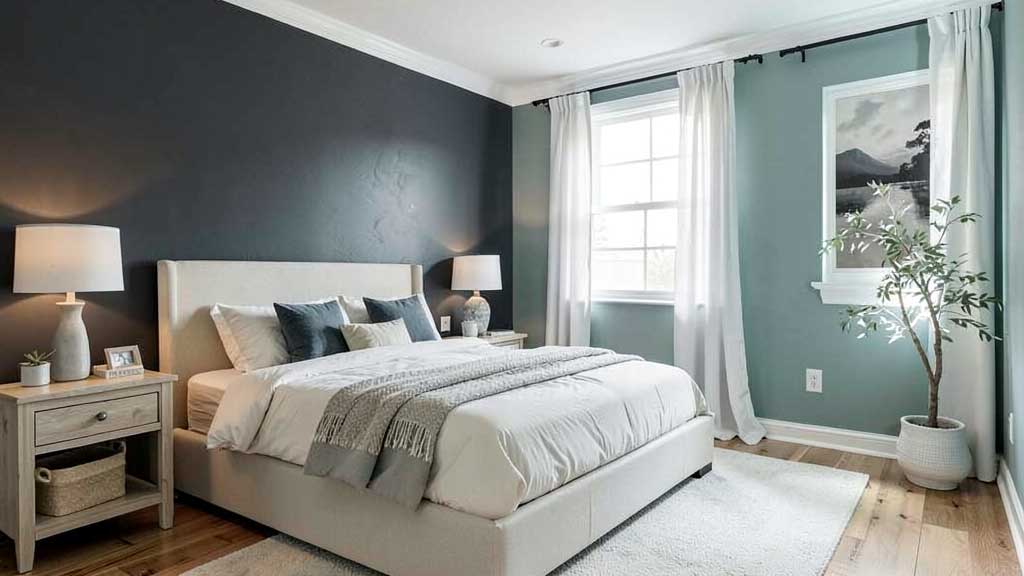
Choosing the right paint color for a sun-drenched living room is easy. But choosing the perfect shade for a dark, windowless bedroom or a basement with tiny windows? That’s where things get tricky.
If you’ve ever picked a beautiful “light gray” in the store, only to have it look like a muddy, dingy cave once it’s on your walls, it’s very natural. The truth is, dark rooms play by different rules. Without natural sunlight to bring out the pigments, many colors lose their life and end up making the space feel smaller and more enclosed.
And that’s where most people get it wrong.
It’s not just about choosing a “nice color.”
It’s about choosing a color that actually works with your lighting conditions.
To fix this, we need to focus on LRV (Light Reflective Value)—a scale that tells us how much light a color reflects. For dark rooms, we want colors that act like a mirror, bouncing whatever light is available back into the space.
The goal?
Pick colors that make your space feel brighter, more open, and less like a cave—even without sunlight.
Understanding LRV: The Secret to Brightening Dark Rooms

Let’s keep this simple.
LRV is a number (from 0 to 100) that tells you how reflective a paint color is.
- Higher LRV (60+) = more light reflected
- Lower LRV = absorbs more light (darker look)
👉 For dark rooms, higher LRV is your best friend.
But here’s something surprising:
Pure white isn’t always the best choice.
In a room with little natural light, stark white can actually look:
- gray
- cold
- slightly “dirty”
Instead, softer tones with a bit of warmth often perform much better.
10 Best Paint Colors for Dark Rooms
Here are the 10 best paint colors to transform your dark room into a bright, airy sanctuary.
1. Off-White or Soft Cream
While “Pure White” can often look gray and cold in a dark room, an off-white with warm undertones adds a much-needed glow. It provides the brightness of white without the stark, clinical feel.
If pure white feels too cold, this is the upgrade.
- Adds warmth
- Reflects light well
- Feels soft and inviting
👉 Great for bedrooms where you want brightness without harshness.
2. Light Sage Green
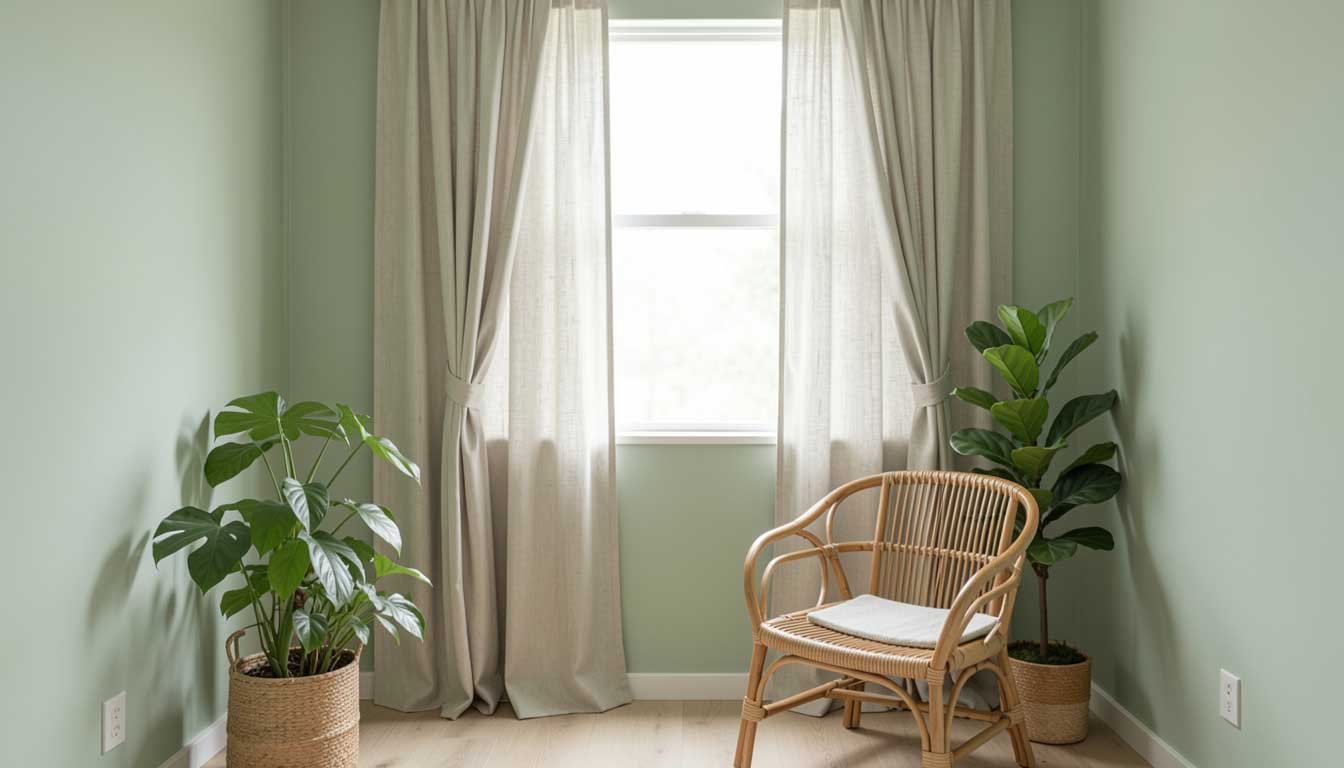
Sage green is a designer favorite for windowless rooms. It brings a touch of nature indoors, mimicking the feeling of being outside. It’s refreshing, calming, and surprisingly bright under artificial lighting.
A subtle way to bring nature indoors.
- Calming and earthy
- Works well in low light
- Doesn’t feel flat like plain neutrals
3. Soft Powder Blue
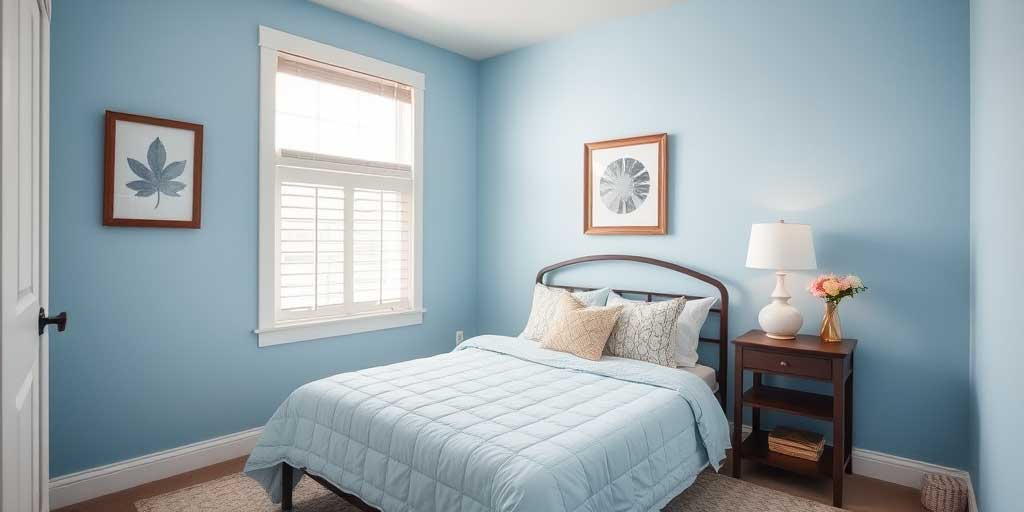
Blue is naturally a “receding” color, meaning it visually pushes walls away from you. A soft, pale blue can mimic the sky, making a cramped, dark bedroom feel much more expansive.
This one works surprisingly well.
- Mimics the sky
- Makes walls feel farther away
- Creates a more open atmosphere
4. Pale Lavender
Lavender is an underrated hero for dark spaces. It has enough “soul” to not look muddy, and its cool undertones help the walls feel airy and light.
Not as bold as it sounds.
- Adds a touch of personality
- Reflects light softly
- Feels calm and slightly upscale
5. Warm Greige
If you love the modern look of gray but fear the “cave effect,” Greige (a mix of gray and beige) is your answer. It stays warm even when the lights are low, keeping your room cozy rather than gloomy.
One of the safest choices.
- Balanced tone (not too warm, not too cool)
- Works with almost any decor
- Keeps the room feeling light but grounded
6. Soft Ochre or Pale Yellow
Since you lack sunshine, why not “fake” it? A very soft, buttery yellow can simulate a sun-kissed glow, especially when paired with best lighting for small bedroom with no windows.
If your room feels too dark, this adds warmth instantly.
- Mimics sunlight
- Brightens the mood
- Works well in windowless spaces
7. Millennial Pink or Blush
Blush tones have a unique way of “glowing” in low light. It adds a luminous, sophisticated quality to the room that feels warm and inviting.
This color has a subtle glow effect.
- Reflects light gently
- Adds warmth without being overwhelming
- Makes small spaces feel softer
8. Cool Mint
Like sage but brighter, mint green is incredibly refreshing. It’s a great choice for basement bedrooms that need a “clean” and crisp atmosphere.
Fresh and clean.
- Great for small or basement bedrooms
- Feels airy and refreshing
- Adds a bit of brightness without glare
9. Pale Aqua
Aqua brings a watery, tranquil depth to a room. It works beautifully with white furniture to create a coastal, open-air vibe even in the middle of a house.
Think of it as a mix between blue and green.
- Creates a calm, relaxing vibe
- Reflects light well
- Adds depth without darkening the room
10. Pearl Gray
If you must go gray, go for a Pearl Gray with a high LRV. It’s classic, clean, and reflects artificial light beautifully without feeling like a “basement gray.”
A more refined neutral.
- Reflects light better than darker grays
- Feels modern but not cold
- Works great with layered lighting
Finishes Matter: Matte vs. Satin vs. Gloss
Beyond the color, the finish of the paint is crucial for dark rooms.
- Avoid Matte: It absorbs light, making a dark room feel flatter.
- Choose Satin or Eggshell: These finishes have a slight sheen that helps reflect light back into the room, effectively acting as an extra light source.
👉 For most dark bedrooms, satin or eggshell is the sweet spot.
Coordination is Key
Your wall color is just one part of the puzzle.
Pair it with indoor plants
To truly maximize the space, coordinate your new paint with Indoor Plants for Dark Rooms to add life and texture.
Even in low-light spaces, the right greenery can make your room feel more alive.
Combine it with proper lighting
Paint alone won’t fix a dark room—you also need the right lighting setup.
👉 See our full guide on Best Lighting for Small Bedroom with No Windows to maximize brightness.
The Dark Room Painting Checklist: Get It Right the First Time
Painting a room with little natural light requires more than just a brush and a bucket. Use this checklist to ensure your chosen color looks bright and beautiful:
- Check the LRV: Ensure your paint choice has a Light Reflective Value (LRV) of 60 or higher.
- Sample at Night: Test your paint patches using your artificial bedroom lights, not just in the daytime, to see how the color truly behaves.
- Pick the Right Finish: Choose Satin or Eggshell finish instead of Matte to help bounce light around the room.
- Prep the Walls: Patch any holes and sand the walls smooth. In a dark room, shadows from wall imperfections are much more noticeable.
- Don’t Skip the Primer: Use a high-quality white primer, especially if you are painting over a darker old color. This ensures the new light color looks “clean.”
- Ceiling Strategy: Paint your ceiling a “Brilliant White” (flatter/brighter than the walls) to make the room feel taller.
- Trim Coordination: Use a crisp white for baseboards and door frames to provide a sharp contrast that makes your wall color “pop.”
- Clean the Fixtures: Before you start, dust off your light bulbs and fixtures to ensure maximum brightness while you work.
Conclusion
Brightening a dark room isn’t just about picking the lightest color on the chart; it’s about choosing a shade that knows how to handle low light. By selecting colors with high LRV and the right undertones, you can turn your “dark cave” into a bright, beautiful retreat you’ll never want to leave.
Sometimes, the difference between a dull room and a beautiful one comes down to a single decision: the paint on your walls.
👉 Now that your walls are ready, don’t forget to check out our Small Bedroom Layout Tips to complete the look and make the most of your space.

Royan Abdillah is a home improvement enthusiast and interior design consultant with over 9 years of experience in the industry. Passionate about blending aesthetics with functionality, Royan Abdillah specializes in unique DIY furniture and pet-friendly home solutions. Through this blog, Royan Abdillah aims to help homeowners create beautiful, personalized spaces on a budget.