
When your bathroom is barely wide enough for a vanity, every inch suddenly matters. Choose one that’s too deep, and the room can feel cramped. Choose one that’s too small, and you may end up giving up the storage space you actually need.
The good news? A narrow bathroom doesn’t mean you have to sacrifice style for functionality. The right vanity can provide the storage and countertop space you need while helping the room feel more open.
The trick is to look beyond width. Depth, storage, placement, and visual weight can make just as much difference in a tight bathroom.
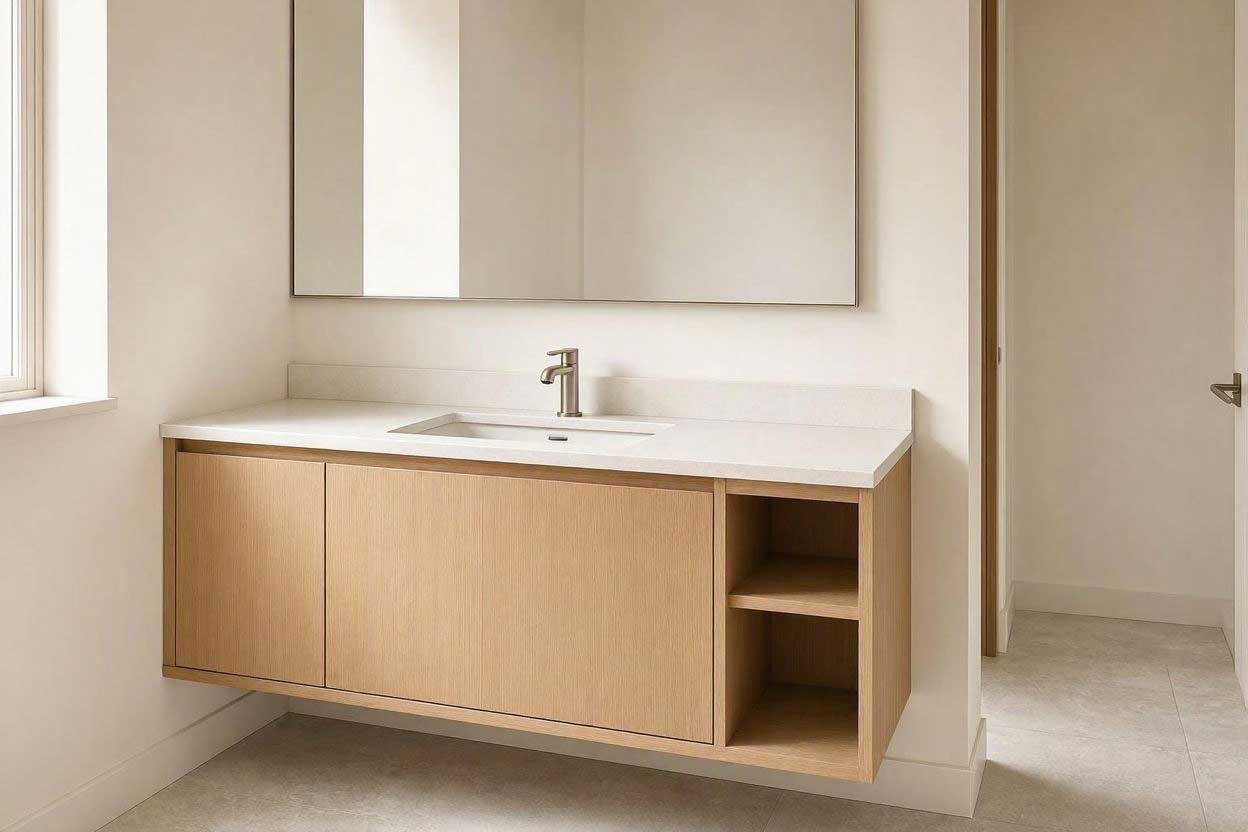
In this guide, we’ll look at 10 small vanity ideas for narrow bathrooms, along with practical tips for choosing the right size and style for your space.
How to Choose a Vanity for a Narrow Bathroom
A vanity that looks perfectly reasonable in a showroom can feel bulky once it’s installed in a narrow bathroom. The best option isn’t necessarily the smallest one—it’s the one that fits the room without getting in the way of how you use it.
Before choosing a style or finish, consider five things: available space, depth, storage, clearance, and layout.
1. Measure the Available Space First
Start by measuring the wall where you plan to install the vanity, but don’t stop at the cabinet width. Consider the toilet, shower, bathtub, doorway, and other fixtures around it.
If the bathroom door or shower door swings toward the vanity, make sure the two won’t interfere. One simple trick is to mark the approximate footprint of the vanity on the floor with painter’s tape. This lets you see how much walking space will remain before you buy.
2. Pay Attention to Vanity Depth
In a narrow bathroom, depth can matter more than width.
A vanity may fit the wall perfectly but still project too far into the room, making the walkway uncomfortable. Shallow-depth designs can provide a functional sink and useful storage while taking up less floor space.
When comparing options, consider how far the countertop extends, whether drawers can open freely, and whether you’ll have enough room to use the sink comfortably.
3. Think About Storage
Choosing the smallest possible vanity isn’t always the smartest way to make a bathroom feel spacious. Too little storage can leave toiletries and everyday essentials scattered across the countertop, creating even more visual clutter.
Instead, think about what you actually need to store. Drawers, medicine cabinets, wall-mounted shelves, and vertical storage can help you maintain a balance between storage and breathing room.
4. Check the Clearance
A vanity needs room to function, not just room to fit.
Make sure doors and drawers can open without hitting the toilet, shower enclosure, or bathroom door. You should also be able to stand comfortably at the sink without creating an awkward bottleneck through the room.
5. Match the Vanity to the Layout
Finally, choose a vanity that works with the shape of the bathroom. A floating vanity can help keep the floor visually open, while a corner vanity may make better use of an awkward space. For unusually tight layouts, a custom vanity can sometimes make better use of every available inch.
10 Small Vanity Ideas for Narrow Bathrooms
When space is tight, the best vanity often solves more than one problem. It should provide a comfortable sink, offer enough storage for everyday essentials, and leave the bathroom easy to move around in.
Here are 10 practical ideas worth considering.
1. Choose a Slim Floating Vanity
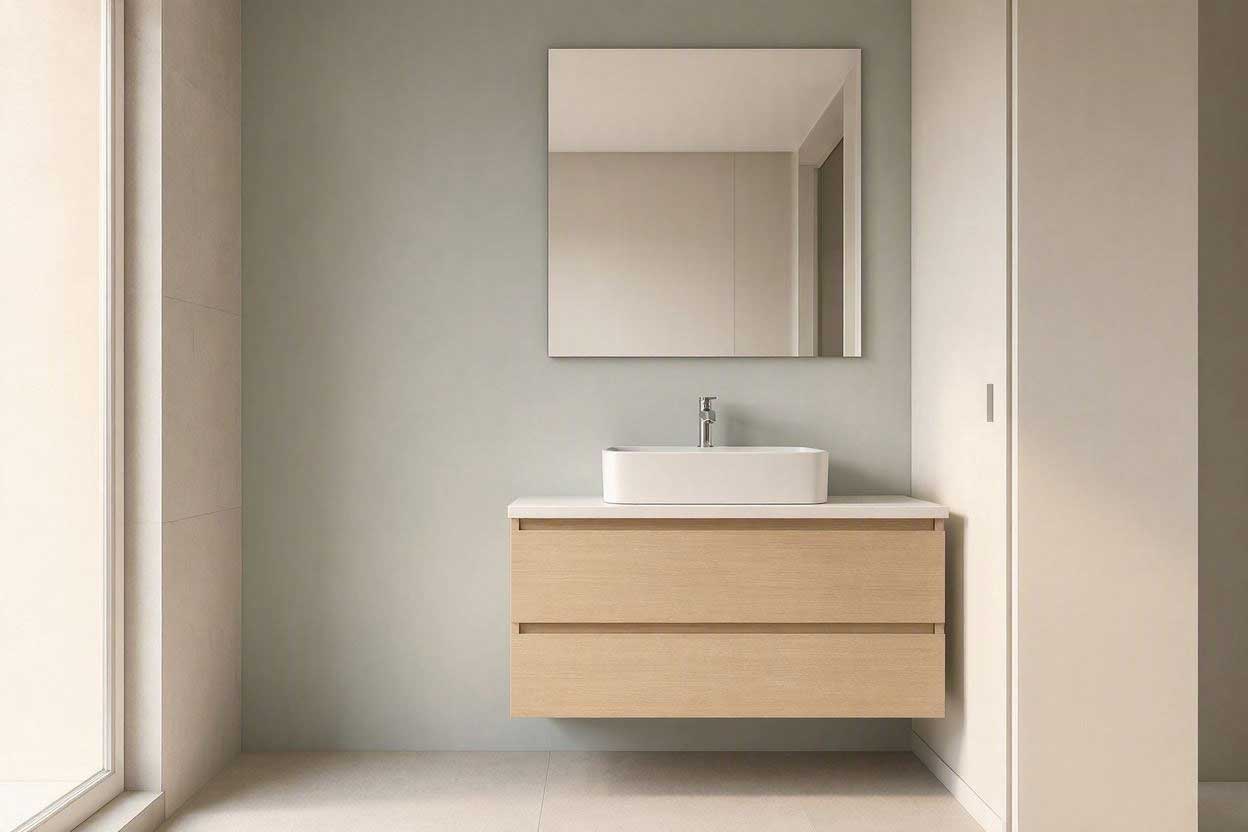
A floating vanity can make a narrow bathroom feel less crowded because the cabinet doesn’t sit directly on the floor. The visible flooring underneath creates a lighter appearance and can make the room feel more open.
Look for a slim design with clean lines and drawers rather than a bulky cabinet. You’ll get useful storage without adding as much visual weight.
Best for: Narrow bathrooms where preserving visible floor space is a priority.
2. Try a Shallow-Depth Vanity
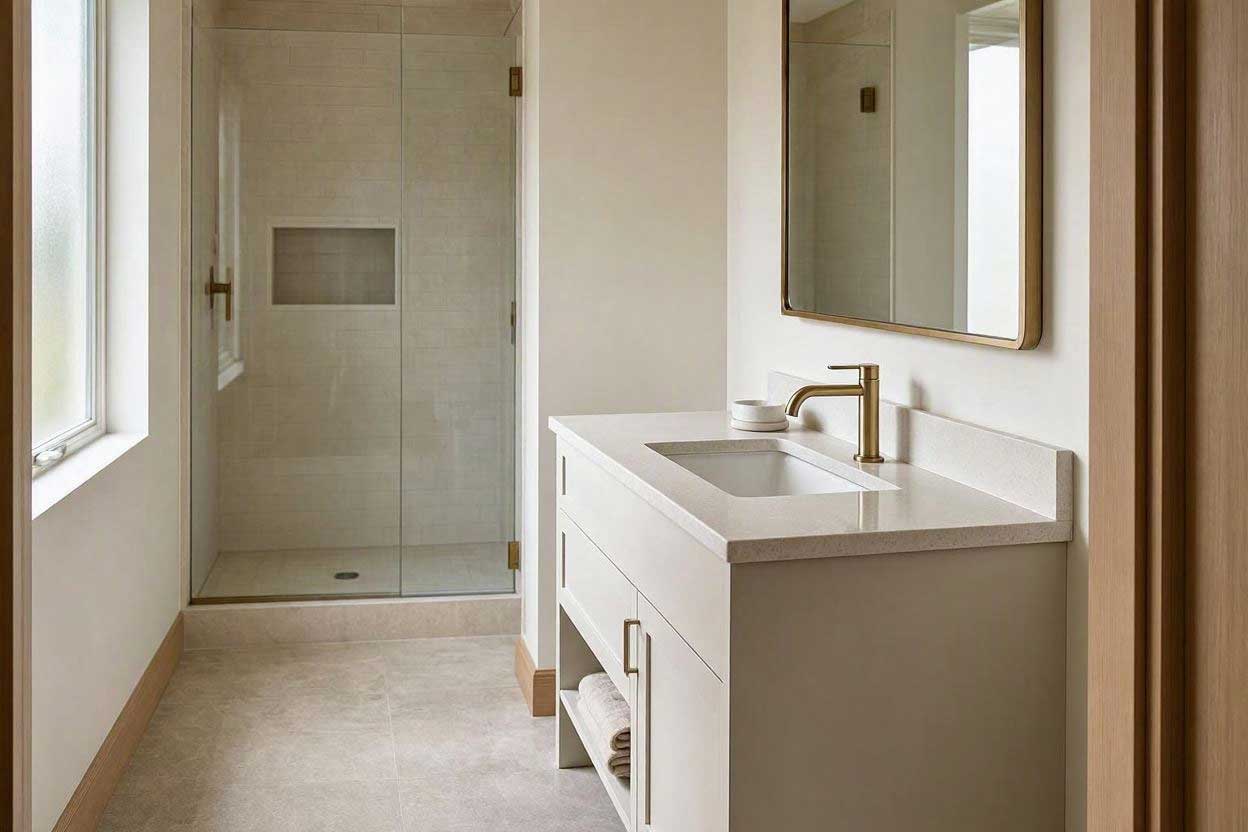
When a bathroom is particularly narrow, reducing the vanity’s depth can be more useful than simply choosing a shorter cabinet.
A shallow vanity extends less into the room, leaving more space between the sink and the opposite wall, shower, or toilet. Just make sure the sink and countertop still provide enough usable space for your routine.
Best for: Long bathrooms with limited front-to-back space.
3. Use a Narrow Single-Sink Vanity
A double-sink vanity can be appealing, but it isn’t always practical in a narrow bathroom. A compact single-sink vanity can provide the functionality you need while leaving more room for storage, countertop space, or comfortable movement.
For a shared bathroom, efficient storage may be more useful than squeezing in a second sink.
Best for: Small bathrooms used by one or two people who don’t need a double vanity.
4. Make an Awkward Corner Work With a Corner Vanity
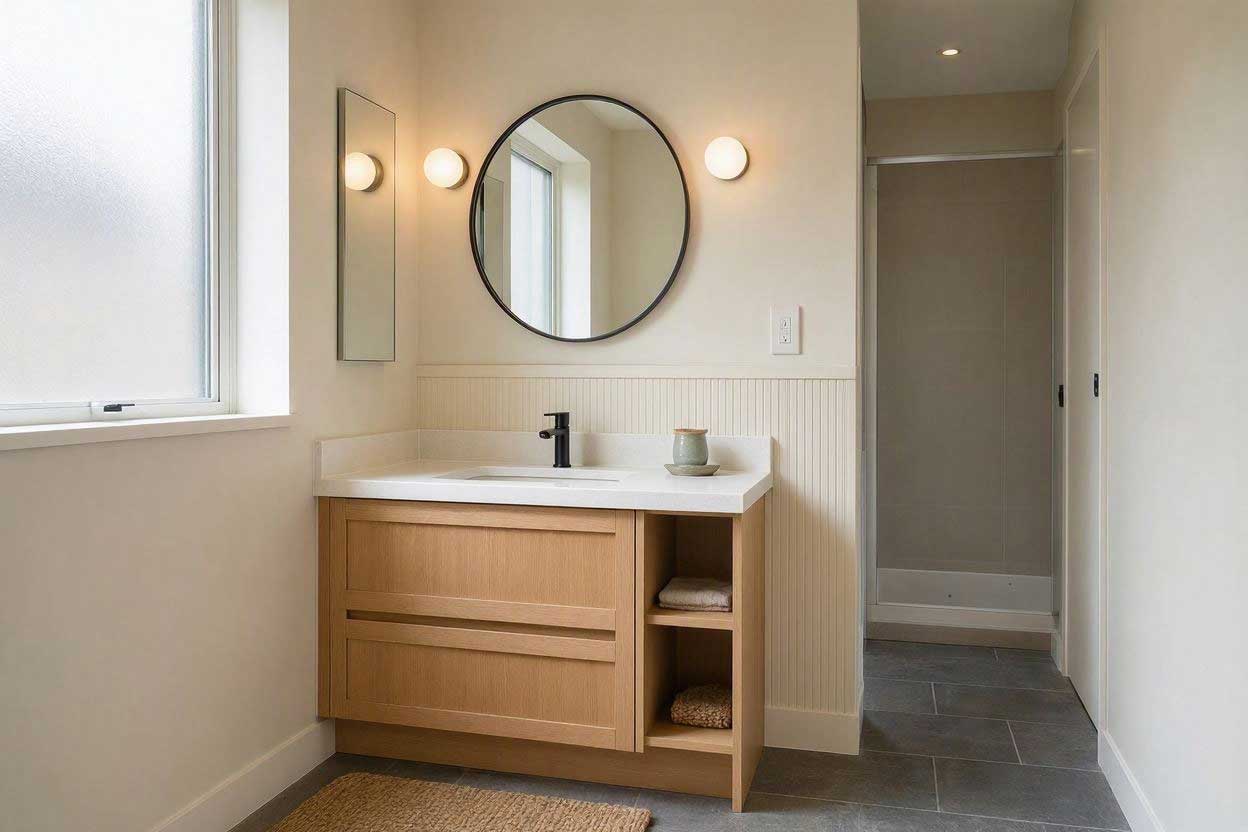
An unused corner can become valuable space in a small bathroom. A corner vanity can fit into an area that might otherwise be difficult to use, particularly when the room has an unusual layout.
Before choosing one, measure both walls carefully and check that the drawers or doors won’t interfere with nearby fixtures.
Best for: Bathrooms with awkward corners or unconventional layouts.
5. Add Vertical Storage Above the Vanity
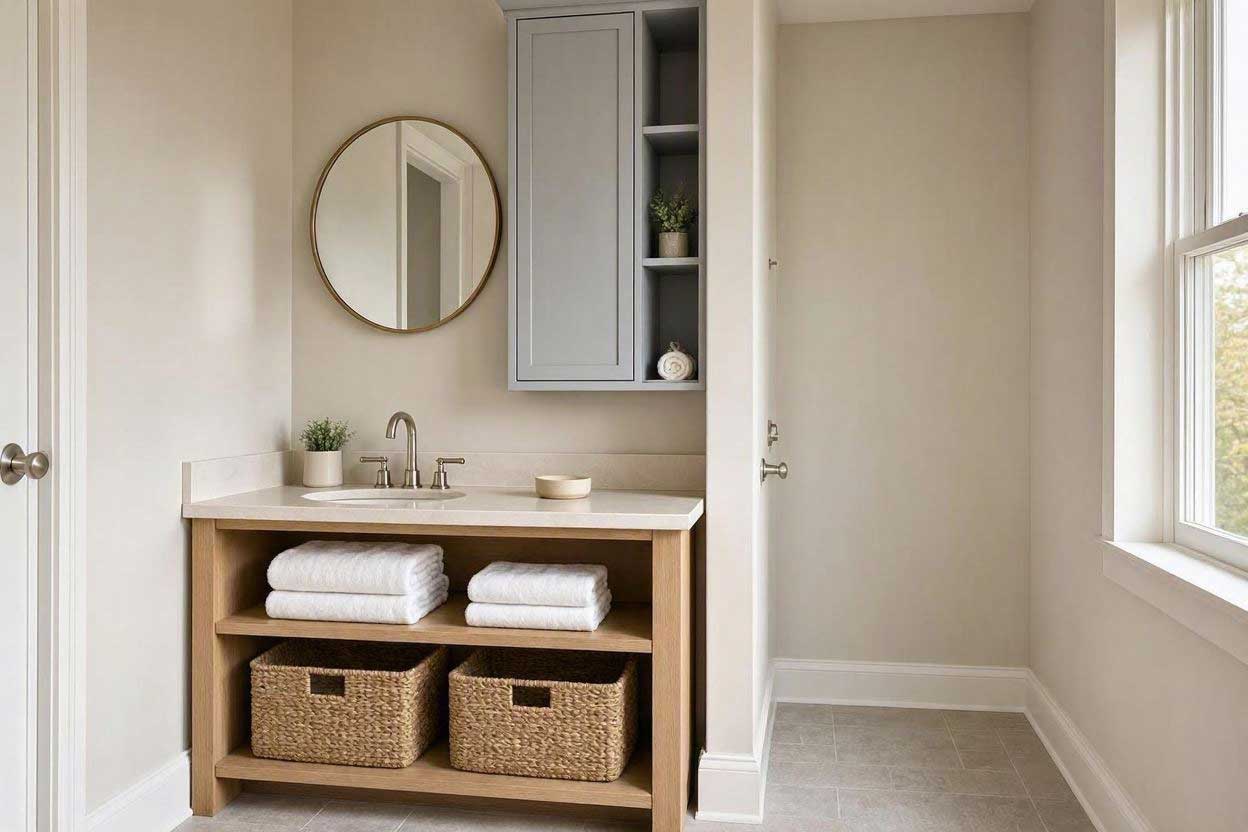
When floor space is limited, look up.
A medicine cabinet, wall-mounted shelves, or another vertical storage solution can give you more usable space without increasing the vanity’s footprint.
This approach is particularly useful when you need additional room for toiletries but don’t have space for a larger floor cabinet.
Best for: Narrow bathrooms that need more storage without adding floor furniture.
6. Consider an Open-Shelf Vanity
An open-shelf vanity can create a lighter look than a fully enclosed cabinet. Because you can see more of the floor underneath, the vanity may feel less visually heavy.
Baskets or neatly folded towels can provide practical storage, but keep in mind that everything underneath remains visible. This style works best if you’re comfortable keeping the storage area organized.
Open shelving can also work well for towels and other frequently used items. If you need more inspiration for organizing towels in a compact bathroom, explore our guide to small bathroom towel storage ideas.
Best for: Bathrooms where an airy appearance is more important than concealed storage.
7. Choose a Wall-Mounted Vanity with Drawers
If you like the look of a floating vanity but still need enclosed storage, consider a wall-mounted cabinet with drawers.
This combination keeps some floor visible while providing a convenient place for toiletries and personal items. Drawers can also make it easier to see and access smaller items than deep cabinet compartments.
Best for: Modern bathrooms that need both storage and a clean appearance.
8. Use a Mirrored Cabinet Above a Compact Vanity
A mirrored medicine cabinet can do double duty by providing both a reflective surface and additional storage.
This is particularly useful in a narrow bathroom because it adds storage without taking up floor space. A large mirror can also reflect light and make the room feel more spacious.
Best for: Small bathrooms where storage and visual openness are equally important.
9. Try a Console-Style Vanity
A console-style vanity offers a middle ground between a traditional cabinet and a pedestal sink.
Its slimmer structure can keep the bathroom feeling open while still providing a countertop and, depending on the design, a lower shelf for storage. It’s a useful option when a full cabinet feels too bulky but a pedestal sink doesn’t offer enough functionality.
Best for: Small bathrooms that need a lighter alternative to a full cabinet vanity.
10. Go Custom When the Layout Is Especially Tight
Sometimes a standard vanity simply doesn’t fit the room well.
If you have an unusually narrow wall, an awkward corner, or fixtures positioned in inconvenient places, a custom vanity can be designed around the space rather than forcing the space to accommodate standard dimensions.
Custom work can cost more, so it makes the most sense when a standard vanity would leave significant unused space or create clearance problems.
Best for: Challenging layouts where standard vanity dimensions don’t work well.
Which Vanity Is Best for Your Bathroom Layout?
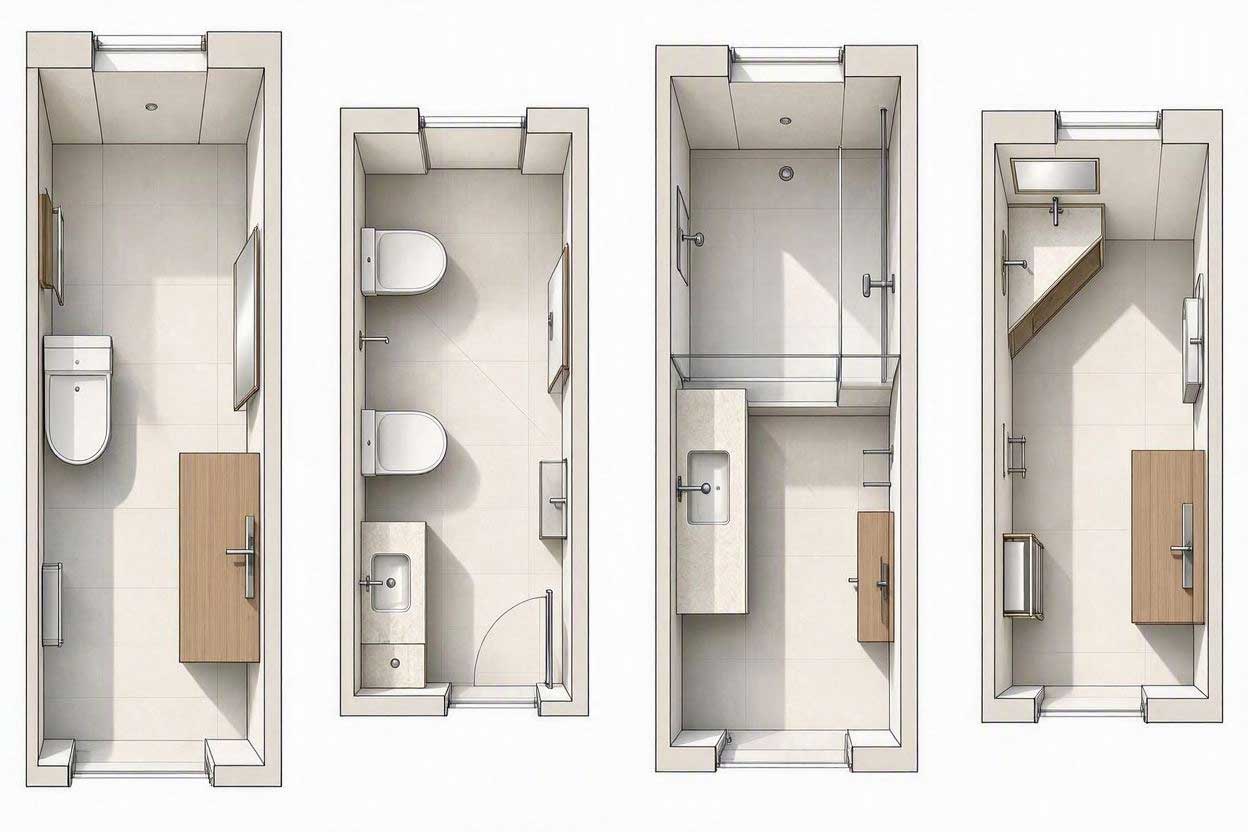
The best vanity depends on more than the size of the bathroom. The room’s layout can also determine which design makes the most sense.
- Long, narrow bathroom: A shallow-depth or floating vanity can help preserve the walkway.
- Tiny powder room: A compact wall-mounted or console-style vanity can provide function without overwhelming the room.
- Vanity near the shower: Choose a shallow design and pay close attention to clearance.
- Awkward layout: A corner or custom vanity may make better use of otherwise wasted space.
The goal is to choose a vanity that works with the room rather than against it.
How to Make a Narrow Bathroom Feel More Spacious
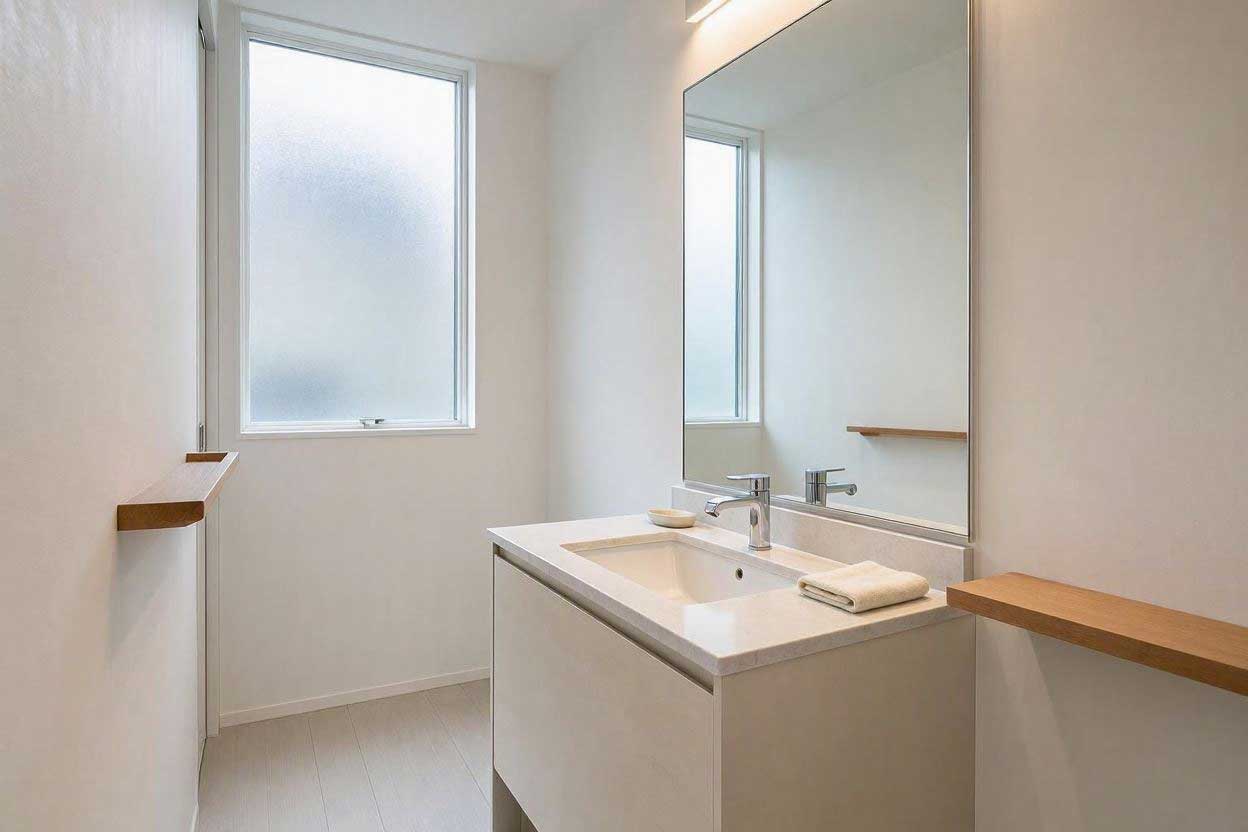
Choosing the right vanity is only part of the equation. A few visual decisions can make the entire bathroom feel lighter and less crowded.
1. Use a Light, Simple Finish
White, soft gray, light wood, and other muted finishes can blend more easily with surrounding walls and flooring. This creates a more seamless appearance and reduces the visual weight of the vanity.
That doesn’t mean dark vanities are off-limits. They can work beautifully when balanced with good lighting and a simple surrounding design.
2. Add a Large Mirror
A generously sized mirror above the vanity can reflect light and visually extend the space. A frameless or slim-framed design can also help maintain a clean, uncluttered appearance.
If you need additional storage, a mirrored medicine cabinet can provide both functions without adding another piece of furniture to the floor.
3. Keep the Countertop Clutter-Free
Even a beautiful vanity can make a narrow bathroom feel crowded when the countertop is covered with everyday products.
Keep frequently used items organized inside drawers, cabinets, or baskets whenever possible. A clear countertop can make a noticeable difference without requiring a remodel.
For more ideas, see our guide to ways to make a small bathroom feel bigger.
4. Make Use of Vertical Space
When floor space is limited, use the walls. A narrow shelf, medicine cabinet, or other vertical storage solution can provide useful space without making the vanity larger.
Just avoid filling every available wall with shelves and decorations. A few purposeful pieces usually create a cleaner result.
If your bathroom doesn’t have built-in cabinets, you can also explore these bathroom storage ideas without cabinets for practical ways to keep everyday essentials organized.
Common Vanity Mistakes to Avoid
A vanity can look perfect on paper and still make the bathroom uncomfortable once it’s installed. Keep these common mistakes in mind before making your choice.
1. Choosing a Vanity That Is Too Deep
Don’t focus only on width. A cabinet that projects too far into the room can reduce the walking space and make the sink area feel cramped.
Measure the distance between the vanity and nearby walls or fixtures, including the countertop overhang.
2. Ignoring Door and Drawer Clearance
Make sure cabinet doors and drawers can open fully without hitting the toilet, shower enclosure, or bathroom door.
One practical approach is to mark the vanity dimensions on the floor with painter’s tape and test the opening paths before installation.
3. Adding Too Much Visual Bulk
A vanity can technically fit while still making the room feel crowded. Oversized hardware, thick countertops, dark finishes, and solid cabinet bases can all add visual weight.
If the bathroom already feels tight, clean lines and a lighter visual profile may work better.
4. Sacrificing Storage Completely
Choosing the smallest possible vanity isn’t always the answer. Without enough storage, toiletries can quickly take over the countertop.
Look for efficient storage through drawers, medicine cabinets, shelves, or other vertical solutions instead of eliminating storage altogether.
5. Choosing Style Over Function
A beautiful vanity is only useful if it works for your daily routine.
Consider whether you have enough counter space, whether the storage suits your needs, whether everyone can move comfortably through the room, and whether the materials can handle everyday bathroom use.
The best vanity isn’t necessarily the trendiest one. It’s the one that makes your bathroom easier and more comfortable to use.
Frequently Asked Questions
What is the best vanity depth for a narrow bathroom?
A shallow-depth vanity is often a practical choice because it takes up less floor space while still providing a functional sink and storage. The ideal depth depends on the bathroom’s layout, so measure the available clearance before choosing one.
What type of vanity makes a small bathroom look bigger?
Floating vanities can make a bathroom feel more open because they leave some of the floor visible underneath. Light finishes, clean lines, and a large mirror can also reduce visual heaviness.
Can you put a vanity in a very narrow bathroom?
Yes. Shallow-depth, wall-mounted, corner, and compact single-sink vanities can all work in tight layouts. The important thing is making sure the vanity doesn’t interfere with doors, drawers, the shower, or other fixtures.
Is a floating vanity better for a small bathroom?
A floating vanity can be an excellent option when you want to preserve visible floor space and create a lighter appearance. However, a floor-mounted vanity may be more practical if storage capacity or installation requirements are your main concerns.
What is better for a small bathroom: a vanity or pedestal sink?
It depends on your priorities. A pedestal sink takes up very little space, while a compact vanity provides valuable storage. For many small bathrooms, a slim vanity offers a useful balance between functionality and space efficiency.
Final Thoughts
A narrow bathroom doesn’t mean you have to choose between style, storage, and comfort.
Start with the room’s dimensions, consider how you move through the space, and decide how much storage you actually need. From shallow-depth and floating vanities to compact single-sink, corner, console, or custom designs, there are plenty of ways to make a narrow bathroom work harder without making it feel more crowded.
When every inch matters, thoughtful planning matters even more.

Royan Abdillah is a home improvement enthusiast and interior design consultant with over 9 years of experience in the industry. Passionate about blending aesthetics with functionality, Royan Abdillah specializes in unique DIY furniture and pet-friendly home solutions. Through this blog, Royan Abdillah aims to help homeowners create beautiful, personalized spaces on a budget.