
A small shower can feel crowded long before it actually runs out of space. Too many grout lines, strong patterns, or abrupt material changes can make the walls feel busier, while the wrong floor tile can create practical problems that have nothing to do with appearance.
The challenge is choosing tile that works visually and functionally at the same time. A finish that looks perfect on a sample board may feel very different once it covers an entire shower wall, surrounds a niche, or meets the floor and drain.
That is why the best shower tile ideas for small bathrooms are not simply the most decorative ones. They use scale, pattern, grout, and material transitions carefully to support the way the shower looks, feels, and performs.
In this guide, you’ll find seven practical tile ideas, along with the trade-offs and planning details to consider before choosing a final combination.
What Shower Tile Works Best in a Small Bathroom?
There is no single tile size, color, or pattern that works best for every small shower. The right choice depends on where the tile will be installed, how the shower is used, and the visual effect you want to create.
Larger wall tiles can reduce the number of grout lines and create a calmer surface, while smaller formats may be better suited to some shower floors because they can follow slope and drainage changes more easily. Consistent materials can also help the shower feel more connected to the rest of the bathroom, but appearance should not come before wet-area suitability.
The best approach is to choose tile according to its function first, then consider scale, grout, pattern, and color. A tile that looks attractive on the wall may not be appropriate for the floor, and a visually simple design still needs to work with drainage, maintenance, and everyday use.
Check These Details Before Choosing Shower Tile
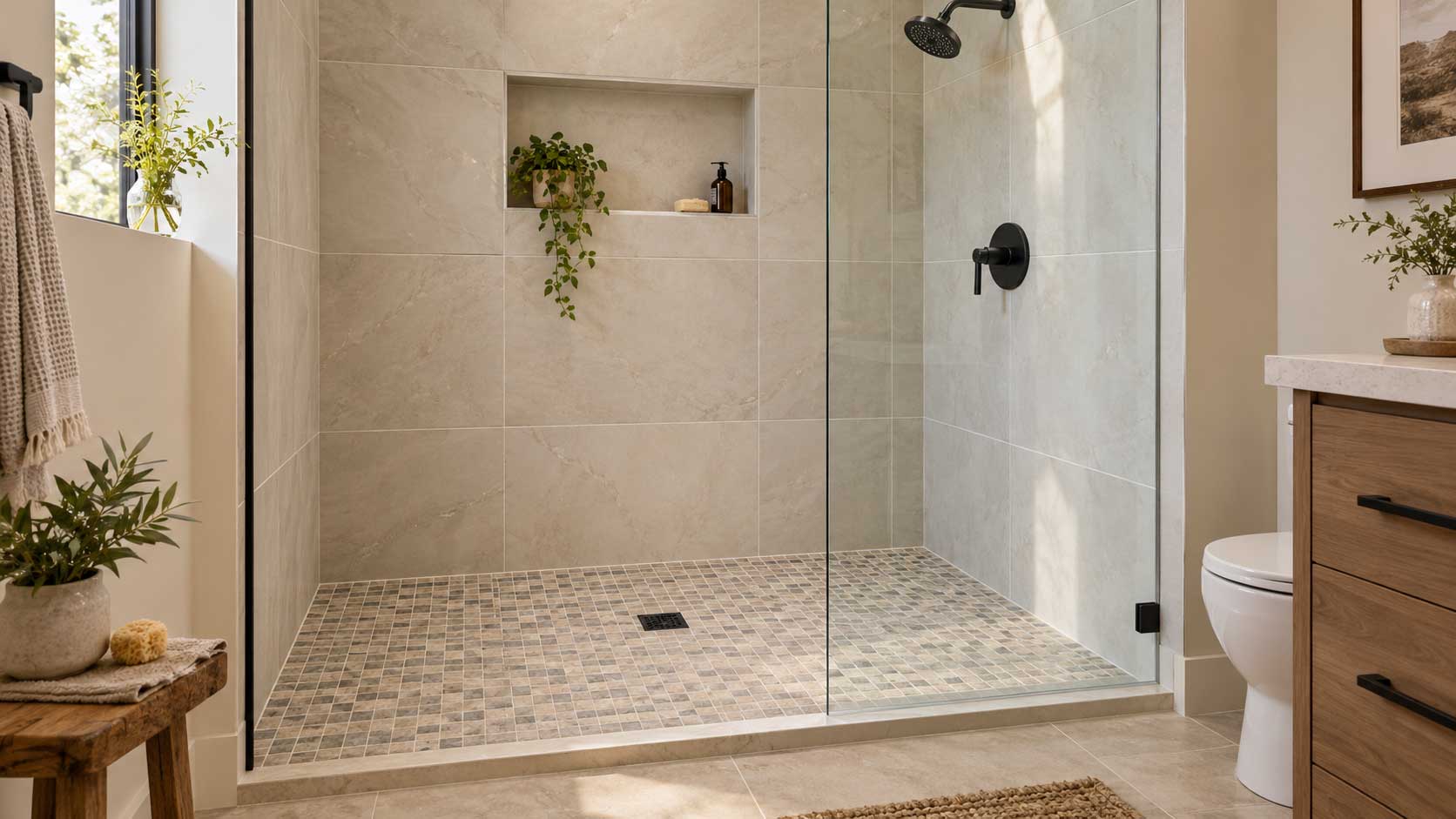
Shower tile needs to do more than look good in a small space. Before choosing a color, pattern, or size, check how the tile will be used and how it will interact with water, grout, lighting, and the surrounding bathroom.
Separate Wall Tile from Floor Tile Requirements
A tile that works well on a shower wall may not be the right choice for the floor. Shower floors need to work with drainage and slope while also providing suitable performance in a wet area.
Wall tile gives you more freedom to focus on scale, color, and pattern, but floor tile should be evaluated more carefully for surface finish, installation requirements, and wet-use suitability.
Consider Grout as Part of the Design
Grout affects more than maintenance. The number, width, and color of grout lines can change how busy or calm the shower looks.
A low-contrast grout can help the surface feel more continuous, while a contrasting grout emphasizes the shape and pattern of each tile. More joints also mean more areas that need regular cleaning and care.
Check Samples in the Actual Bathroom
A tile sample can look very different once it covers an entire wall. Before making a final decision, view the sample in the bathroom itself and compare it under both natural and artificial light.
Also consider how it looks next to the vanity, floor, glass, and other finishes. This can reveal whether the tile feels balanced in the room or becomes too dominant once repeated across a larger surface.
Compare These 7 Shower Tile Ideas for Small Bathrooms
Each tile approach changes the shower in a different way. Some focus on visual continuity, others on pattern, maintenance, or how the floor works with drainage. Use this comparison as a starting point rather than treating any option as universally best.
Tile idea Useful starting point Main trade-off Larger wall tiles You want fewer visual breaks on shower walls Tile cuts and layout still need planning Continuous tile into the shower You want the shower to feel connected to the rest of the bathroom Wall and floor suitability may differ Vertical tile patterns You want to emphasize height Strong patterns can feel busy in a small space One feature wall You want contrast without covering every surface in bold tile The feature can dominate if overused Smaller shower-floor tiles The floor needs to work around slope and drainage More grout joints to maintain Coordinated grout color You want to control how strongly the tile pattern reads Maintenance and compatibility still matter Light-reflective wall finishes You want the shower to respond better to available light Water marks and glare may become more noticeable
The key is to match the tile strategy to the surface and the way the shower will be used. A visually quiet wall treatment may work well alongside a more detailed floor, while a bold feature wall may be enough to add interest without making the entire shower feel busy.
1. Use Larger Wall Tiles to Reduce Visual Breaks
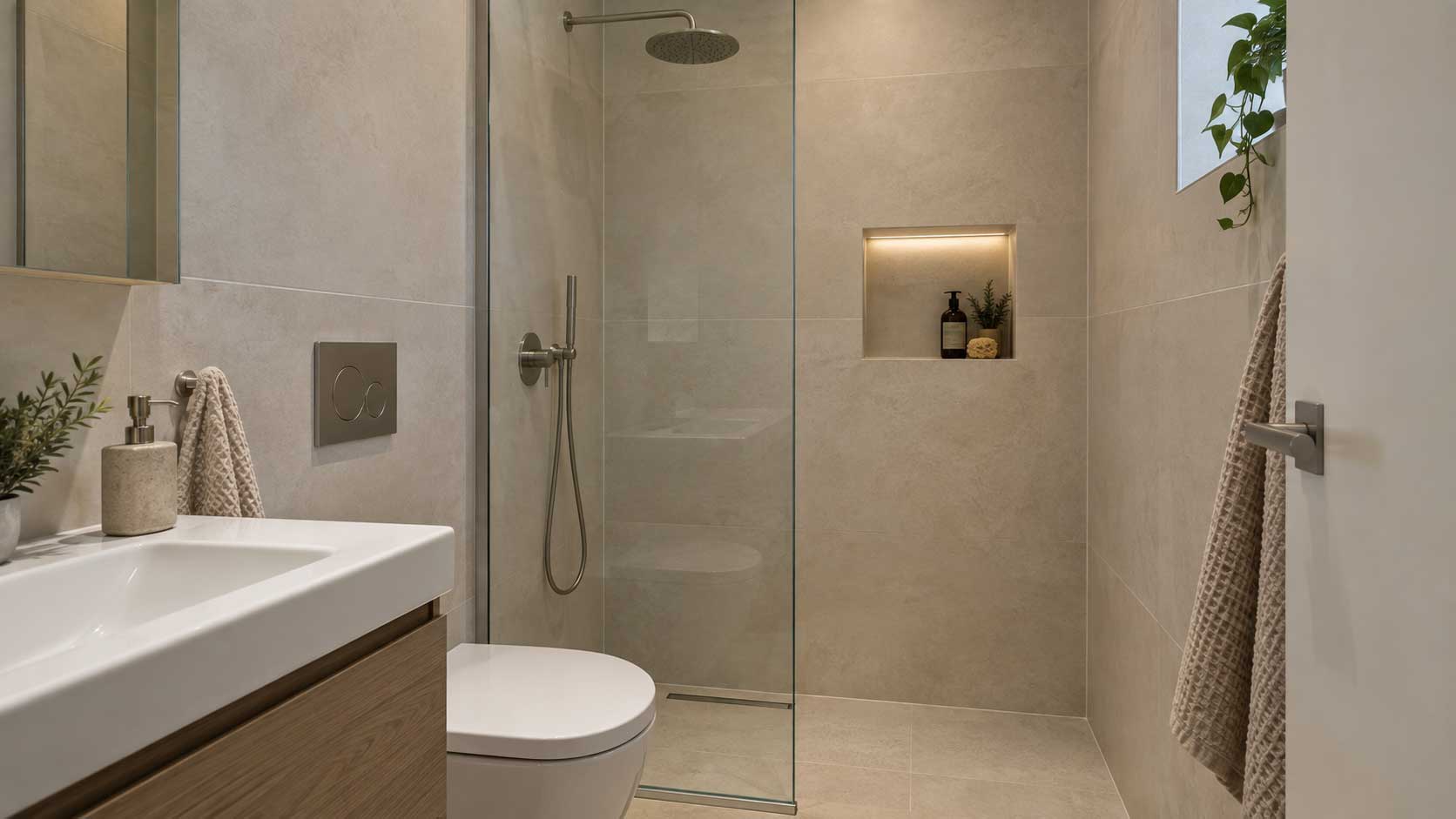
Larger wall tiles can give a small shower a calmer appearance by reducing the number of grout lines across the surface. With fewer visual divisions, the wall can feel more continuous and less busy, especially in showers where several fixtures and finishes are already competing for attention.
This approach works best when the tile size suits the actual wall dimensions. A large-format tile may look simple in theory, but awkward cuts around niches, corners, valves, or glass panels can weaken the effect if the layout is not planned carefully.
The benefit is mainly visual rather than physical. Larger tiles do not create more space, but they can reduce surface clutter and help the shower feel more composed.
The trade-off: larger wall tiles can simplify the appearance of a small shower, but the final result depends on thoughtful tile placement, clean cuts, and a layout that works with the wall rather than against it.
2. Continue the Same Tile into the Shower
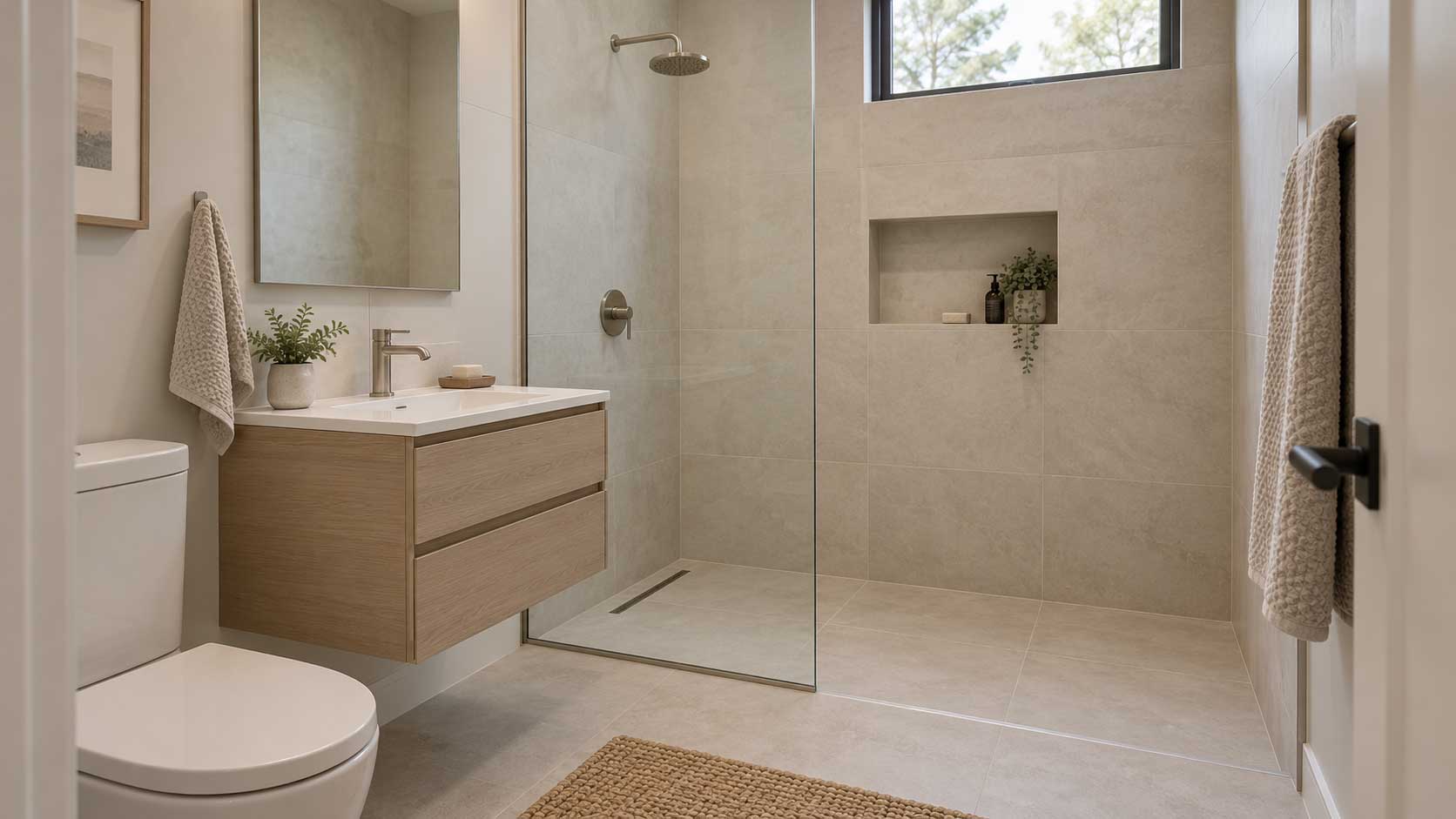
Using the same or closely coordinated tile from the main bathroom into the shower can create a stronger sense of continuity. When material changes are kept to a minimum, the shower is less likely to feel like a separate enclosed zone.
This approach can work especially well in small bathrooms where several finishes would otherwise compete for attention. Continuing a wall tile into the shower, or using a related floor material, can help the room feel more visually connected.
However, continuity should not override practical requirements. A tile that suits the bathroom floor or wall may not automatically be appropriate inside the shower, particularly where drainage, slope, traction, and wet-area performance are involved.
For more planning ideas around open shower layouts, see our guide to walk-in shower ideas for small bathrooms.
The trade-off: continuous materials can simplify the visual flow, but each surface still needs a tile that is suitable for its specific use.
3. Run Rectangular Tiles Vertically
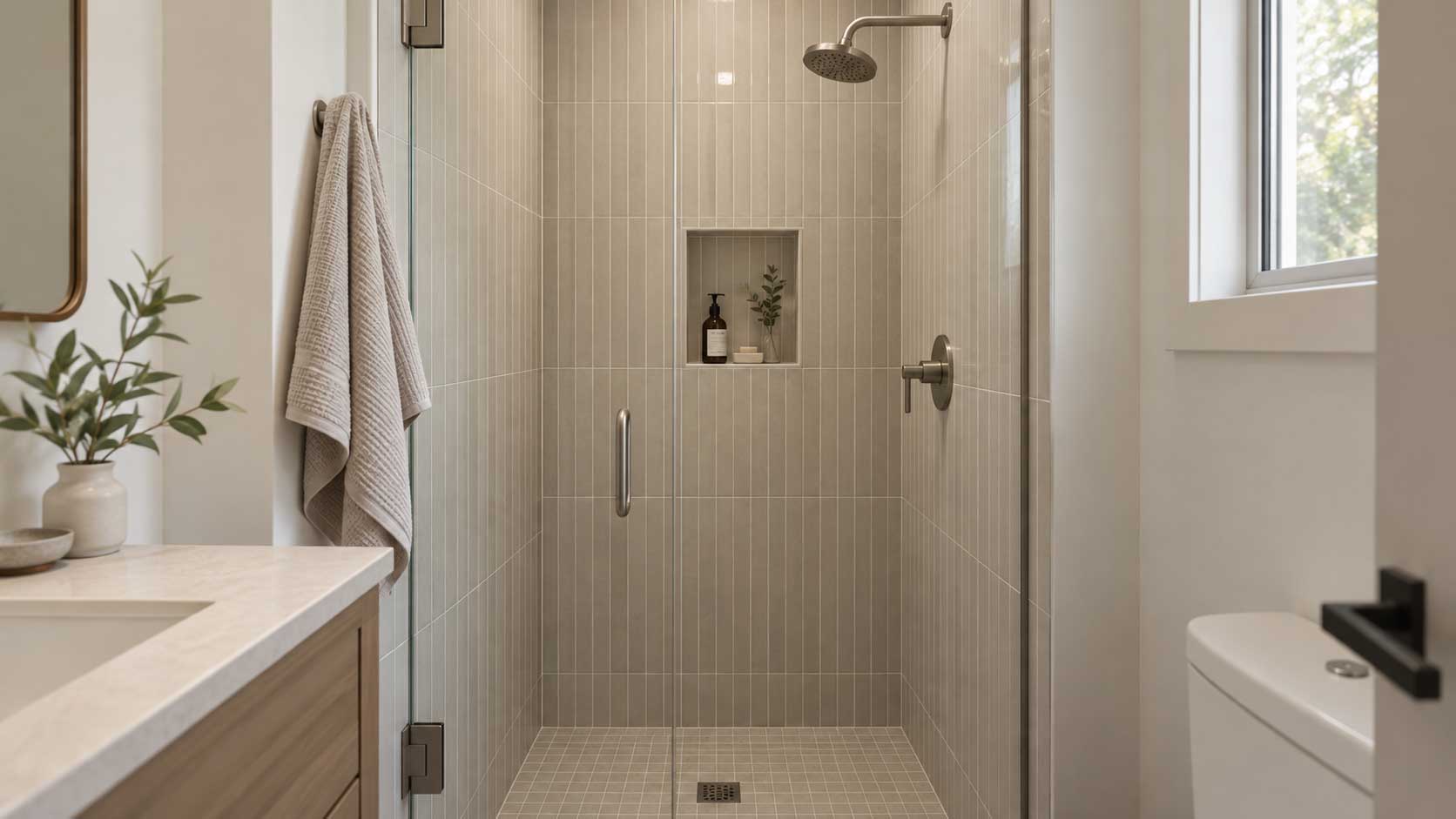
Installing rectangular tiles in a vertical pattern can draw the eye upward and emphasize the height of a small shower. This can be useful when the space feels visually compressed or when you want the wall treatment to create a stronger sense of direction.
The effect works best when the pattern remains controlled. Slim rectangular tiles, subway-style formats, or stacked layouts can create a clean vertical rhythm without adding too many competing details.
However, vertical placement is not a guaranteed way to make the shower feel larger. Strong grout contrast, very small tile formats, or multiple patterns used together can make the wall feel busier instead of more open.
The trade-off: a vertical tile pattern can add height and movement to a small shower, but it works best when the overall design stays simple enough for the pattern to read clearly.
4. Create One Feature Wall Instead of Tiling Every Surface Boldly
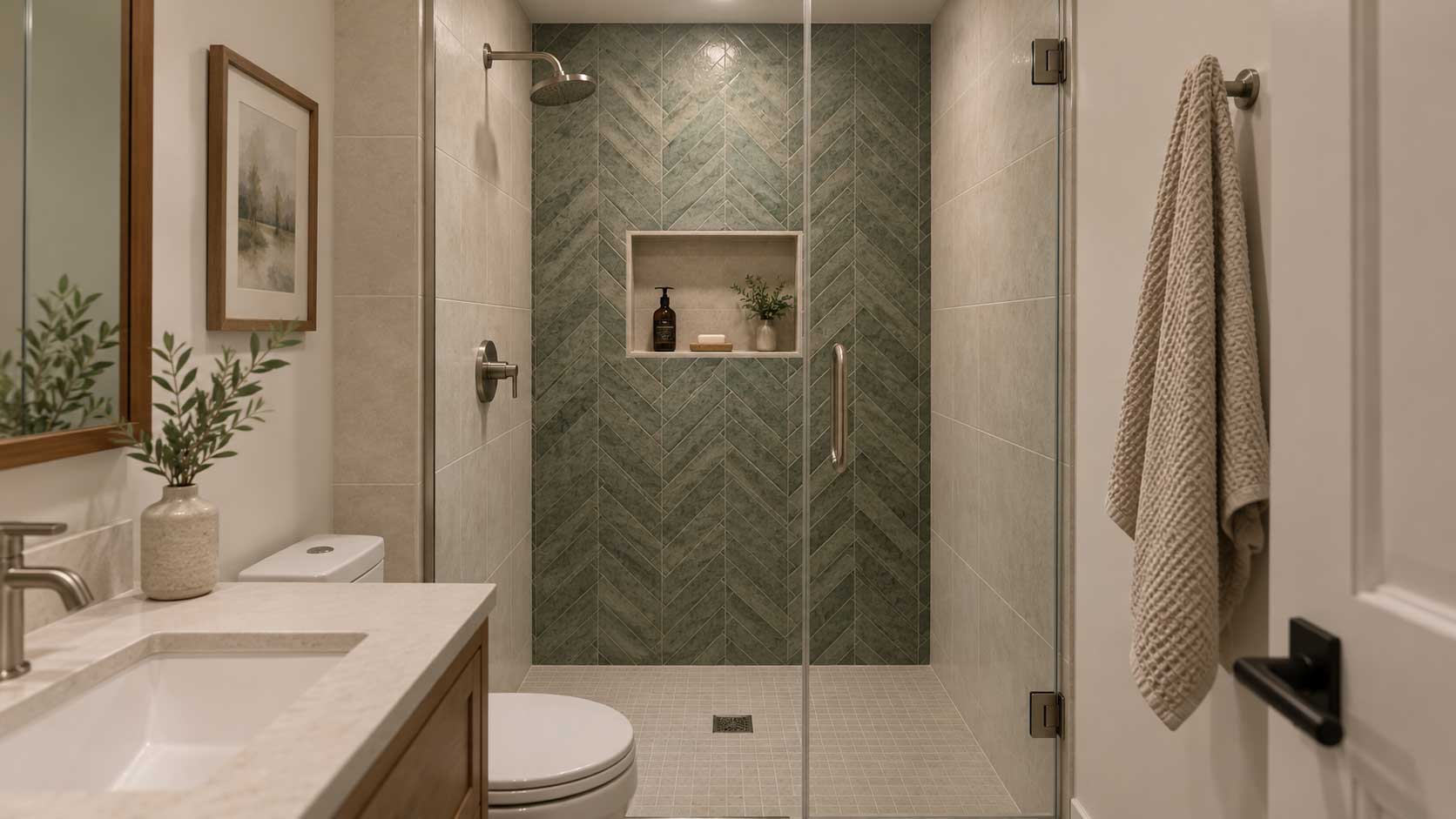
A single feature wall can add personality to a small shower without overwhelming the entire space. Instead of using a strong pattern, color, or texture on every surface, concentrate it on one wall and keep the surrounding tile more restrained.
The back wall of the shower, the wall behind the fixtures, or the area around a recessed niche can all work as focal points. This approach helps direct attention while allowing the rest of the shower to remain visually calm.
The key is balance. A bold feature wall should relate to the surrounding floor, grout, vanity, and other finishes rather than feeling like a separate decorative element.
The trade-off: a feature wall can create interest with less visual clutter, but if the contrast is too strong or repeated elsewhere, a small shower can quickly start to feel busy.
5. Use Smaller Tiles Where the Shower Floor Needs Flexibility
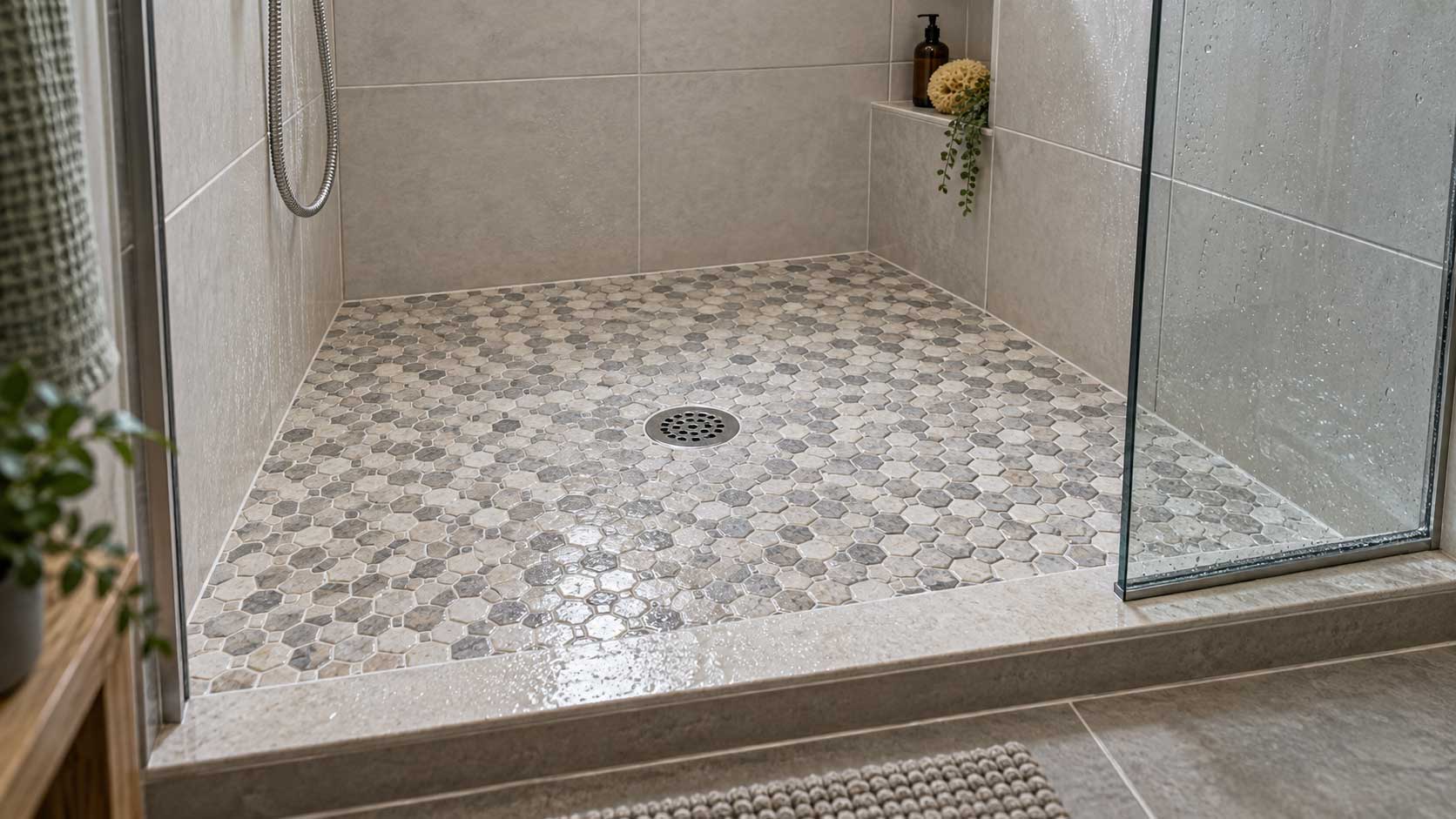
Smaller tiles can be useful on a shower floor because they are easier to work around changes in slope, drain placement, and other floor transitions. Their smaller format allows the surface to follow subtle changes in plane more naturally than some larger tiles.
This can be especially helpful in compact showers where the floor geometry needs to guide water toward the drain. The additional grout joints may also change how the surface feels underfoot, but the tile itself still needs to be suitable for wet-area use.
The main drawback is maintenance. More tile pieces usually mean more grout lines, which can require additional cleaning and care over time.
The trade-off: smaller shower-floor tiles can provide more flexibility around slope and drainage, but the extra grout joints make product selection, installation quality, and maintenance more important.
6. Coordinate Grout Color with the Tile
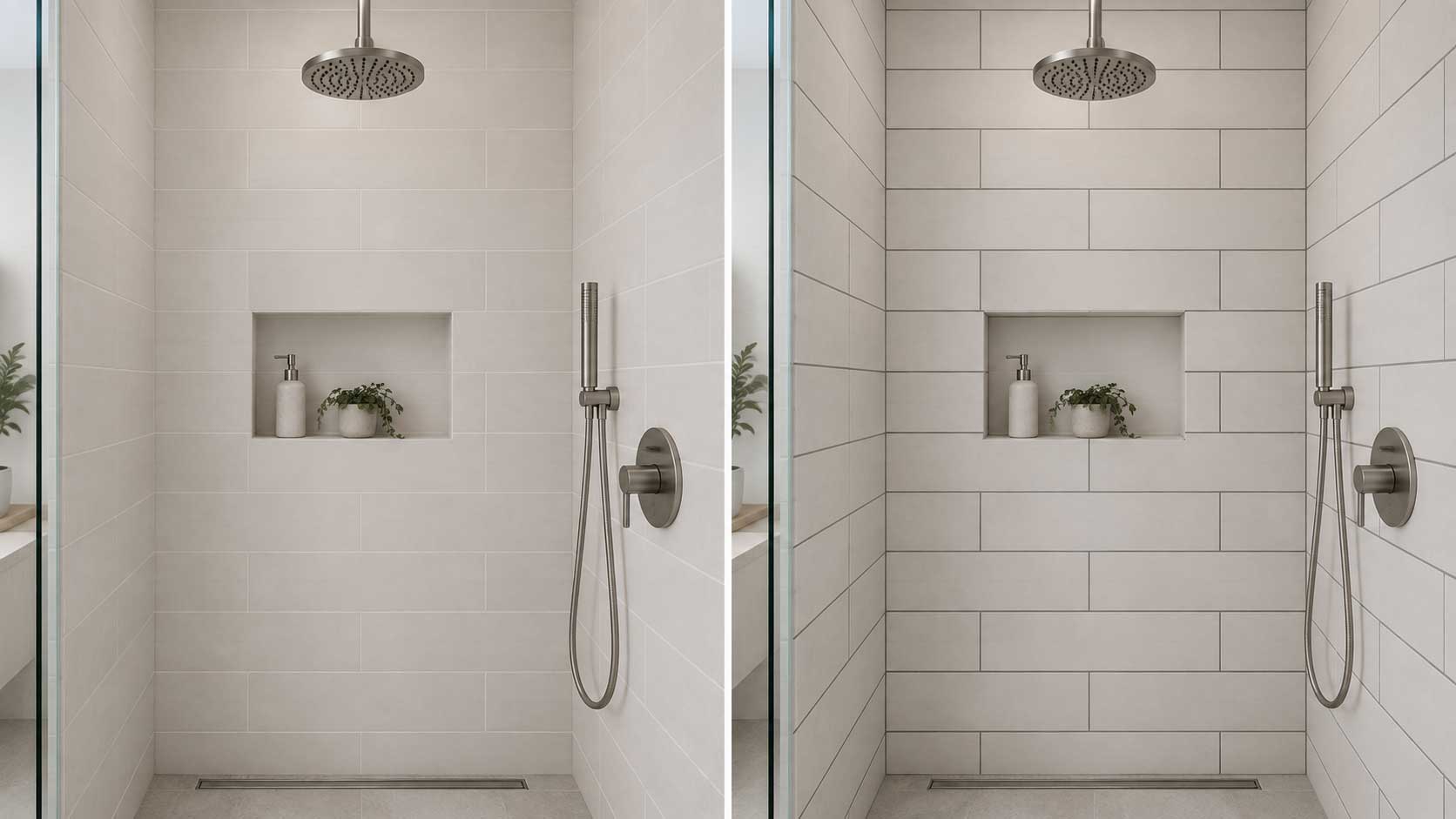
Grout color can change how strongly a tile pattern stands out in a small shower. A low-contrast grout tends to blend with the tile, creating a calmer surface and allowing the wall to read more continuously.
A contrasting grout does the opposite. It highlights the shape, direction, and layout of each tile, which can be useful when you want the pattern itself to become part of the design.
Neither approach is automatically better. The right choice depends on whether you want the tile pattern to recede or become more noticeable. In a small shower, strong contrast can add character, but too many visible lines may also make the surface feel busier.
Maintenance should be considered as well, since grout remains part of the wet-area finish and needs appropriate care over time.
The trade-off: coordinated grout can create a quieter, more unified look, while contrasting grout adds definition—but both choices affect how visually active the shower feels.
7. Use Light-Reflective Wall Finishes Carefully
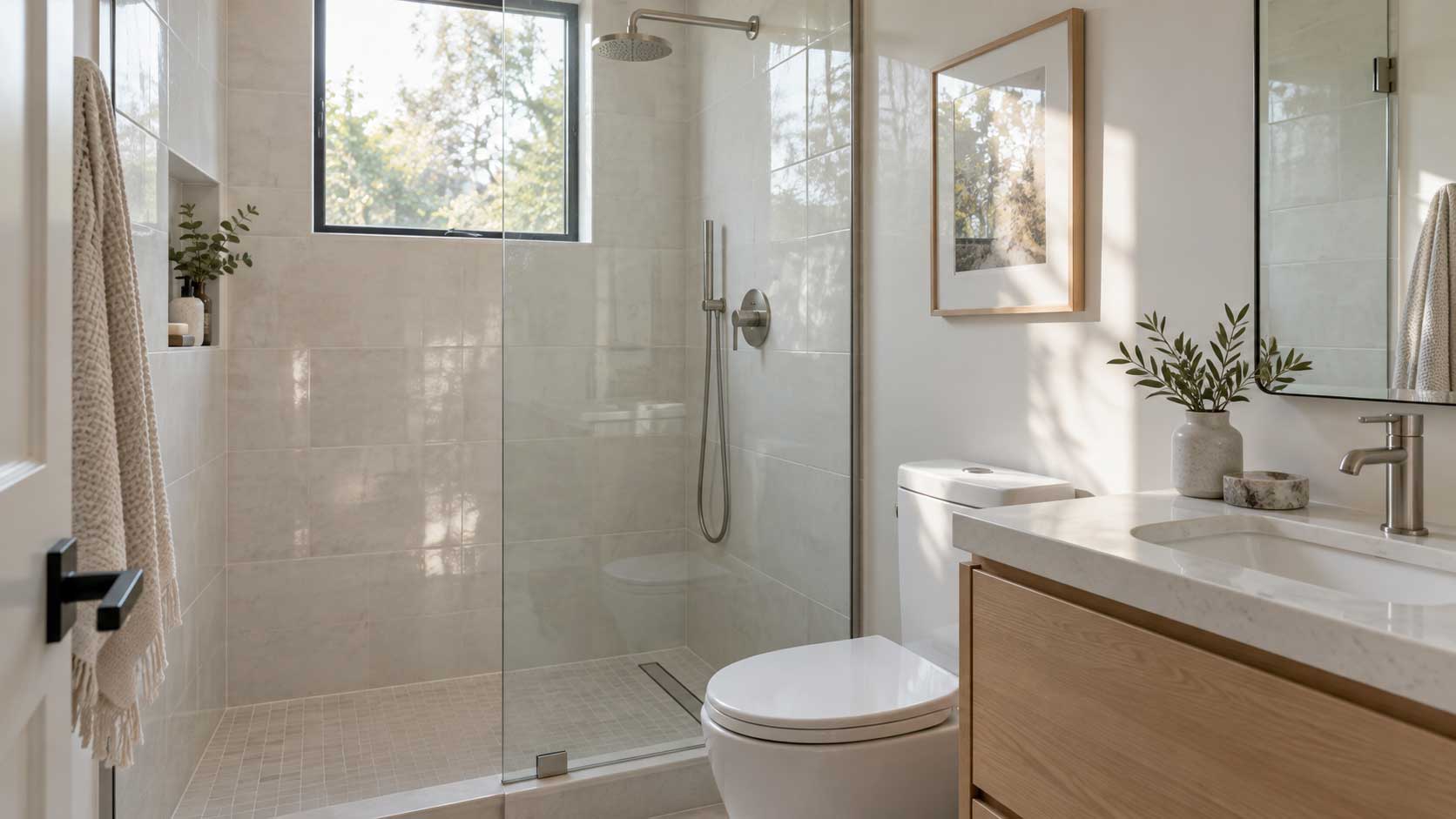
A light-reflective wall finish can help a small shower feel brighter by bouncing available light across the surface. Glossy, polished, or subtly reflective tiles can reduce visual heaviness and keep the shower from feeling too dark or enclosed.
This approach works best on walls, where reflection can contribute to the overall sense of openness without introducing unnecessary concerns about footing. It can be especially effective when the shower has limited natural light or relies on a compact lighting scheme.
However, highly reflective finishes can also make water spots, streaks, and glare more noticeable. The effect should support the rest of the bathroom rather than becoming the dominant feature.
For more visual strategies, see our guide on how to make a small bathroom feel larger.
The trade-off: reflective wall finishes can brighten a small shower and improve visual continuity, but they may require more frequent cleaning and careful lighting to avoid glare.
Common Shower Tile Mistakes to Avoid
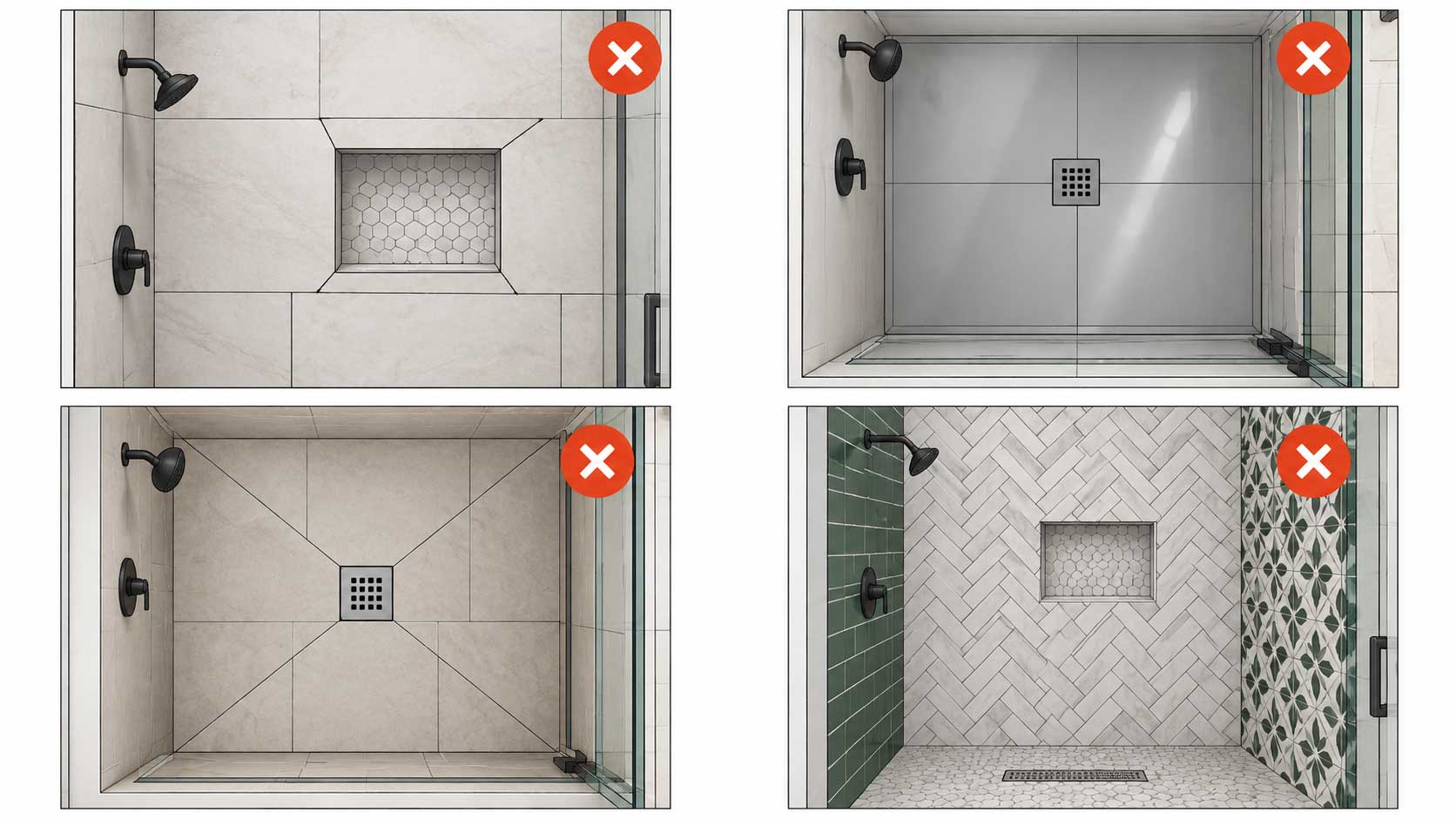
A tile combination can look impressive in a showroom and still feel wrong once it covers a small shower. Before making a final choice, check for these common mistakes.
Choosing Tile from a Small Sample Only
A small sample does not always show how a color, pattern, or finish will behave across an entire wall. View larger samples where possible and check them in the actual bathroom lighting before committing.
Assuming Wall and Floor Tiles Are Interchangeable
A tile that works beautifully on a shower wall may not be suitable for the floor. Wet-area performance, surface finish, slope, drainage, and installation requirements should guide the choice.
Ignoring the Drain and Floor Slope
The shower floor is not simply a flat decorative surface. Tile size and layout need to work with the drain position and the way the floor directs water.
Using Too Many Competing Patterns
Strong patterns, contrasting grout, bold flooring, and feature walls can quickly compete in a compact shower. Choose one or two focal elements and let the remaining surfaces support them.
Treating Grout as an Afterthought
Grout influences both appearance and maintenance. Its color, number of joints, and compatibility with the tile should be considered before installation rather than after the tile layout is already fixed.
Frequently Asked Questions
What Size Tile Is Best for a Small Shower?
There is no single tile size that works best for every small shower. Larger tiles can create a calmer look on walls by reducing visible grout lines, while smaller formats may offer more flexibility on shower floors where slope and drainage need to be accommodated.
The better choice depends on the surface, room proportions, tile layout, and product suitability rather than size alone.
Can You Use Large Tiles in a Small Shower?
Yes. Large-format tiles can work well in a small shower, particularly on the walls, where fewer grout lines may create a more continuous appearance.
However, the wall dimensions, niches, fixtures, corners, and required cuts should be considered before selecting an oversized format. Shower floors may have different installation needs because of drainage and slope.
Should Shower Floor and Wall Tiles Match?
They can match, but they do not have to. Using related colors or materials can create visual continuity, while different wall and floor tiles can add contrast and allow each surface to meet its own practical requirements.
The most important consideration is that each tile is suitable for where it will be installed.
Do Light Tiles Make a Small Shower Look Bigger?
Light-colored tiles can help a shower feel brighter and less visually heavy, particularly when they work with good lighting and limited visual clutter.
They do not increase the physical size of the shower, however. Tile color works best as part of a layout that already provides comfortable movement and practical fixture placement.
Is Glossy Tile Suitable for a Shower?
Glossy tile can be suitable for some shower walls, where its reflective surface may help distribute light. Shower floors require more careful consideration because wet-area performance and footing are more important than reflection.
Always check the manufacturer’s intended application and installation guidance for the specific tile you are considering.
Choose Tile for the Shower You Actually Use
The best shower tile is not simply the one that looks impressive in a showroom or photograph. It is the one that works with the surface, lighting, drainage, maintenance needs, and daily use of your bathroom.
Before making a final choice, compare a few tile combinations in the actual space and consider how the wall tile, floor tile, grout, fixtures, and surrounding finishes work together. Check that each product is suitable for its intended location and review the installation requirements before committing. A well-planned tile scheme should support both the appearance of a small shower and the way it performs over time.

Royan Abdillah is a home improvement enthusiast and interior design consultant with over 9 years of experience in the industry. Passionate about blending aesthetics with functionality, Royan Abdillah specializes in unique DIY furniture and pet-friendly home solutions. Through this blog, Royan Abdillah aims to help homeowners create beautiful, personalized spaces on a budget.