
A small bathroom doesn’t have to feel boxed in. Sometimes, the problem isn’t how much space you have—it’s how many visual and physical barriers you put inside it.
A traditional shower door can take up valuable clearance, interrupt the sightline across the room, and make an already compact bathroom feel even more enclosed. That’s one reason doorless showers have become an appealing option for small bathrooms. By removing the swinging or sliding door, you can create a more open transition between the shower and the rest of the space.
But there’s a catch: simply removing the shower door doesn’t automatically make a small bathroom work better. The shower’s position, opening size, drainage, splash control, and privacy all need to be considered before choosing a doorless design.
With the right layout and a few thoughtful design choices, a doorless shower can feel open, practical, and visually connected to the rest of the room.
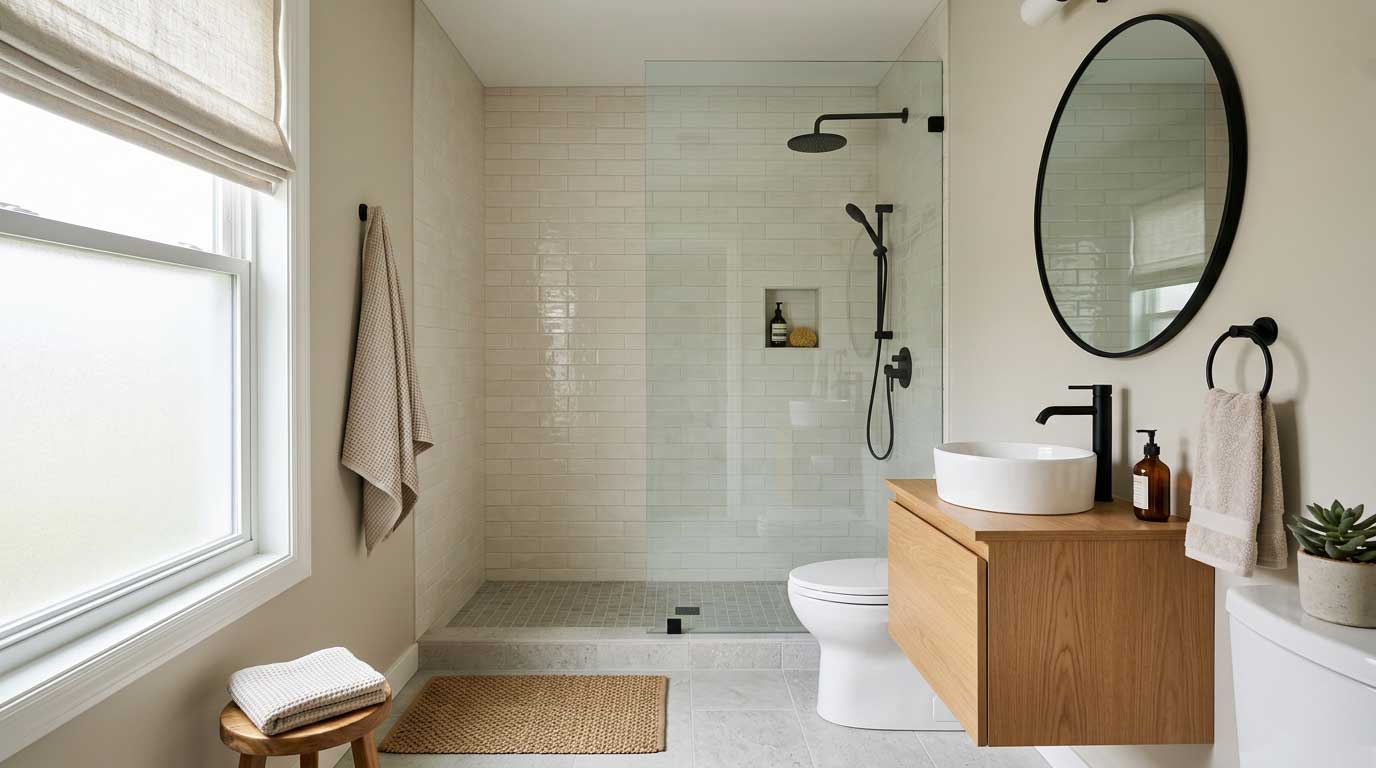
In this guide, we’ll explore 10 doorless shower ideas for small bathrooms, along with practical tips to help you decide whether this approach is right for your space.
What Is a Doorless Shower?
A doorless shower is a shower area designed without a conventional hinged or sliding shower door. Instead of closing the shower behind a movable enclosure, the space remains open on at least one side, allowing you to walk directly into the shower area.
That doesn’t necessarily mean the shower has to be completely exposed. A doorless design can still use a fixed glass panel, half wall, or partial partition to help control splashing while maintaining a more open visual connection with the rest of the bathroom.
For a small bathroom, that distinction matters. A well-planned doorless shower can reduce visual barriers and eliminate the clearance needed for a swinging shower door. But the design still needs to account for the shower opening, water direction, drainage, privacy, and available floor space.
In other words, a doorless shower isn’t simply a matter of removing the door. The entire shower area needs to work as part of the bathroom’s overall layout.
Is a Doorless Shower Good for a Small Bathroom?
A doorless shower can be an excellent choice for a small bathroom, but it isn’t automatically the best solution for every space. Its success depends largely on the bathroom’s layout, shower position, drainage, and ability to contain water.
Potential Benefits
One of the biggest advantages is the more open visual flow. Without a shower door interrupting the room, your eyes can travel farther across the bathroom, which may help the space feel less enclosed.
It also eliminates the need to account for a swinging door or maneuver around a sliding door. A minimalist combination of clear glass, continuous flooring, and simple finishes can further strengthen that open feeling.
Potential Drawbacks
The main challenge is water control. Because there is no door to contain the spray, the shower needs the right configuration to keep water from reaching areas where it shouldn’t.
Privacy can also be more limited, particularly with a completely open design. And if the shower is poorly positioned or lacks adequate drainage, removing the door may create more problems than it solves.
The goal, therefore, isn’t simply to remove the shower door. It’s to design the shower around the limited space you have.
10 Doorless Shower Ideas for Small Bathrooms
A doorless shower can take many forms. The best option depends on the shape of your bathroom, the location of existing plumbing, and how much space is available around the shower.
These ideas focus on practical ways to maintain an open feel without sacrificing everyday function.
1. Open Corner Doorless Shower
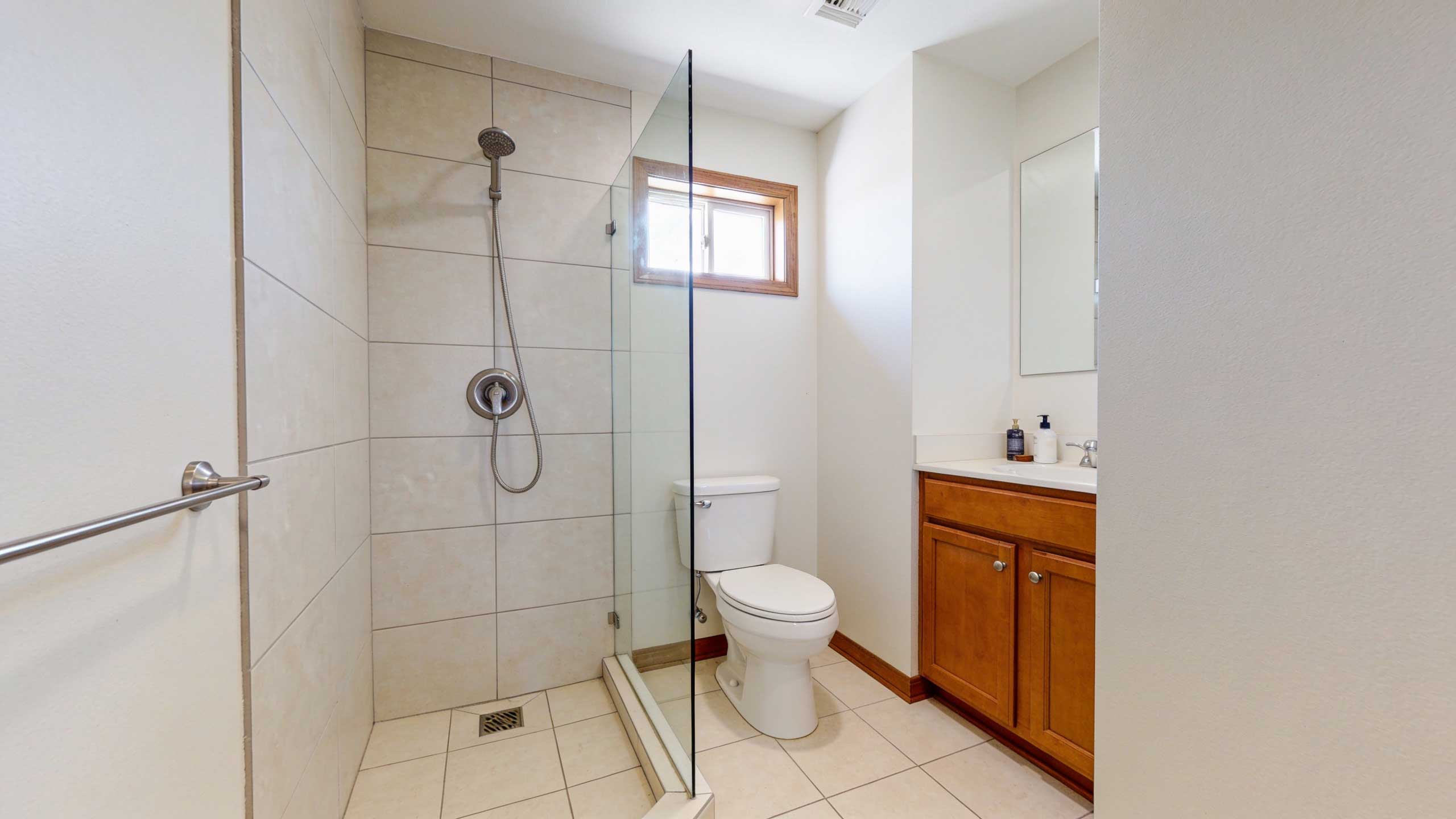
An open corner shower can make excellent use of an otherwise underutilized part of a small bathroom. Positioning the shower in a corner leaves more of the room available for circulation while creating a natural boundary between the wet and dry areas.
Direct the showerhead toward the back wall rather than the opening whenever possible. A fixed glass panel can provide additional splash protection without making the corner feel enclosed.
2. Doorless Shower With a Fixed Glass Panel
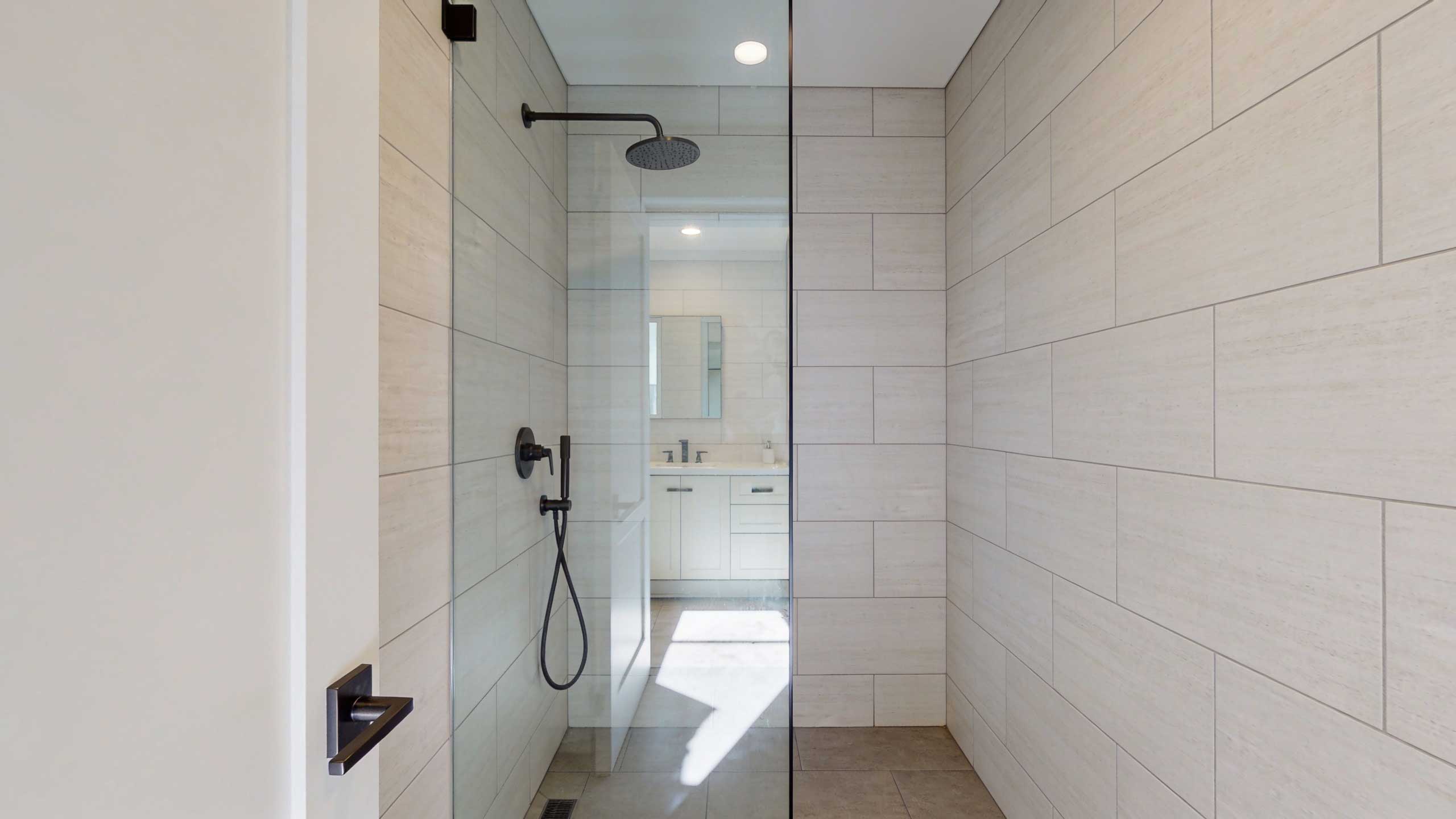
A fixed glass panel offers a practical middle ground between a completely open shower and a fully enclosed enclosure. It can help contain water while preserving the visual openness that makes doorless designs appealing.
Clear glass is particularly useful in a small bathroom because it doesn’t create a solid visual barrier. Keep the panel simple and avoid unnecessary framing to maintain a clean sightline across the room.
3. Doorless Shower With a Half-Height Privacy Wall
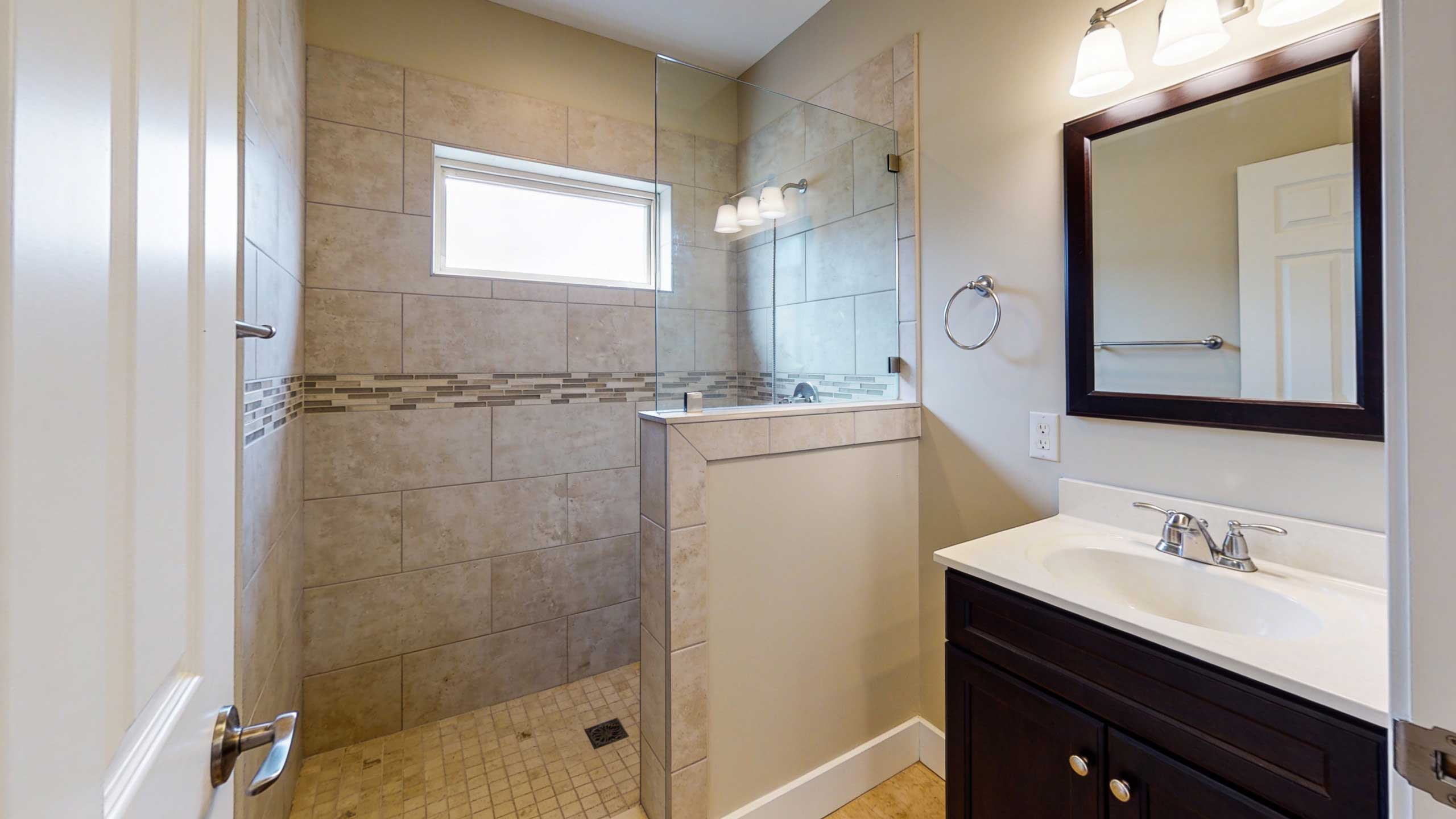
A half-height wall can provide more separation than an open shower while avoiding the visual weight of a full enclosure. It can also help direct water away from the bathroom’s main walking area.
This approach works especially well when the shower is positioned beside another fixture. The wall creates a subtle boundary between wet and dry zones while also giving you more privacy than a completely open design.
Keep the wall proportionate to the room so it doesn’t become another visual obstacle.
4. Curbless Doorless Shower
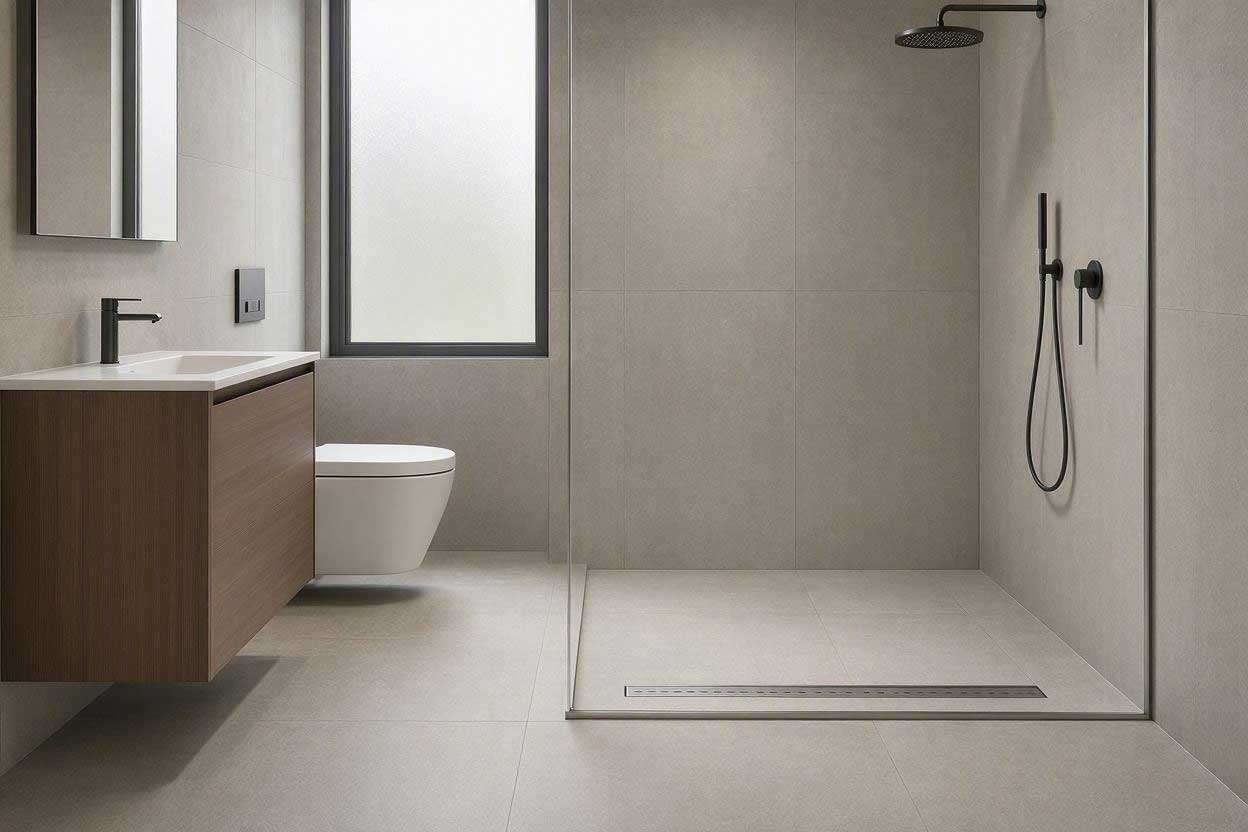
A curbless shower removes the raised threshold between the shower floor and the rest of the bathroom. When the flooring flows continuously into the shower area, the room can appear more cohesive and less visually interrupted.
This style can be particularly attractive in compact bathrooms, but it requires careful planning for drainage, floor slope, and waterproofing. These details should be addressed as part of the shower installation rather than treated as finishing touches.
5. Narrow Walk-In Shower Along One Wall
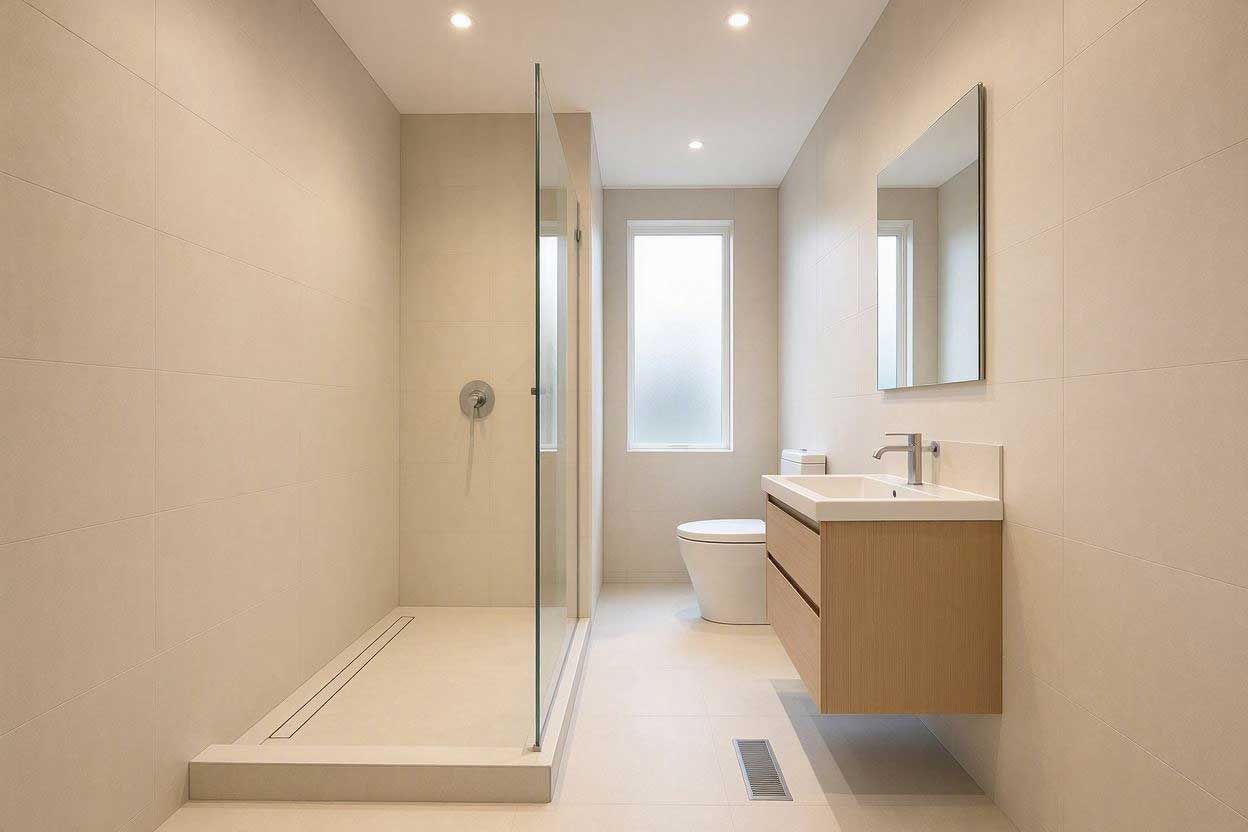
For a long, narrow bathroom, placing the shower along one wall can create a straightforward and efficient arrangement. The remaining fixtures can be positioned along the opposite side or closer to the entrance, depending on the room’s dimensions. Choosing a shallow or wall-mounted vanity can also help preserve valuable clearance
A narrow shower doesn’t need to feel cramped if the design keeps the sightline open. Simple finishes and fewer visual barriers can help the space feel more cohesive.
6. Doorless Shower at the End of the Bathroom
Placing the shower at the far end of the bathroom can create a natural focal point while keeping the central walking path relatively clear.
This arrangement can work particularly well in rectangular bathrooms. A fixed glass panel or partial wall can define the shower area without blocking the view toward the back of the room.
Using similar or complementary finishes throughout the bathroom can further strengthen the sense of continuity.
7. Doorless Shower With a Built-In Bench
If the available space allows it, a built-in bench can add comfort without introducing a separate piece of furniture into the bathroom.
The key is proportion. In a small shower, an oversized bench can quickly consume valuable floor space. A compact corner bench may provide enough seating without making the shower feel crowded.
This idea is best suited to bathrooms where the shower footprint already provides enough room for comfortable movement.
8. Minimalist Doorless Shower With Clear Glass
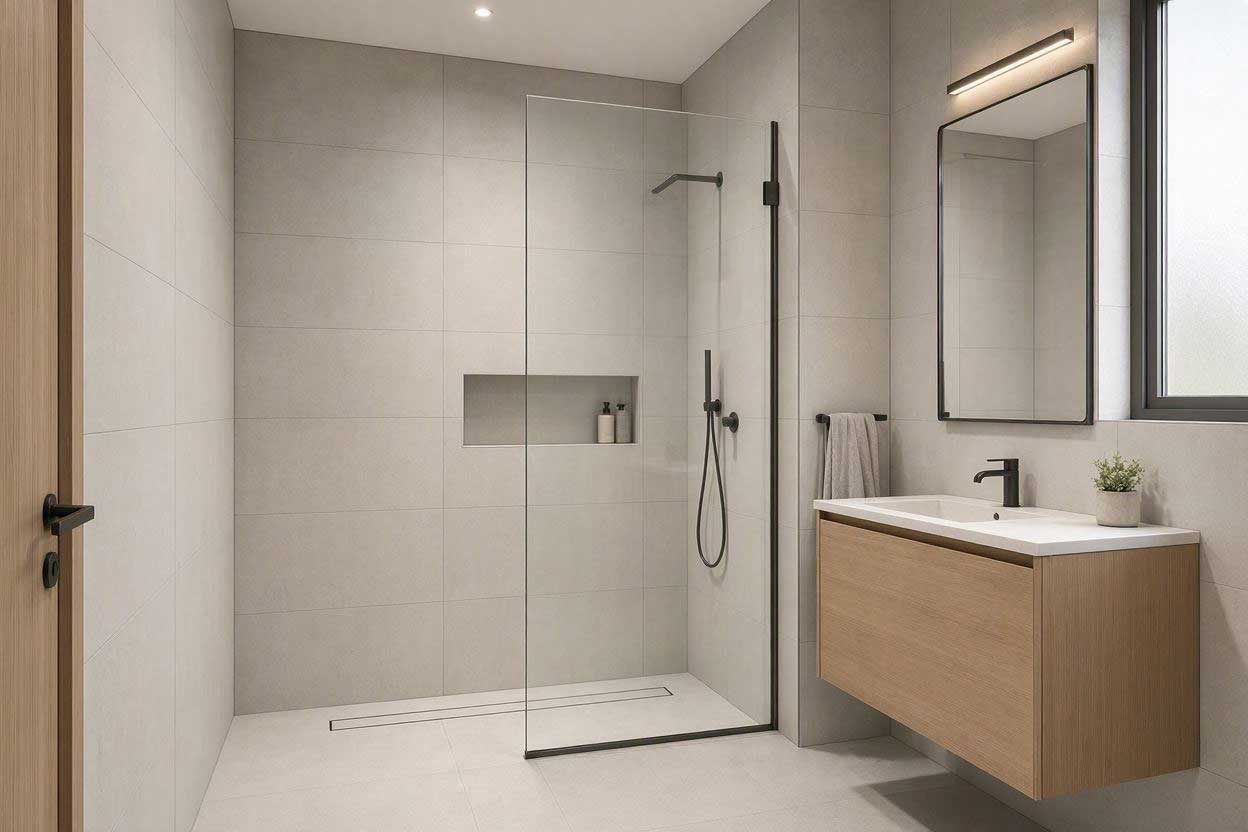
Sometimes the simplest design is the most effective. A minimalist doorless shower can combine a clean opening, clear glass, simple hardware, and restrained finishes to keep the bathroom visually calm.
Here, the focus is less on splash protection and more on visual continuity. When the shower blends naturally with the rest of the room, the entire bathroom can feel more cohesive rather than divided into separate zones.
9. Doorless Shower With a Linear Drain
A linear drain can complement a modern doorless shower, particularly when paired with a curbless floor. Instead of placing a small central drain in the middle of the shower, a linear drain can be positioned along one edge of the wet area.
This can create a cleaner-looking floor and work well with larger-format tiles, depending on the installation. Proper slope, waterproofing, and drainage planning remain essential.
10. Doorless Shower with Strategic Privacy
A completely open shower isn’t the only way to achieve a doorless design. Depending on the bathroom’s layout, you can use the position of a wall, partial partition, or textured glass to make the shower less exposed.
This can be particularly useful when the bathroom is shared or the shower is visible from the doorway. The goal is to create enough privacy without turning the shower into another visually heavy enclosure.
How to Make a Doorless Shower Work in a Small Bathroom
The details of the layout can determine whether a doorless shower feels spacious and practical—or leaves water where it shouldn’t.
1. Plan the Shower Opening Carefully
Consider what sits directly outside the shower, including the toilet, vanity, and main walking path. A wider opening may look attractive, but a strategically positioned opening can sometimes provide better splash control.
The goal is to create enough room for comfortable entry without giving water an easy path into the dry area.
2. Keep the Showerhead Away From the Opening
Whenever possible, direct the shower spray toward a wall rather than toward the open entrance. This gives the water more space to fall and reduces the amount of spray reaching the bathroom floor.
Positioning the controls closer to the entrance can also let you turn the water on without immediately stepping into the spray.
3. Use a Fixed Glass Panel When You Need More Splash Protection
A completely open shower isn’t your only option. A single fixed glass panel can block direct spray while preserving the open appearance that makes doorless designs attractive.
This can be especially useful when a full enclosure would feel visually heavy.
4. Pay Close Attention to Drainage
The shower floor needs to direct water toward the drain rather than allowing it to collect near the entrance.
For curbless designs, proper floor slope and waterproofing are particularly important. A linear drain can also work well with an open shower layout, but the drainage system should be considered as part of the overall design.
5. Think About Overall Comfort
A doorless shower exposes more of the bathroom to warm, humid air, so good ventilation is particularly important in a compact space.
Privacy and temperature are worth considering too. If the bathroom is shared or the shower is visible from the doorway, a partial wall or strategically positioned glass panel may provide a better balance than a completely open design.
Ultimately, the best doorless shower is the one where the opening, spray direction, drainage, and surrounding fixtures work together as a single layout.
When floor and wall space are limited, using smart bathroom storage ideas to keep essentials organized can help preserve the open feeling of a compact bathroom.
Doorless Shower vs. Shower Door for a Small Bathroom
Choosing between a doorless shower and a traditional shower enclosure comes down to how you want the bathroom to function. Neither option is automatically better for every small space.
Feature Doorless Shower Shower With Door Visual openness High Moderate Door clearance None Depends on door style Splash control Requires careful planning Generally easier Privacy Lower to moderate Higher Cleaning Fewer moving parts More glass, tracks, or hardware Design flexibility High High
A doorless shower can be appealing when your priority is creating an open sightline and avoiding the space required for a swinging door. A fixed glass panel can provide additional splash protection without visually closing off the shower.
A shower with a door, however, can offer better water containment and privacy in some tighter layouts. If the shower footprint makes splash control difficult, an enclosed option may simply be more practical.
The best choice is the one that works with your bathroom—not against it.
Common Mistakes to Avoid with a Doorless Shower
A doorless shower can look beautifully simple, but the finished design depends on careful planning. Avoid these common mistakes:
1. Making the Shower Too Small
Removing the door doesn’t mean the shower itself can be made extremely compact. There needs to be enough room for comfortable entry and reasonable splash control.
2. Pointing the Showerhead Toward the Opening
Directing water toward the open entrance can make splash control much more difficult. Whenever possible, aim the spray toward an interior wall or another area within the wet zone.
3. Ignoring Drainage and Floor Slope
Poor drainage or an inadequate slope can allow water to migrate outside the shower. This is particularly important with curbless designs.
4. Forgetting About Privacy
A completely open shower isn’t ideal for everyone. Depending on the layout, a half wall, textured glass, or strategic positioning can provide more privacy without requiring a full enclosure.
5. Overlooking Ventilation
More steam and moisture can escape into the bathroom when there is no shower door. Adequate ventilation helps manage humidity and allows the space to dry more effectively.
Frequently Asked Questions About Doorless Showers
Is a doorless shower a good idea for a small bathroom?
Yes, it can work well when the layout is planned carefully. The main considerations are the shower’s size, opening, showerhead position, drainage, and splash control.
Does a doorless shower make a small bathroom look bigger?
It can. Removing a shower door eliminates a visual barrier and can create a more continuous sightline across the bathroom. However, the overall layout still plays a major role in how spacious the room feels.
How much space do you need for a doorless shower?
There isn’t one universal size that works for every doorless shower. The required space depends on the shower configuration, opening, spray pattern, and water containment. Local building requirements should also be checked before construction.
How do you keep water from splashing out of a doorless shower?
Start with the showerhead position. Directing the spray toward an interior wall can reduce splash. A fixed glass panel or partial wall can provide additional protection, while properly sloped flooring helps move water toward the drain.
Does a doorless shower need glass?
No. A doorless shower can be completely open, but a fixed glass panel can provide additional splash protection or privacy without creating the feeling of a traditional enclosure. Frosted or textured glass can offer more privacy while still allowing light into the shower area.
Are doorless showers colder than enclosed showers?
They can feel cooler because there is no door to contain warm air around the shower area. A partial wall or carefully positioned partition can provide some separation while preserving the open design.
Final Takeaway
A doorless shower can be a smart way to make a small bathroom feel more open, but the best results come from thoughtful planning rather than simply removing the shower door.
Consider the shower’s position, opening, spray direction, drainage, privacy, and ventilation before settling on a design. Most importantly, choose an approach that fits your bathroom’s actual dimensions and everyday needs.
A beautiful shower isn’t successful if it sends water across the floor or makes the space uncomfortable. When the layout and practical details work together, a doorless shower can give a compact bathroom a cleaner sightline, a more spacious feel, and a modern look without making the room work harder than it needs to.

Royan Abdillah is a home improvement enthusiast and interior design consultant with over 9 years of experience in the industry. Passionate about blending aesthetics with functionality, Royan Abdillah specializes in unique DIY furniture and pet-friendly home solutions. Through this blog, Royan Abdillah aims to help homeowners create beautiful, personalized spaces on a budget.