
A door hinge screw that keeps spinning without tightening is often a sign that the surrounding wood has become stripped. When this happens, the hinge can loosen, causing the door to sag, rub against the frame, or become difficult to close.
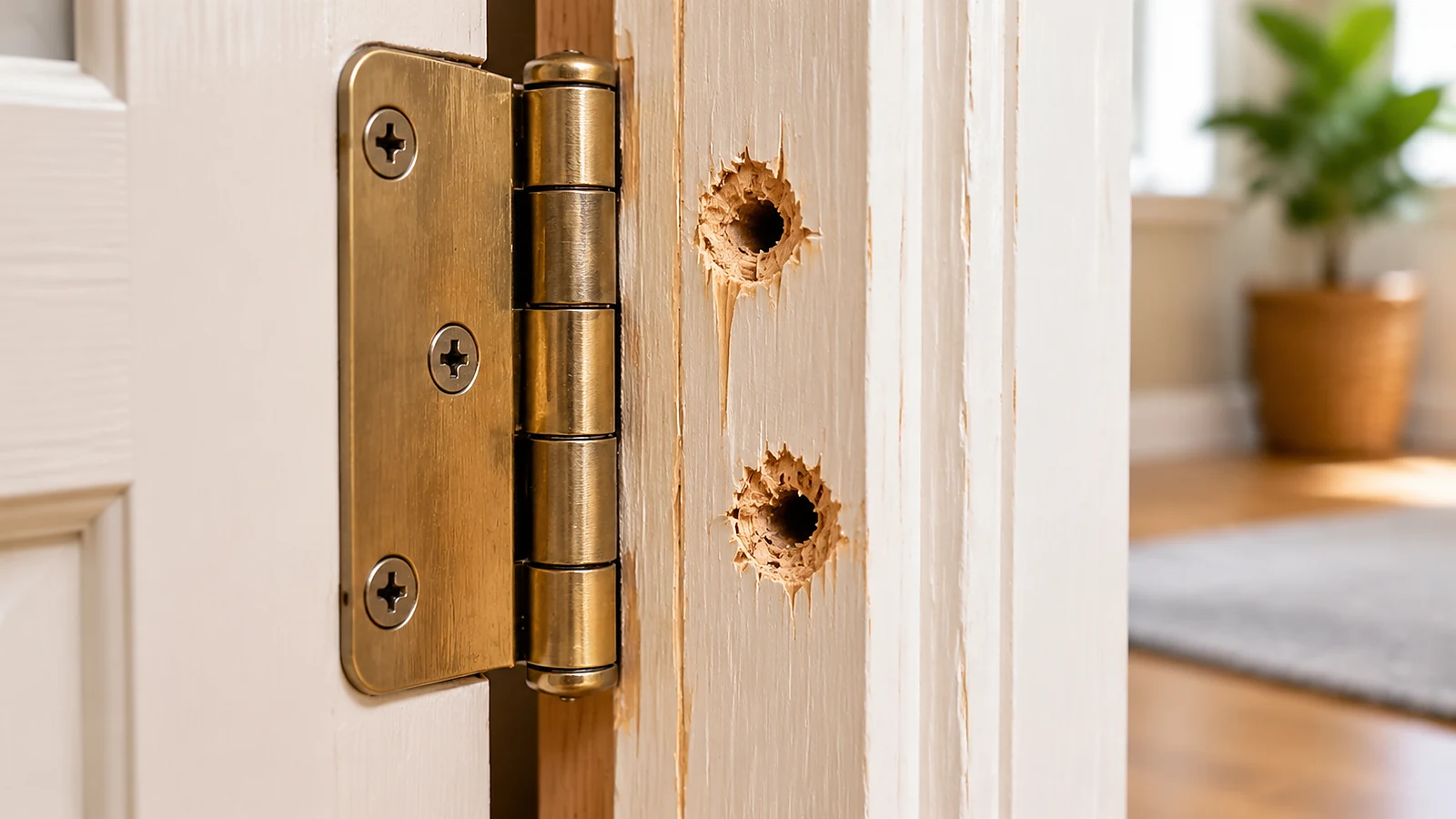
Fortunately, you can often repair stripped door hinge screw holes without replacing the entire door or frame. Small holes may only need wooden toothpicks or wood slivers with wood glue, while larger openings may require a wooden dowel or wood plug. Longer screws can also help in certain situations, particularly when the damaged hole is in the door jamb and the replacement screw can reach solid framing behind it.
The right repair depends on where the damage is, how much wood has been damaged, and how the door is constructed. Here are three practical methods and how to choose between them.
What Causes Door Hinge Screw Holes to Strip?
Door hinges experience repeated movement and pressure every time a door opens and closes. Over time, this stress can weaken the wood fibers surrounding the mounting screws.
Several factors can contribute to stripped hinge screw holes:
- Repeated door movement: Constant opening and closing can gradually loosen screws, particularly on heavy doors.
- Overtightened screws: Excessive tightening can damage the wood fibers that hold the screw threads.
- Incorrect pilot holes: A pilot hole that is too large may prevent the screw from gripping the wood properly.
- Door sagging or misalignment: An improperly aligned door can place additional pressure on its hinges.
- Previous repairs: Reinstalling screws into an already damaged hole can gradually enlarge the opening.
A common warning sign is a screw that rotates without becoming tighter. This indicates that the surrounding material may no longer provide enough resistance to hold the screw securely.
How to Tell If a Door Hinge Screw Hole Is Stripped
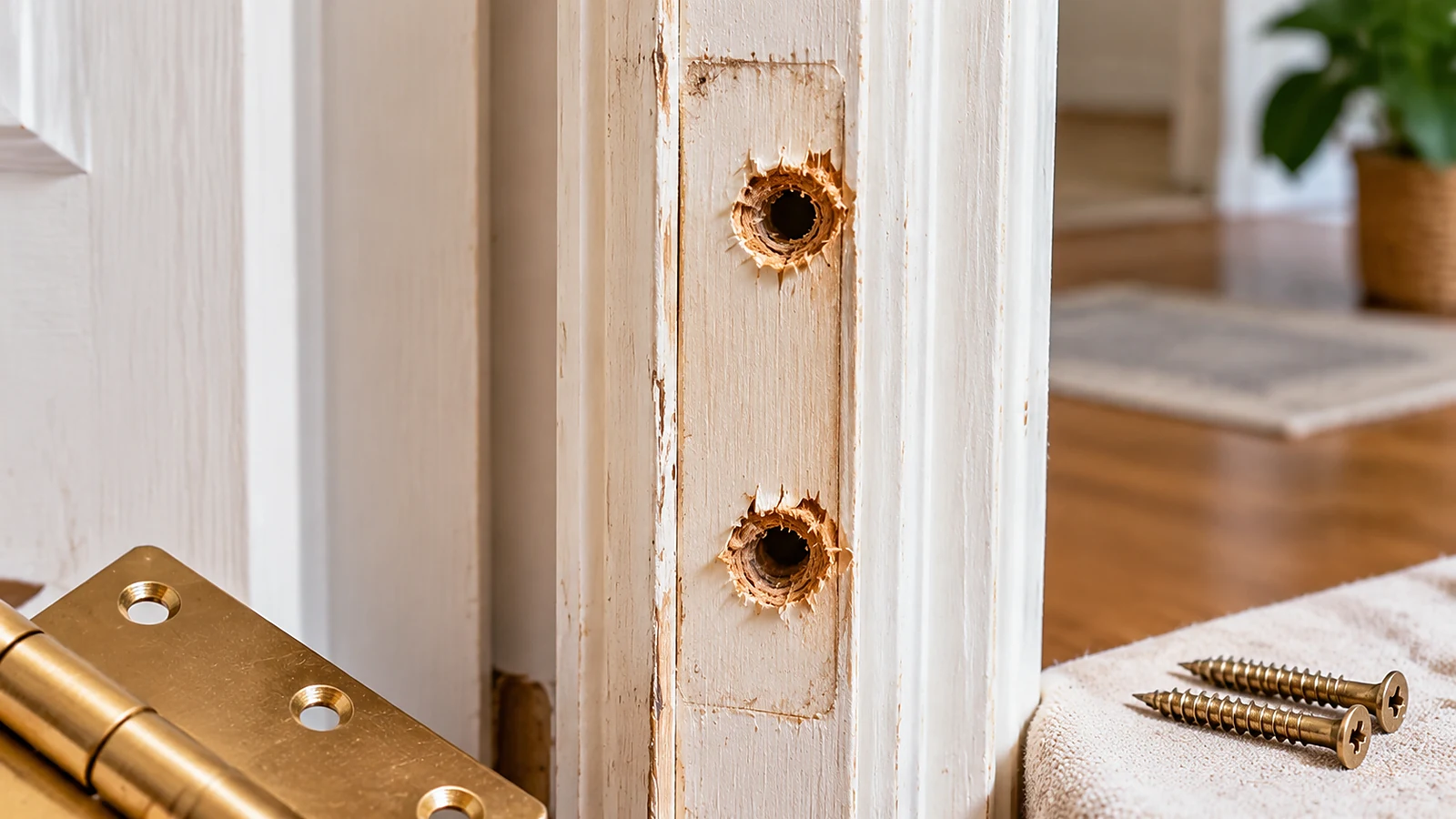
Before choosing a repair method, inspect the hinge and confirm that the screw hole is actually damaged.
Look for these signs:
- A hinge screw spins continuously without tightening.
- The hinge leaf moves away from the wooden surface.
- A screw comes out easily even though it was previously tightened.
- The door begins to sag or develops uneven gaps around the frame.
- The hinge becomes loose when the door opens or closes.
You can also open the door halfway and gently lift the handle while observing the hinge leaves. Movement between the hinge plate and the wood may indicate loose mounting screws.
However, not every sagging door has stripped screw holes. Bent hinges, worn hinge pins, and frame movement can produce similar symptoms.
Check Whether the Damage Is on the Door or Door Jamb
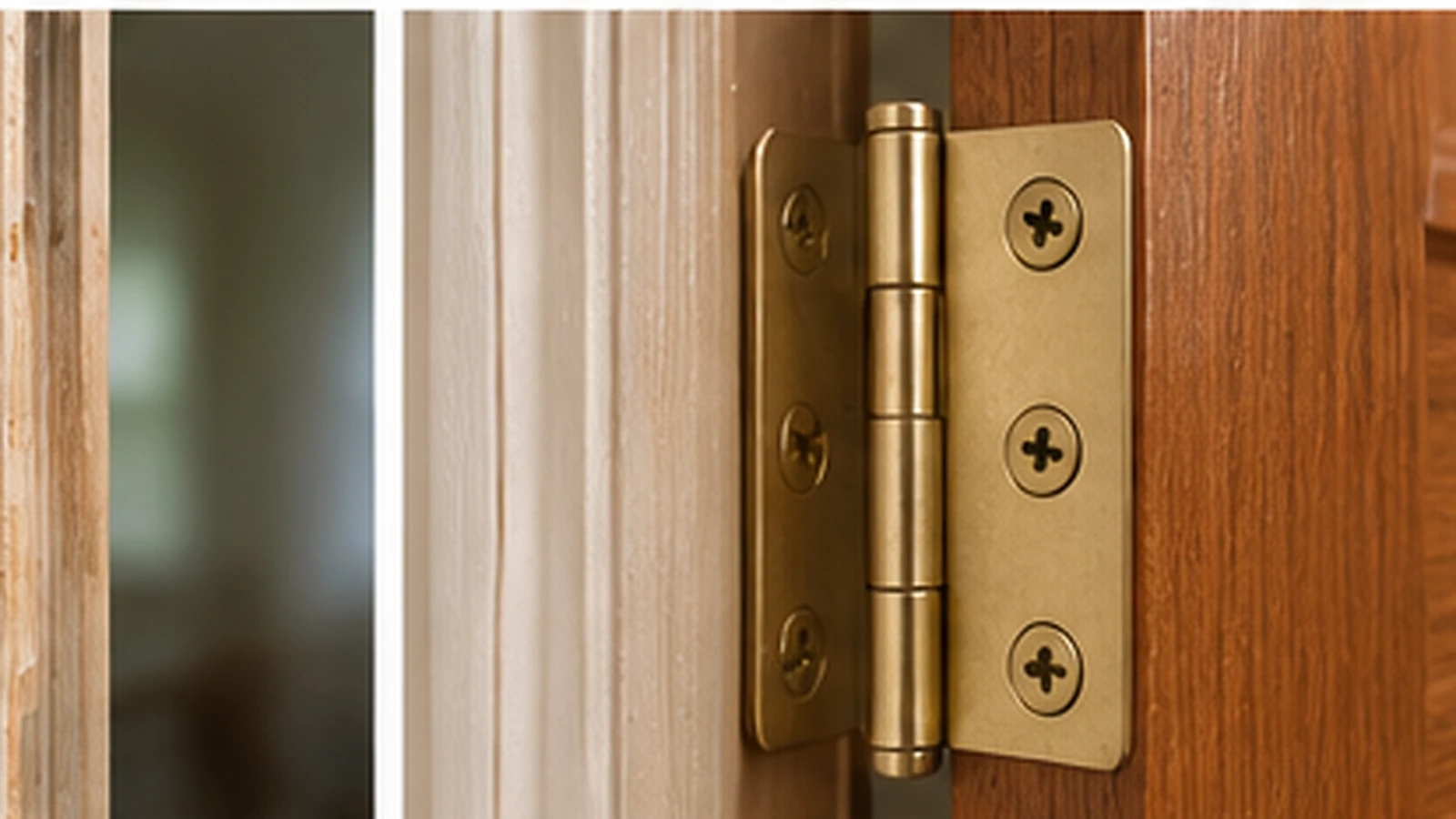
This is an important step because the door and frame may require different repair approaches.
A door hinge connects two separate components:
- Door jamb: The stationary wooden frame where one hinge leaf is mounted.
- Door slab: The moving door itself, where the other hinge leaf is attached.
Stripped Screw Holes in the Door Jamb
If the damaged holes are on the stationary frame, you may be able to repair them using wood slivers, wooden dowels, or an appropriate longer screw.
The best option depends on the condition of the jamb and whether solid framing is accessible behind it.
Stripped Screw Holes in the Door Slab
If the damaged holes are on the moving door, inspect the material around the hinge mounting area before drilling or inserting a wooden plug.
Solid-wood doors and engineered doors can have different internal structures. A repair that works on a solid wooden door may not be appropriate for a hollow-core door.
If the hinge is noisy but its mounting screws still hold securely, our guide on how to fix a squeaky door hinge without removing the door covers a separate maintenance problem.
Which Repair Method Should You Use?
Choose the repair based on the size of the damaged hole and the condition of the surrounding material.
Condition Recommended Method Slightly enlarged screw hole Wooden toothpicks or thin wood slivers with wood glue Moderately enlarged hole Wooden golf tee or suitable wood plug Large or severely stripped hole in solid wood Hardwood dowel with compatible adhesive Stripped hole in door jamb with accessible solid framing Appropriate longer hinge screw Damaged hollow-core door hinge reinforcement Manufacturer-approved repair or professional assessment
These methods are not interchangeable in every situation. Check the door construction before drilling or installing replacement screws.
Tools and Materials You Will Need
Prepare the following items before starting:
Tools and Materials Purpose Screwdriver Removing and reinstalling hinge screws Drill and drill bits Preparing damaged holes Wooden toothpicks or wood slivers Repairing minor damage Wooden golf tees Filling suitable moderately enlarged holes Hardwood dowels Repairing larger holes Wood glue or compatible epoxy Securing wooden repair pieces Utility knife or flush-cut saw Trimming excess wood Sandpaper Smoothing the repaired surface Door jack or suitable support Stabilizing the door Vacuum or small brush Removing drilling debris Safety glasses Protecting your eyes during drilling
Choose the dowel diameter and drill bit according to the actual hole and available material. There is no single size that works for every door hinge.
3 Ways to Fix Stripped Door Hinge Screw Holes
Method 1: Use Toothpicks and Wood Glue for Small Holes
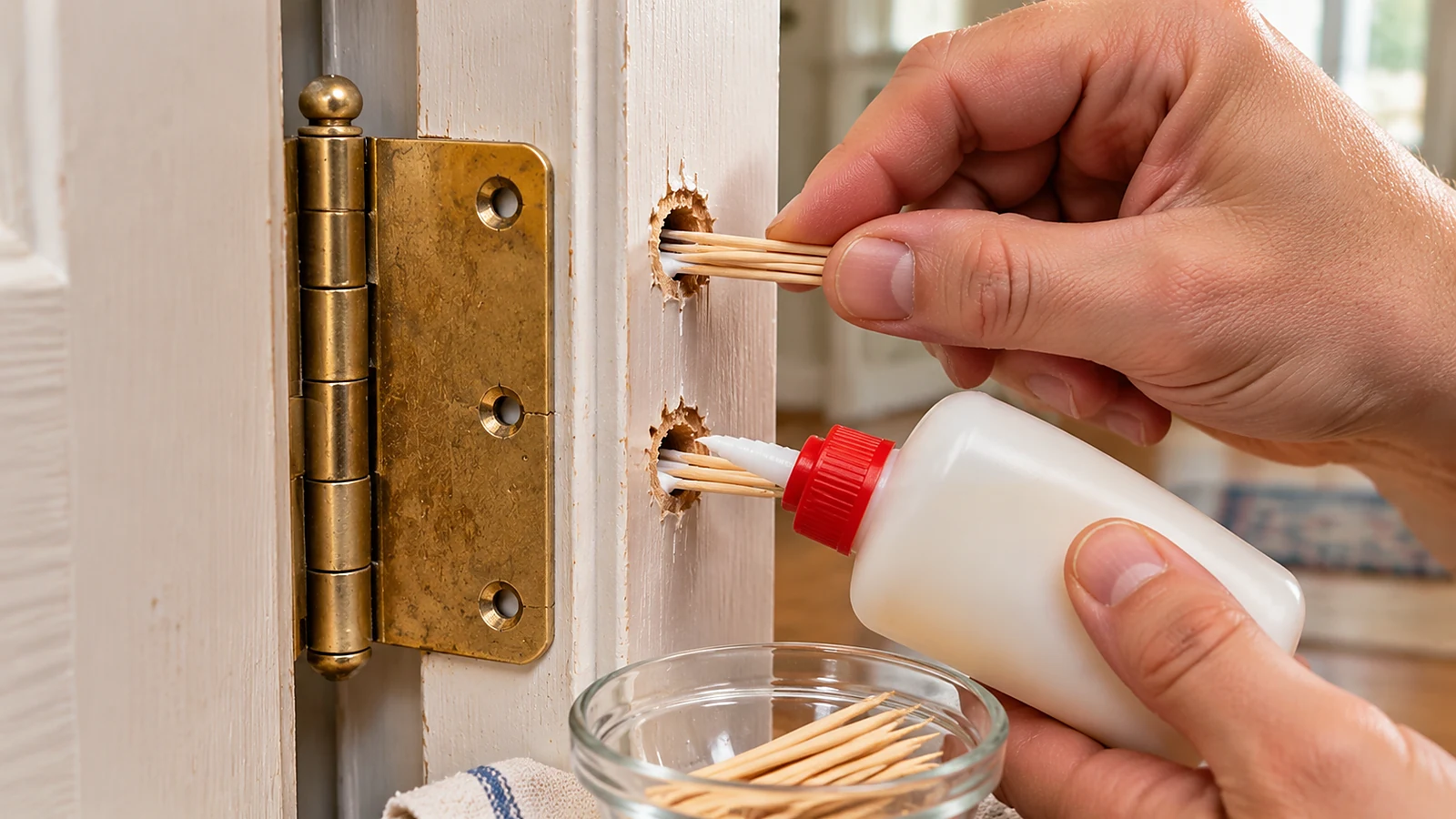
For a slightly enlarged screw hole, wooden toothpicks or thin wood slivers can provide additional material for the screw threads to grip.
This is a practical option when the surrounding wood remains solid and the damage is relatively minor.
Steps:
- Remove the loose hinge screw.
- Inspect the opening and remove loose wood fibers or debris.
- Apply compatible wood glue to several wooden toothpicks or thin wood slivers.
- Insert them into the damaged hole until it is sufficiently filled.
- Allow the adhesive to cure according to the manufacturer’s instructions.
- Trim any protruding wood flush with the surface.
- Reposition the hinge leaf and mark the original screw location.
- Drill an appropriately sized pilot hole if required.
- Reinstall the screw carefully using a hand screwdriver.
The goal is to restore enough solid material around the screw threads to provide a secure grip.
What about wooden golf tees?
A wooden golf tee can be another option when a hole is too large for toothpicks but still suitable for a tapered wooden plug.
Choose a wooden tee that fits the opening, apply compatible wood glue, and insert only as far as needed. Trim the excess flush after the adhesive has cured.
Do not force an oversized tee into the opening because excessive pressure can split the surrounding wood.
This method is best reserved for minor to moderate damage. If the opening is significantly enlarged or the surrounding wood is cracked, a wooden dowel repair may be more appropriate.
JELD-WEN’s Interior and Exterior Doors Product Guide also describes repairing stripped screw holes in wood using wooden toothpicks or appropriately sized dowels with wood glue.
Method 2: Repair Larger Holes With a Wooden Dowel
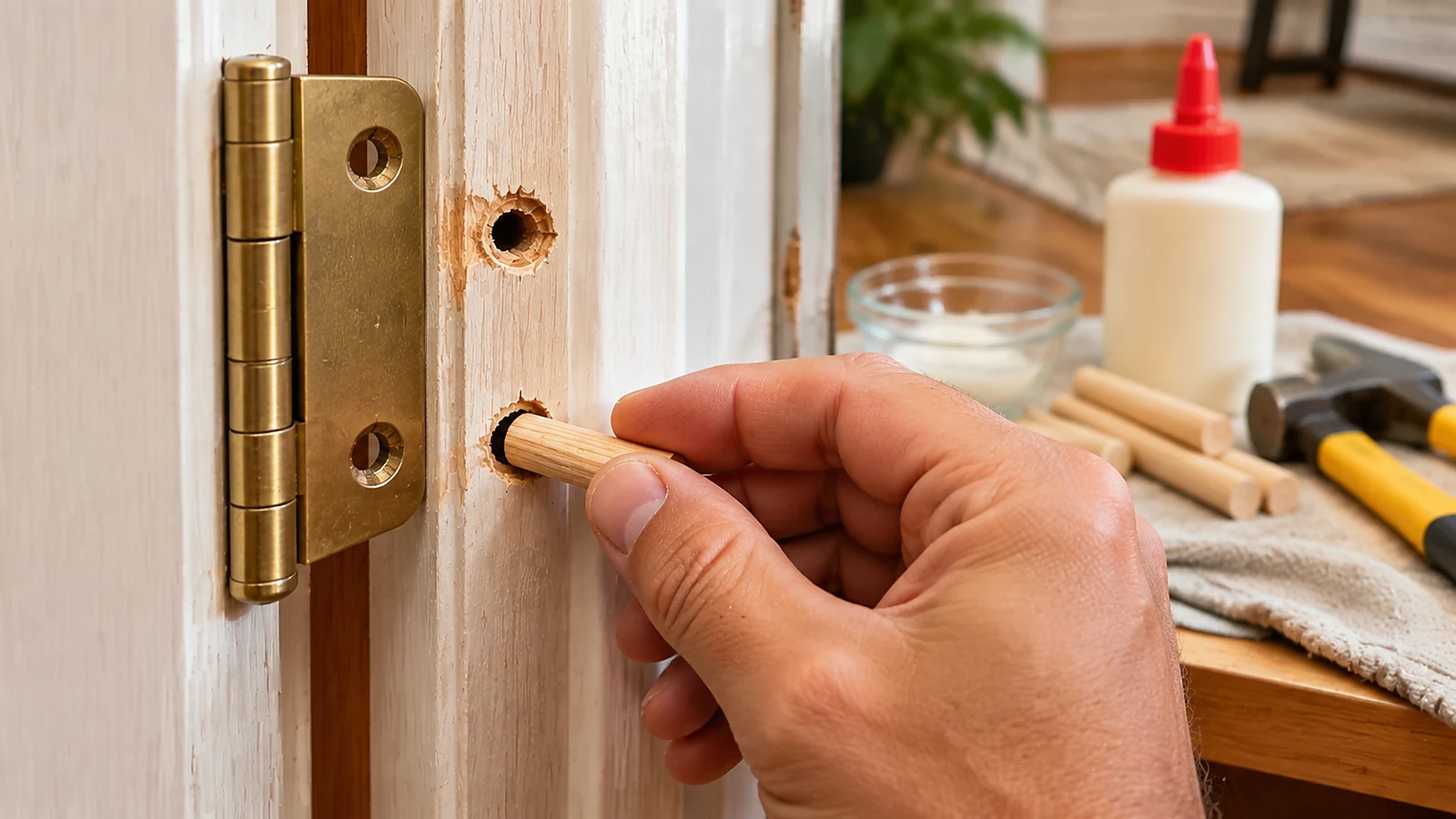
When a screw hole is too large for toothpicks or small wood slivers, a wooden dowel can provide a more substantial repair.
This method is particularly useful for stripped holes in solid wooden door jambs.
Steps:
- Support the door securely before removing the affected hinge leaf.
- Remove the hinge screws and move the hinge leaf away from the damaged area.
- Inspect the hole and select an appropriate dowel size.
- Carefully drill the damaged opening into a clean, uniform shape that matches the selected dowel.
- Remove sawdust and loose wood particles.
- Apply compatible wood glue or a suitable two-part epoxy according to the product instructions.
- Insert the dowel into the prepared hole until it is properly seated.
- Allow the adhesive to cure completely.
- Trim the excess dowel flush with the surrounding surface.
- Reposition the hinge and mark the screw locations.
- Drill centered pilot holes into the repaired dowel.
- Reinstall the hinge screws without overtightening.
Keep the drill aligned with the mounting surface. On a jamb repair, drill only as deep as necessary to accommodate the wooden plug.
After the adhesive cures, the dowel provides fresh wood for the replacement screw to grip.
This Old House demonstrates a similar repair using wooden dowels and two-part epoxy. Its procedure also emphasizes keeping the drill straight, supporting the door, allowing the adhesive to cure, and creating new pilot holes before reinstalling the hinge.
For the full demonstration, see How to Repair a Stripped Screw Hole.
Method 3: Use Longer Screws When the Door Jamb Has Solid Framing Behind It
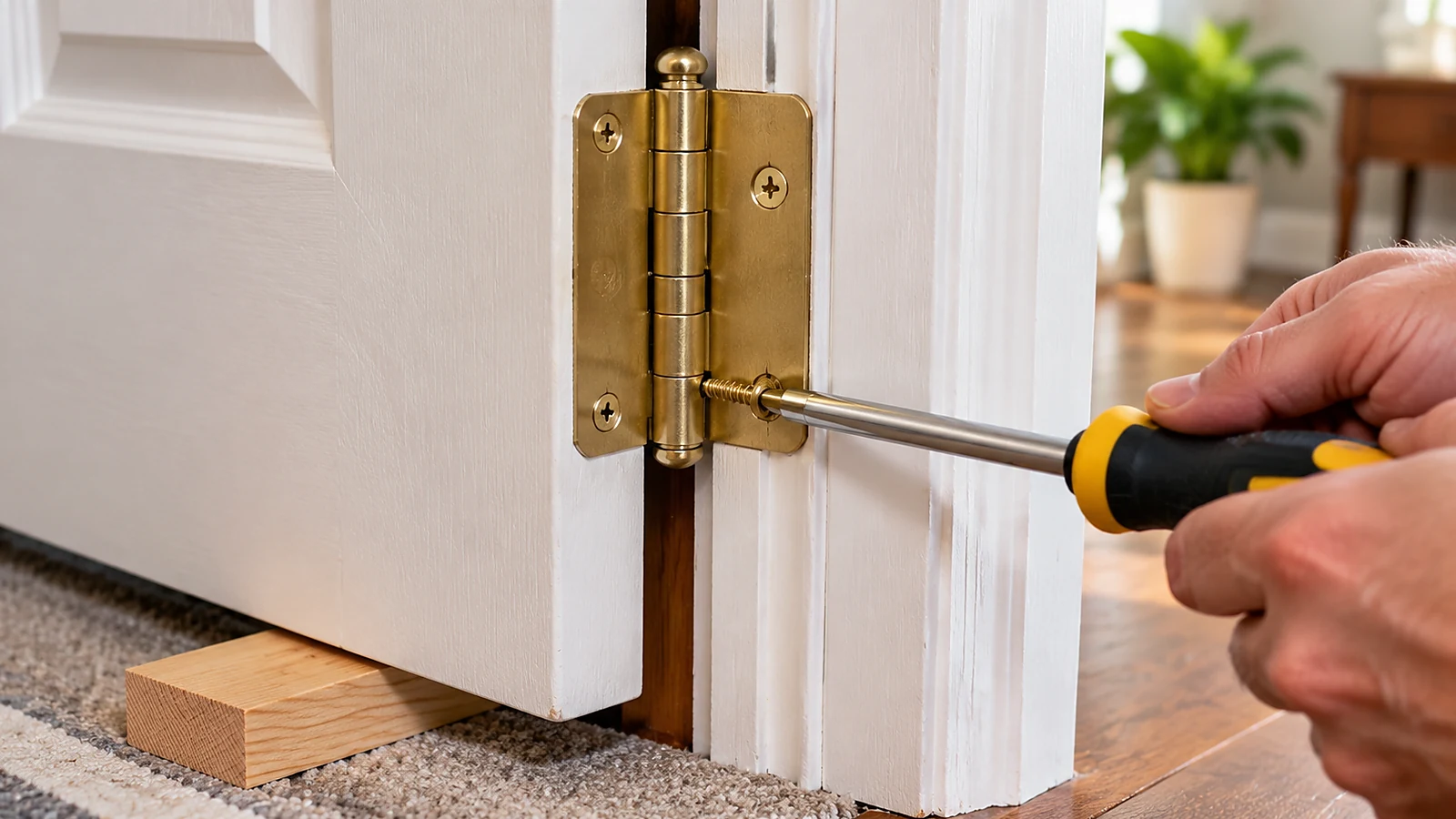
A longer screw may provide better holding power when a stripped screw hole is located in the door jamb and the replacement screw can reach sound framing behind it.
However, this method is not appropriate for every door or every damaged screw hole.
Steps:
- Remove the loose screw.
- Inspect the jamb and determine whether solid framing is accessible behind the damaged area.
- Check the position of any existing shims behind the jamb.
- Select a compatible replacement screw with an appropriate length and head profile.
- Prepare a suitable pilot hole if necessary.
- Drive the replacement screw carefully through the hinge and jamb into sound framing.
- Check that the hinge leaf remains flat against its mortise.
- Confirm that the jamb remains properly aligned.
- Open and close the door to check its operation.
Avoid choosing a longer screw simply because the original one no longer holds.
A replacement screw with an oversized head may protrude from the hinge leaf and interfere with the door closing. Overtightening can also pull the jamb toward the framing and disturb the door alignment.
The screw should provide a secure connection without distorting the frame. Do not assume that a particular screw length will work for every installation.
This Old House’s repair guide explains how longer screws can sometimes reach the jack stud behind a jamb. It also warns that the screw head must sit correctly within the hinge leaf to prevent interference when the door closes.
Important: Longer screws are a jamb-side repair option. They are not a substitute for rebuilding a stripped hole on the door slab.
How to Repair Stripped Screw Holes in Hollow-Core Doors
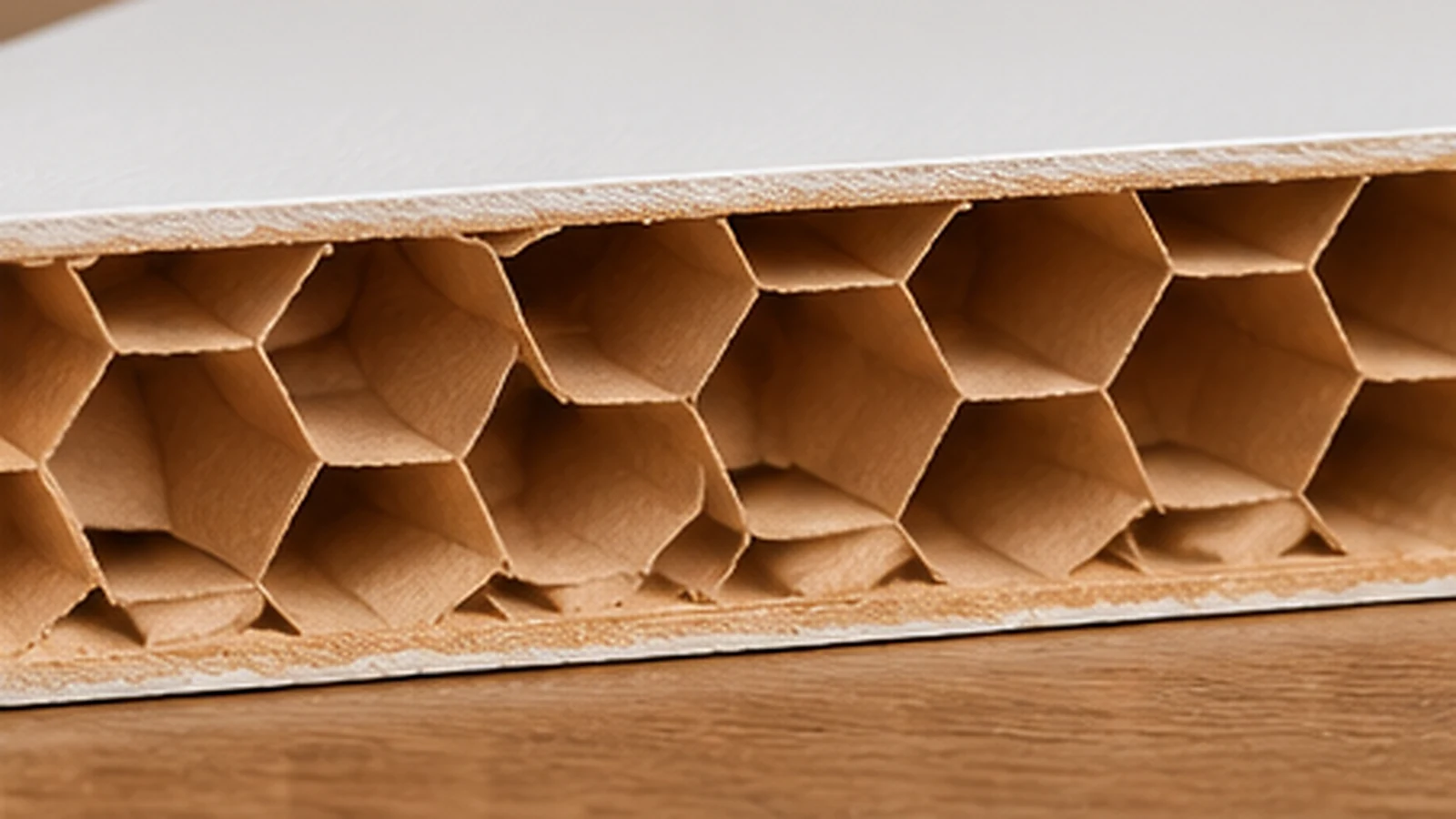
Hollow-core doors require additional care because their internal construction differs from that of solid wood doors.
Some hollow-core doors use lightweight corrugated or foam cores between exterior facings. However, the hinge mounting area may still contain a structural edge component called a hinge stile.
For example, Steves Doors specifies fiberwood or finger-jointed wood stiles as the hinge mounting surface in its molded hollow-core door construction. Its product specifications also identify corrugated or foam build-up cores.
This means you should not automatically assume that the hinge edge is completely hollow.
Before attempting a repair:
- Identify the door manufacturer and model if possible.
- Check the hinge-side edge to understand where the structural stile is located.
- Determine whether the stripped screw holes remain within the reinforced mounting area.
- Avoid drilling deeply into the lightweight core.
- Choose a repair method compatible with the actual door construction.
If the damage is minor and sufficient solid material remains around the hinge mounting area, a carefully fitted wood sliver or suitable wooden plug may be possible.
If the hinge stile is crushed, split, or no longer provides enough material to support the hinge, a standard dowel repair may not be suitable.
Consider a manufacturer-approved repair system, a specialist door repair, or door replacement if the hinge can no longer be securely supported.
For further construction details, consult the manufacturer’s hollow-core door specifications.
Common Mistakes to Avoid
Even a simple hinge repair can fail when the wrong materials or installation techniques are used.
Avoid these common mistakes:
- Using ordinary wood filler as the only repair: Cosmetic filler is not automatically suitable for holding a hinge screw under repeated door loads. Restore the screw-holding material with an appropriate wooden plug or repair system first.
- Choosing an oversized dowel: The repair piece should match the prepared hole without forcing or splitting the surrounding wood.
- Drilling too deeply: Excessive drilling can damage the jamb or door construction.
- Skipping pilot holes: Incorrect pilot-hole sizing can prevent proper screw engagement or split the wood.
- Overtightening screws: Excessive force can strip the repaired hole again.
- Using incompatible screw heads: The screw head must sit correctly within the hinge leaf.
- Ignoring door alignment: A sagging or misaligned door can continue putting stress on the repaired hinge.
- Removing the hinge without supporting the door: An unsupported door can shift or fall when its hinge leaf is detached.
Wood putty may be used to smooth the surrounding surface after a wooden plug has been installed and secured. It should not be treated as the primary structural material holding the hinge screw unless the repair product is specifically designed and rated for that purpose.
When Should You Call a Professional?
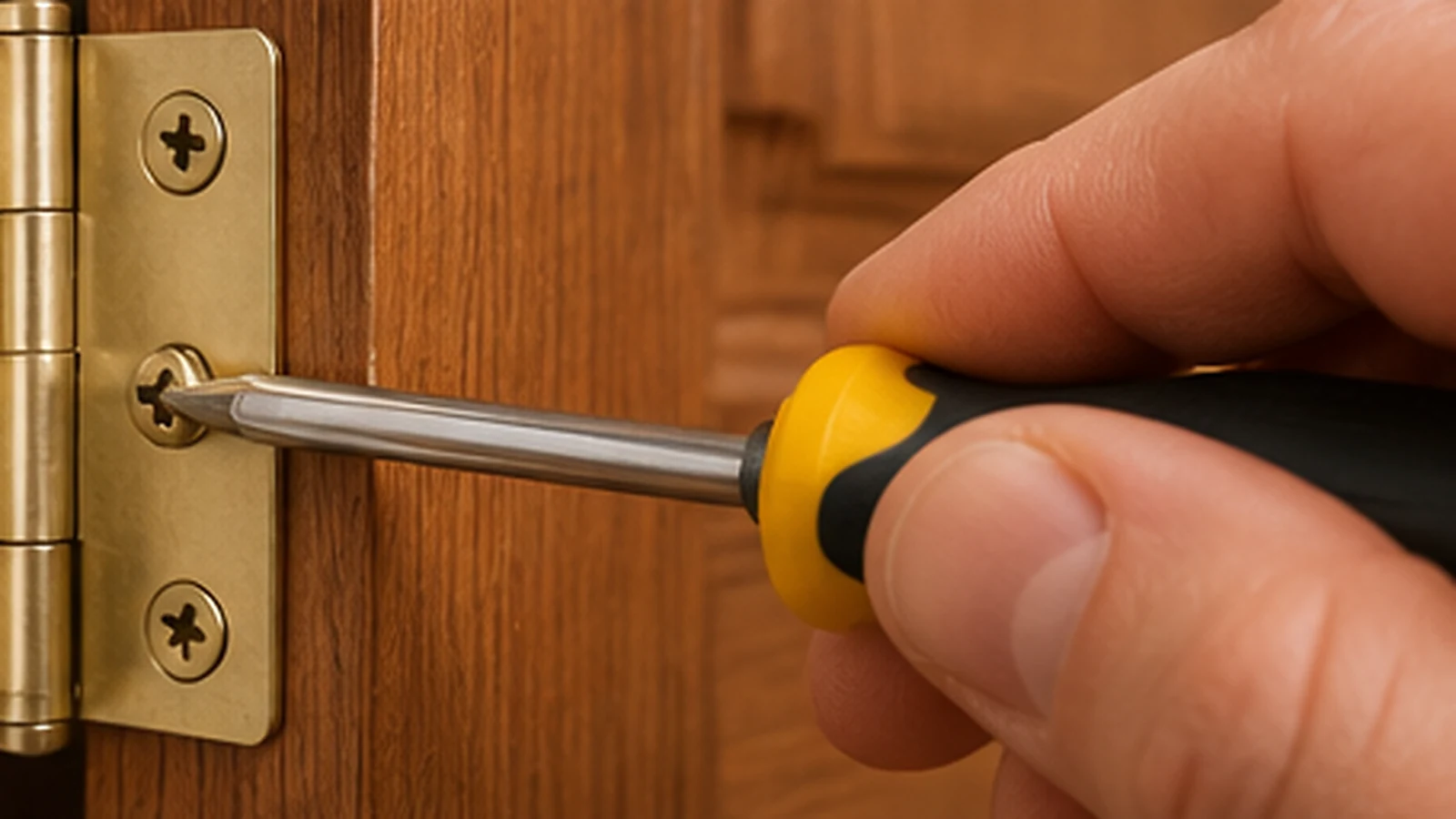
Some stripped hinge holes are relatively easy to repair, but more extensive damage may require professional attention.
Consider contacting a qualified carpenter or door repair specialist if:
- The door jamb is cracked, split, or significantly deteriorated.
- The hinge mounting area has lost too much material to hold a repair plug.
- A hollow-core door has extensive damage around its hinge reinforcement.
- The door is unusually heavy or unstable.
- The frame has shifted or become structurally damaged.
- Previous repairs have repeatedly failed.
If you are not confident supporting the door while removing the hinge leaf, avoid attempting the repair alone.
A professional can assess the door construction, hinge attachment, and frame condition before recommending a suitable repair.
Frequently Asked Questions
Can you fix a stripped door hinge screw hole with toothpicks?
Yes. Wooden toothpicks coated with compatible wood glue can help repair a small stripped hole when the surrounding wood is still solid. For larger openings, a wooden dowel or another suitable repair method may be more appropriate.
Will wood glue hold a door hinge screw?
Wood glue can bond wooden slivers or dowels inside a damaged hole, creating fresh material for the screw threads to grip. However, the adhesive must cure properly, and the replacement screw needs to be installed in a correctly prepared pilot hole.
Should I use a wooden dowel or a longer screw?
Use a wooden dowel when the damaged hole needs to be rebuilt with a solid wood plug. A longer screw may work when the damage is in the jamb and the screw can reach sound framing behind it. The correct choice depends on the location and construction of the door.
Can wood filler hold door hinge screws?
Ordinary wood filler is primarily intended for filling surface imperfections. It should not automatically be considered a reliable structural repair for a hinge screw hole. Use a suitable wooden plug or a product specifically designed and rated for screw-hole repair.
Do I need to remove the entire door to fix stripped hinge holes?
Not always. Some minor repairs can be performed while the door remains supported by its other hinges. However, the door must be properly supported before removing the affected hinge leaf. Heavy or unstable doors may require additional help or professional assistance.
How long should wood glue dry before reinstalling the hinge?
Follow the adhesive manufacturer’s stated clamping and curing times. Drying time and full curing time are not always the same. Do not reinstall or load the hinge until the adhesive has reached the required cure stage.
Final Thoughts
A stripped door hinge screw hole does not automatically mean you need to replace the entire door or frame.
For minor damage, toothpicks or wood slivers combined with wood glue may restore enough material for a secure screw connection. Larger holes may require a wooden dowel repair, while longer screws can be useful when the damaged jamb can be securely fastened to sound framing.
The most important step is identifying where the damage is and understanding the door’s construction before drilling or installing replacement screws.
Choose the repair method carefully, support the door properly, and follow the adhesive and hardware manufacturer’s instructions. A correctly prepared repair can help restore a secure hinge connection and keep your door operating smoothly.

Royan Abdillah is a home improvement enthusiast and interior design consultant with over 9 years of experience in the industry. Passionate about blending aesthetics with functionality, Royan Abdillah specializes in unique DIY furniture and pet-friendly home solutions. Through this blog, Royan Abdillah aims to help homeowners create beautiful, personalized spaces on a budget.