
Dog nails can leave scratches on hardwood floors, especially in areas where pets frequently walk, run, turn, and jump. However, nails are not the only concern. Dirt, sand, and small particles carried on your dog’s paws can also wear down the floor’s protective finish over time.
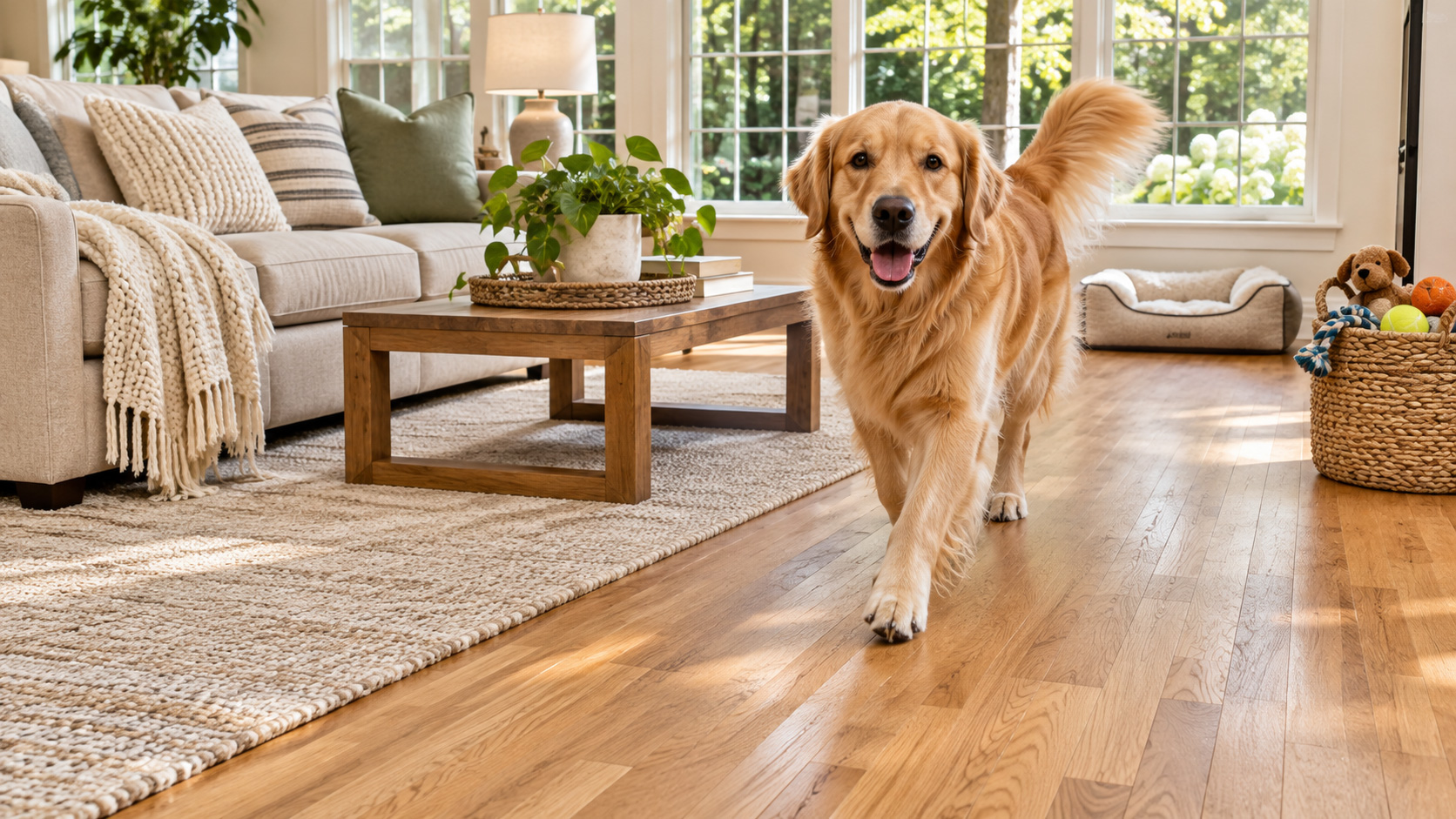
The good news is that you do not have to cover every inch of your home or restrict your dog’s movement to protect your flooring. A combination of regular nail care, strategically placed rugs, entryway mats, and proper floor maintenance can help minimize everyday damage.
If you want to know how to protect hardwood floors from dog nails, start with these seven practical strategies. They are designed to preserve your flooring while keeping your home comfortable and welcoming for your pet.
Can Dog Nails Scratch Hardwood Floors?
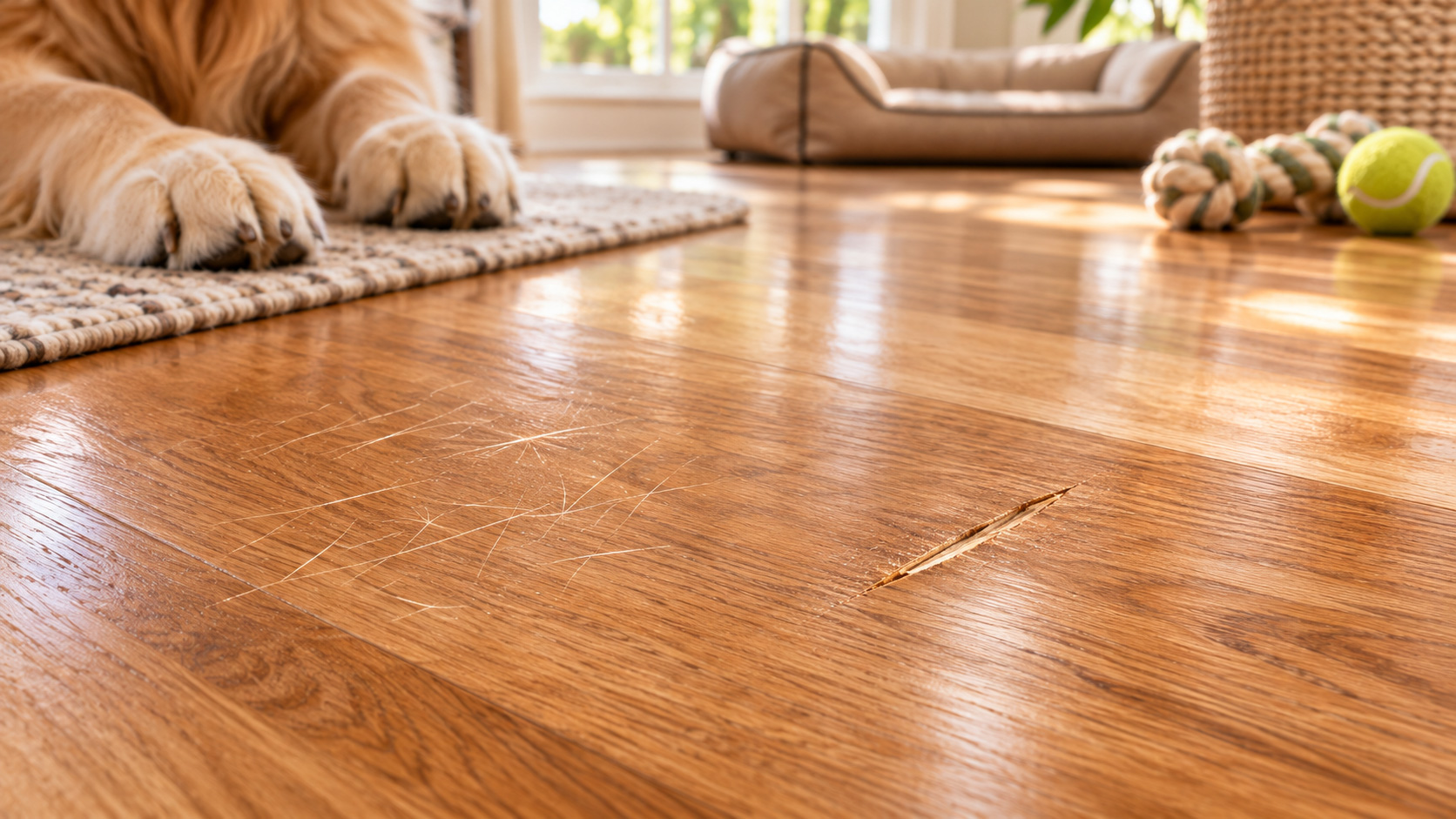
Yes. Dog nails can scratch the protective finish on hardwood floors and, under certain conditions, contribute to deeper surface damage. The amount of wear depends on factors such as nail length, dog activity, flooring species, finish condition, and everyday maintenance.
However, it is important to understand that not all floor damage comes from direct contact with dog nails.
There are several types of damage to recognize:
- Surface scratches: Light marks that affect the protective finish rather than penetrating deeply into the wood.
- Deep scratches and gouges: More serious damage that penetrates the finish and may tear the wood fibers.
- Abrasive wear: Small particles such as sand and dirt rub against the floor’s finish as your dog moves around.
- Indentations: Small depressions caused by pressure or impact, including contact from dog claws.
- Moisture damage: Water spills or pet accidents can cause discoloration, finish deterioration, or changes in the wood.
The National Wood Flooring Association (NWFA) distinguishes between surface scratches, deep scratches, indentations, and moisture-related damage in its technical flooring guidelines.
Understanding these differences helps you choose the right prevention method instead of treating every floor mark as a nail scratch.
7 Practical Ways to Protect Hardwood Floors From Dog Nails
1. Keep Your Dog’s Nails Properly Trimmed
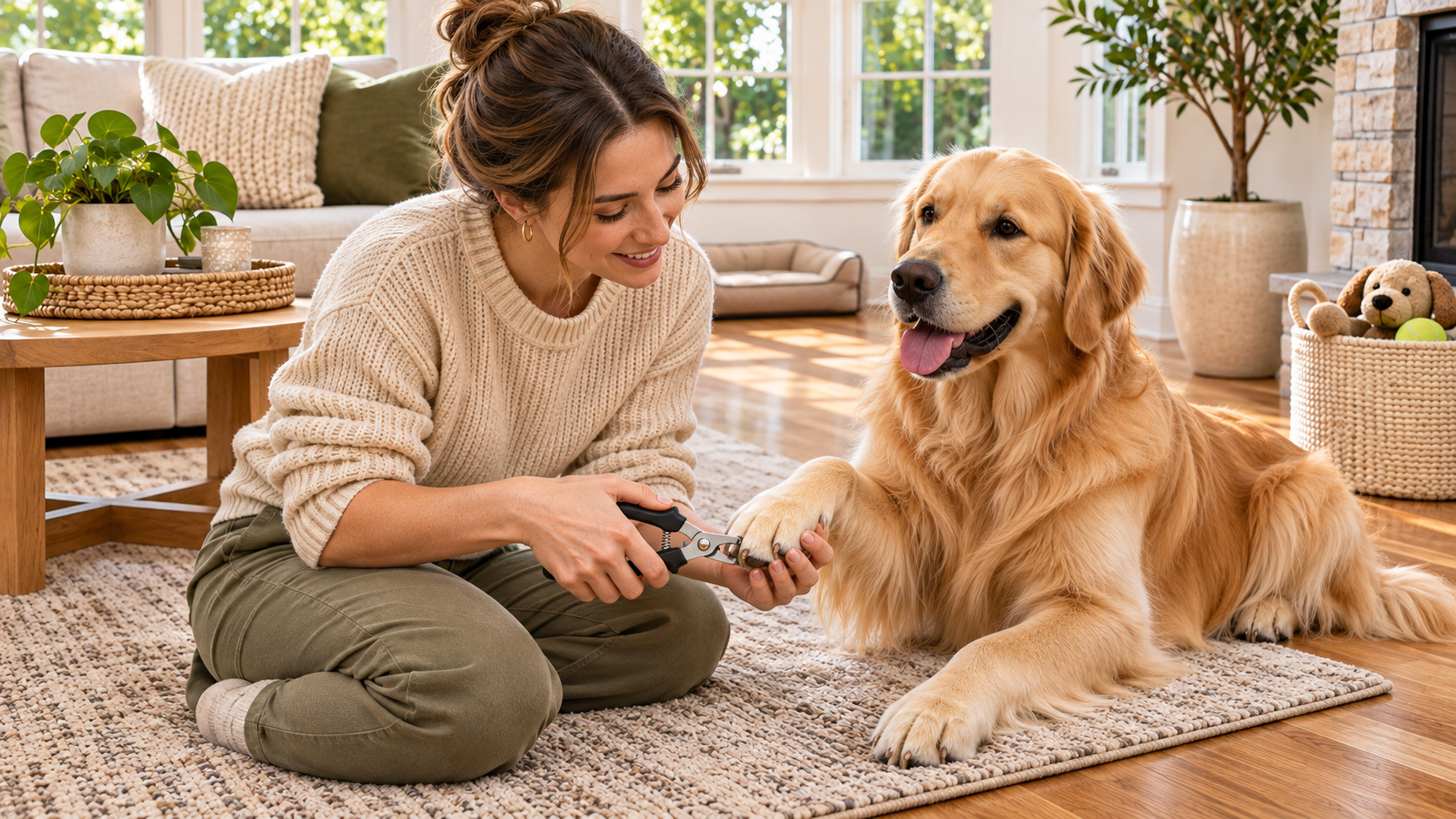
One of the simplest ways to reduce scratches is to maintain your dog’s nails at an appropriate length.
Long nails are more likely to make contact with the floor while your dog walks or changes direction. They can also affect your dog’s comfort and movement.
According to the American Kennel Club (AKC), clicking sounds when a dog walks on a hard floor can indicate that its nails are too long.
Here are a few practical nail-care habits:
- Check your dog’s nails regularly rather than waiting until they become visibly long.
- Use nail clippers designed specifically for dogs.
- Avoid cutting into the quick, which contains blood vessels and sensitive tissue.
- Trim small amounts at a time if you are learning to do it yourself.
- Ask a veterinarian or professional groomer for assistance if your dog becomes uncomfortable or you are unsure about the proper technique.
The ideal trimming frequency varies depending on your dog’s activity level, nail growth, and the surfaces it regularly walks on.
You can also consider a dog nail grinder if your pet tolerates it better than traditional clippers. However, grinders require proper handling and should be introduced gradually.
For more guidance, consult the AKC’s dog grooming and nail-care guide.
2. Place Area Rugs and Runners in High-Traffic Areas
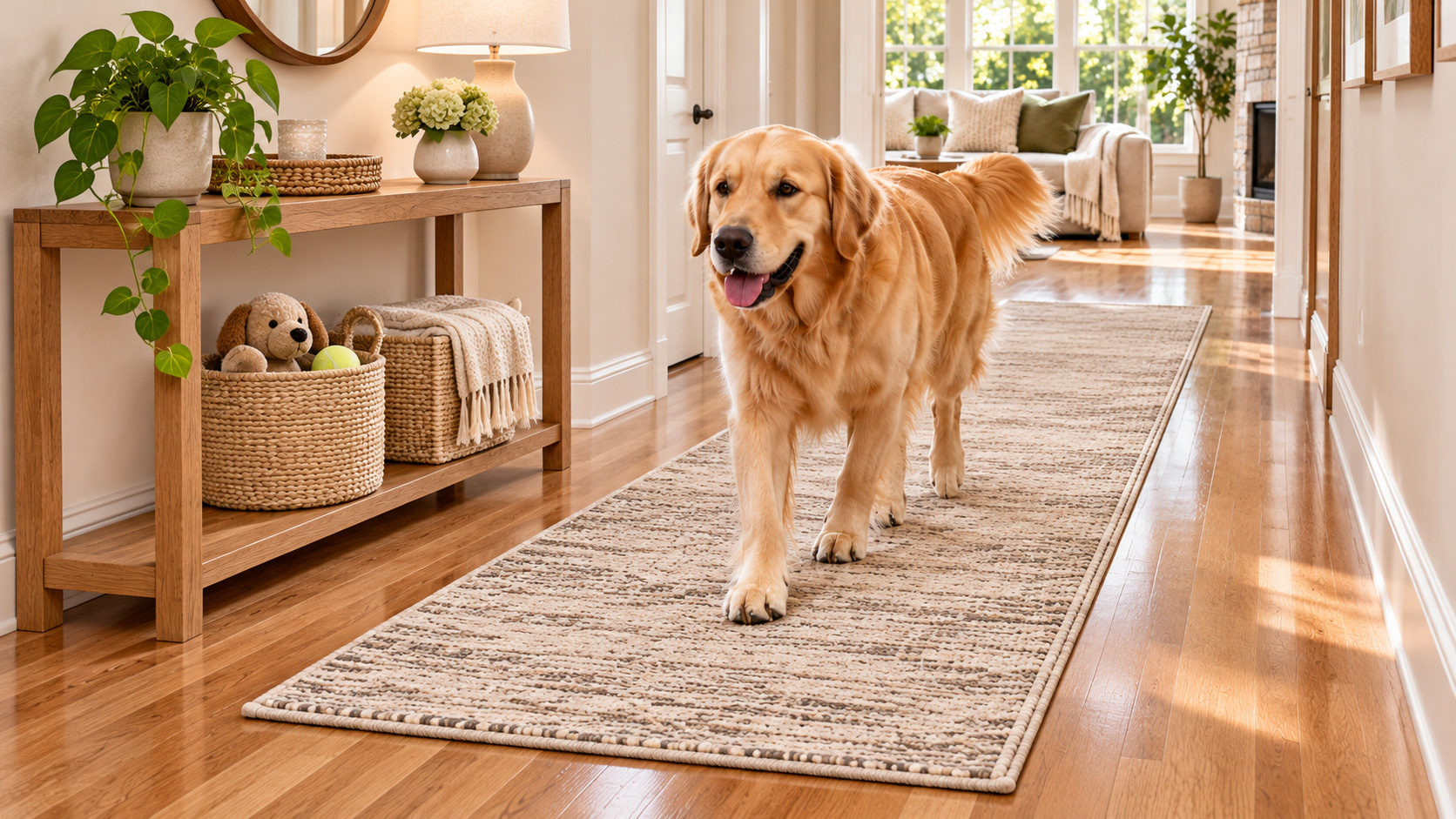
Area rugs and runners provide an additional protective layer between your dog’s paws and hardwood flooring.
Instead of covering the entire room, focus on areas where your dog spends the most time moving around.
For example:
- Hallways where your dog frequently walks.
- Living room pathways between furniture.
- Areas near the sofa where your dog jumps down.
- Spaces where your dog regularly plays or changes direction.
A washable, low-pile rug can be a practical option because it is generally easier to clean and maintain than a thick, high-pile carpet.
Choose rugs that lie flat and remain stable during everyday movement. A rug that slides around can create a tripping or slipping hazard for both pets and people.
Practical tip: Observe your dog’s usual walking routes for a few days. Place rugs where repeated movement occurs rather than buying several rugs without considering the room’s layout.
This approach protects the areas that need attention while preserving the natural appearance of your hardwood floors.
3. Choose a Rug Pad That Is Compatible With Your Hardwood Finish
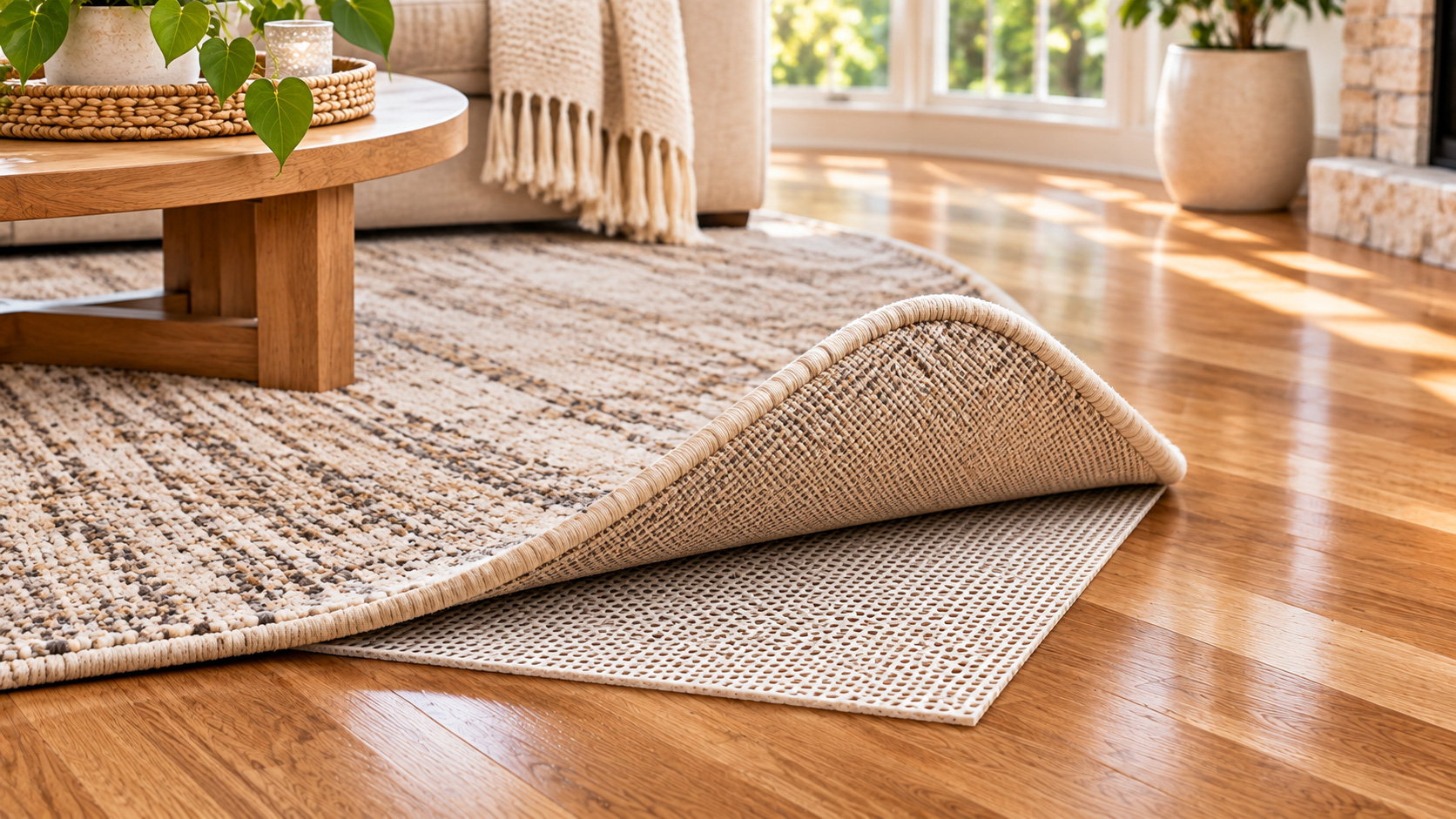
A rug can protect hardwood flooring, but the material underneath it matters just as much.
Some rug pads and backing materials can trap moisture, transfer color, or interact with certain floor finishes. A poorly chosen pad may create a different flooring problem while attempting to prevent scratches.
Before purchasing a rug pad, consider these factors:
- Compatibility with your hardwood floor’s finish.
- Breathability and moisture management.
- Non-staining materials.
- Adequate grip to prevent the rug from moving.
- Manufacturer recommendations for both the flooring and rug.
For example, Bruce recommends breathable, non-staining rug materials and advises against solid rubber or latex-backed rugs on its hardwood flooring. It also warns that abrasive jute backing can scratch the surface.
However, flooring manufacturers may have different requirements depending on their products and finishes.
Therefore, do not assume that every rubber-backed or non-slip rug pad is suitable for every hardwood floor.
Check your flooring manufacturer’s maintenance instructions before selecting an underlay.
You can review Bruce’s hardwood flooring care recommendations for an example of product-specific guidance.
4. Protect Entryways With Walk-Off Mats
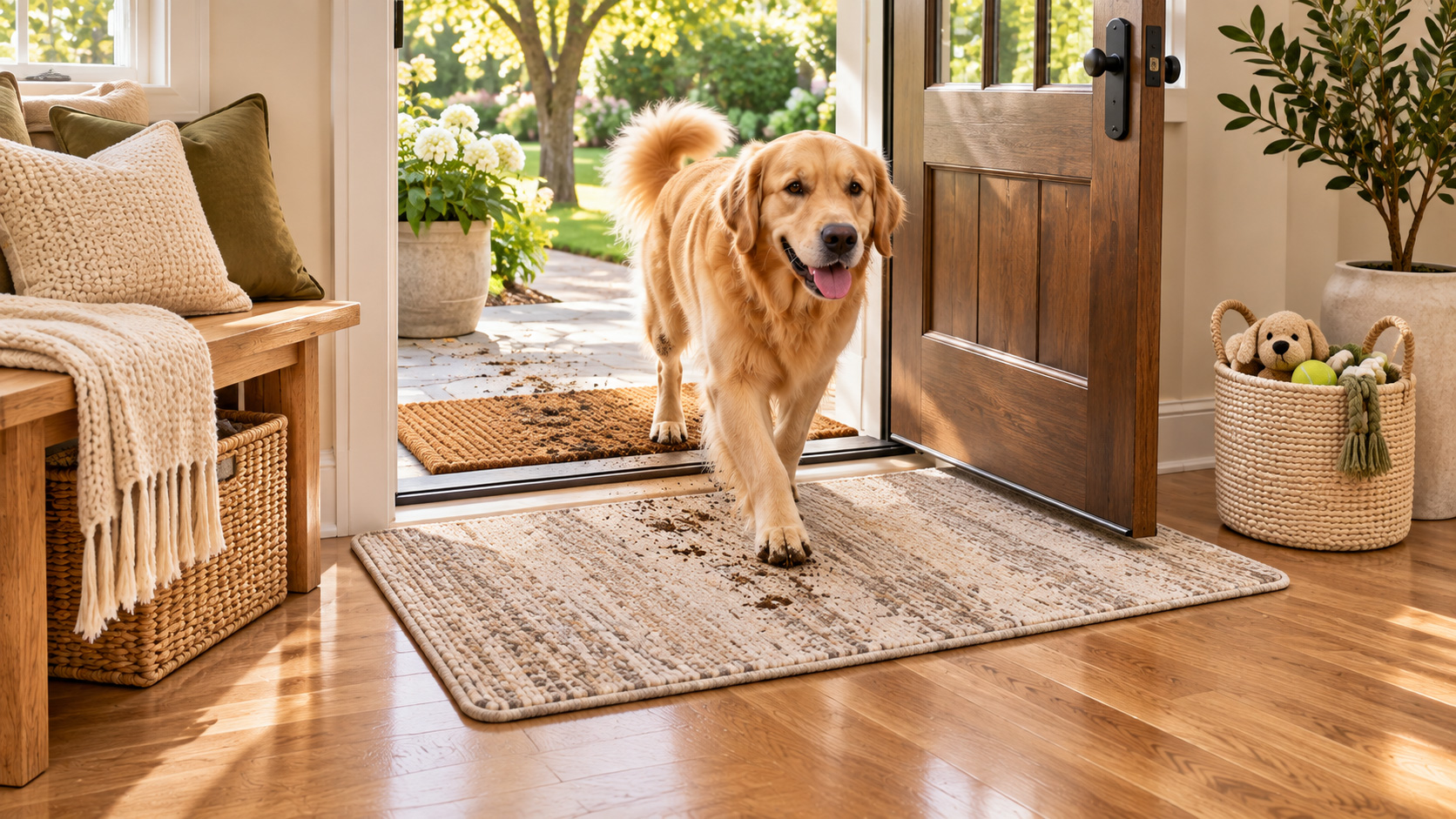
Your dog’s paws can bring small particles of dirt, sand, and debris into your home after outdoor activities.
These particles may become trapped between the dog’s paws and the hardwood surface, creating additional friction as your pet walks.
Installing walk-off mats near exterior doors can help reduce this problem.
For better coverage, consider using two separate mats:
- An outdoor mat: Helps remove loose dirt and debris before your dog enters.
- An indoor mat: Provides another opportunity to collect remaining dirt and moisture.
Choose mats that are easy to clean and suitable for your specific flooring finish.
Remember to clean the mats regularly. A dirty mat can accumulate particles that may eventually transfer back onto the hardwood.
This simple entryway arrangement is especially useful for households with dogs that frequently go outside for walks, exercise, or playtime.
5. Clean Dirt and Grit From Hardwood Floors Regularly
Even when your dog’s nails are properly maintained, dirt and grit can still contribute to floor wear.
Small particles can behave like abrasives when they are repeatedly moved across the surface.
That is why regular cleaning is an important part of hardwood floor protection.
A practical maintenance routine includes:
- Sweeping with a soft-bristle broom to remove loose dirt.
- Vacuuming with an appropriate hard-floor attachment.
- Paying attention to corners, furniture edges, and high-traffic pathways.
- Cleaning beneath area rugs periodically.
- Removing visible dirt and debris before they accumulate.
Avoid using a vacuum setting with a rotating beater bar unless your flooring manufacturer specifically approves it.
You should also use a hardwood floor cleaner recommended for your particular flooring finish.
Shaw Floors recommends regular sweeping or vacuuming, entrance mats, and cleaning high-traffic areas as part of its hardwood maintenance guidance.
You can read its official hardwood floor care recommendations for additional maintenance information.
6. Protect Areas Where Your Dog Plays, Rests, and Eats
Some parts of your home experience more pet-related activity than others.
For example, dogs often jump down from sofas, run toward their owners, or repeatedly turn around in the same area.
These movements can increase wear on the flooring.
Instead of covering the entire room, identify specific activity zones and provide suitable protection.
Consider the following arrangements:
- Living room: Place an area rug near the sofa or favorite resting spot.
- Hallway: Use a runner along frequently traveled pathways.
- Play area: Provide a stable, easy-to-clean surface where your dog regularly plays.
- Feeding area: Place a suitable mat beneath food and water bowls to catch spills.
For water bowls, check beneath the mat regularly and wipe up spills promptly. A mat should not become a place where moisture remains trapped against the hardwood.
The objective is to protect vulnerable areas without making your home difficult to maintain or uncomfortable for your dog.
7. Maintain the Protective Finish of Your Hardwood Floors
Hardwood flooring relies on its protective finish to help resist everyday wear.
Although a quality finish can provide a degree of protection, it does not make the floor completely resistant to scratches.
Routine maintenance helps preserve that protective layer.
Start by identifying the type of hardwood flooring and finish installed in your home. Solid hardwood and engineered hardwood may have different construction characteristics, while individual manufacturers can recommend different cleaning and maintenance procedures.
Follow these practices:
- Use cleaning products approved for your flooring.
- Wipe up spills promptly.
- Avoid excessive water during cleaning.
- Do not use steam mops unless specifically approved by the flooring manufacturer.
- Avoid abrasive cleaning materials.
- Follow the manufacturer’s recommendations for maintenance coats or refinishing.
The NWFA also advises against using vinegar and steam cleaners on wood floor finishes because they can damage the finish and flooring.
If your floor has become dull or shows widespread wear, consult a qualified hardwood flooring professional about whether a maintenance coat or refinishing is appropriate.
Where Should You Place Rugs to Protect Hardwood Floors From Dogs?
Strategic rug placement can make a significant difference without changing the overall appearance of your interior.
The best locations depend on your dog’s habits and the layout of your home.
Area Recommended protection Main purpose Entryway Indoor and outdoor walk-off mats Reduce dirt and debris Hallway Washable runner Protect frequently used pathways Living room Area rug Cover common movement and landing zones Play area Stable, easy-to-clean rug Reduce direct floor contact Feeding station Compatible protective mat Catch water and food spills
You do not necessarily need to purchase expensive rugs for every room.
Start with the locations where your dog spends the most time. You can add more protection later if you notice additional wear in other areas.
What Type of Rug Is Best for Hardwood Floors With Dogs?
When choosing rugs for a pet-friendly home, prioritize practicality over appearance alone.
A suitable rug should be easy to clean, remain stable, and work with your flooring’s maintenance requirements.
Here are some characteristics worth considering:
Low-pile construction: Shorter fibers are generally easier to vacuum and maintain than thick, high-pile rugs.
Washable materials: Rugs that can be cleaned according to their care labels are useful for managing everyday pet dirt and accidental spills.
Stable construction: Choose a rug that stays in position when your dog walks or changes direction.
Compatible backing: Confirm that the rug’s backing and any separate pad are approved for your hardwood flooring finish.
Appropriate sizing: A rug should cover the area where your dog regularly walks, rests, or plays without creating unnecessary obstacles.
Avoid choosing a rug solely because it has a non-slip backing. Its compatibility with your hardwood finish is equally important.
How to Deal With Existing Dog Nail Scratches on Hardwood Floors
If your hardwood floor already has scratches, the first step is to determine how deep the damage is.
Not every scratch requires sanding or refinishing.
The NWFA identifies different categories of damage that may require different repair approaches.
Damage type General appearance Appropriate next step Surface scratch Light mark in the finish Check manufacturer-approved touch-up options Deep scratch Damage extending through the finish into wood fibers Consult a flooring professional Dent or gouge Visible depression or missing wood fibers Professional assessment may be necessary Moisture stain Discoloration or damage associated with liquid exposure Identify the moisture source and assess the affected area
A useful preliminary check is to examine the scratch under good lighting.
According to the NWFA’s technical guidelines, surface scratches are typically limited to the finish coats, while deeper scratches can extend through the finish and tear the wood fibers.
If the damage is extensive, avoid experimenting with sandpaper, steel wool, household chemicals, or generic polishing products.
These methods may make the damage worse, particularly when the flooring has a specialized factory-applied finish.
For deeper scratches, damaged boards, or widespread finish deterioration, contact a qualified hardwood flooring professional.
If your hardwood floor has more than minor surface scratches, it is important to understand the type of damage before attempting a repair. Our guide to common hardwood floor damage, including gouges and dents explains how to recognize deeper flooring damage and understand when professional repairs may be necessary.
Common Mistakes to Avoid When Protecting Hardwood Floors From Dogs
Even well-intentioned prevention methods can create additional problems if they are applied incorrectly.
Watch out for these common mistakes:
1. Using the wrong rug backing
Some backing materials may stain, trap moisture, or damage certain hardwood finishes. Always check product compatibility.
2. Allowing dirt to accumulate
A rug or entry mat will not provide effective protection if it is already filled with abrasive particles.
3. Ignoring nail maintenance
Rugs can reduce direct contact with flooring, but they cannot replace regular nail care.
4. Using unsuitable cleaning products
A cleaner designed for tile or other surfaces may not be appropriate for hardwood flooring.
5. Covering wet floors with rugs
Make sure the floor and rug are dry before placing the rug back. Trapped moisture can create additional problems.
6. Assuming all scratches are caused by dogs
Furniture movement, footwear, dirt, and other everyday activities can also damage hardwood flooring.
Understanding the actual cause helps you choose a more effective solution.
Frequently Asked Questions
Do dog nails always scratch hardwood floors?
Not necessarily. The risk depends on nail length, dog movement, flooring species, finish condition, and maintenance. However, dog claws can contribute to scratches and indentations, so regular nail care and floor protection are recommended.
How often should I trim my dog’s nails to protect hardwood floors?
There is no universal schedule for every dog. Nail growth and natural wear vary according to activity and lifestyle. Check your dog’s nails regularly, and pay attention to clicking sounds when walking on hard surfaces. A veterinarian or professional groomer can help establish an appropriate routine.
Are rugs enough to protect hardwood floors from dogs?
Rugs provide additional protection in high-traffic areas, but they are not a complete solution. Combine them with nail maintenance, regular cleaning, entryway mats, and compatible rug pads.
Can dog scratches be removed from hardwood floors?
Some light scratches affect only the protective finish and may be addressed with manufacturer-approved touch-up products. Deeper scratches and gouges may require professional repair or refinishing.
Is engineered hardwood better for homes with dogs?
Not automatically. Performance depends on the wood species, wear layer, surface finish, and product construction. Check the manufacturer’s specifications rather than assuming that engineered hardwood is always more resistant to dog scratches.
Final Thoughts
Protecting hardwood floors from dog nails does not require limiting your pet’s movement or sacrificing the appearance of your home.
The most practical approach combines regular nail care, strategically placed rugs, compatible rug pads, clean entryways, and consistent floor maintenance.
Start by identifying the areas where your dog spends the most time. Then introduce small improvements that address the actual sources of wear.
With the right combination of preventive measures, you can maintain a more pet-friendly home while helping your hardwood floors retain their appearance for years to come.

Royan Abdillah is a home improvement enthusiast and interior design consultant with over 9 years of experience in the industry. Passionate about blending aesthetics with functionality, Royan Abdillah specializes in unique DIY furniture and pet-friendly home solutions. Through this blog, Royan Abdillah aims to help homeowners create beautiful, personalized spaces on a budget.