
A small room does not always feel small because of its actual size.
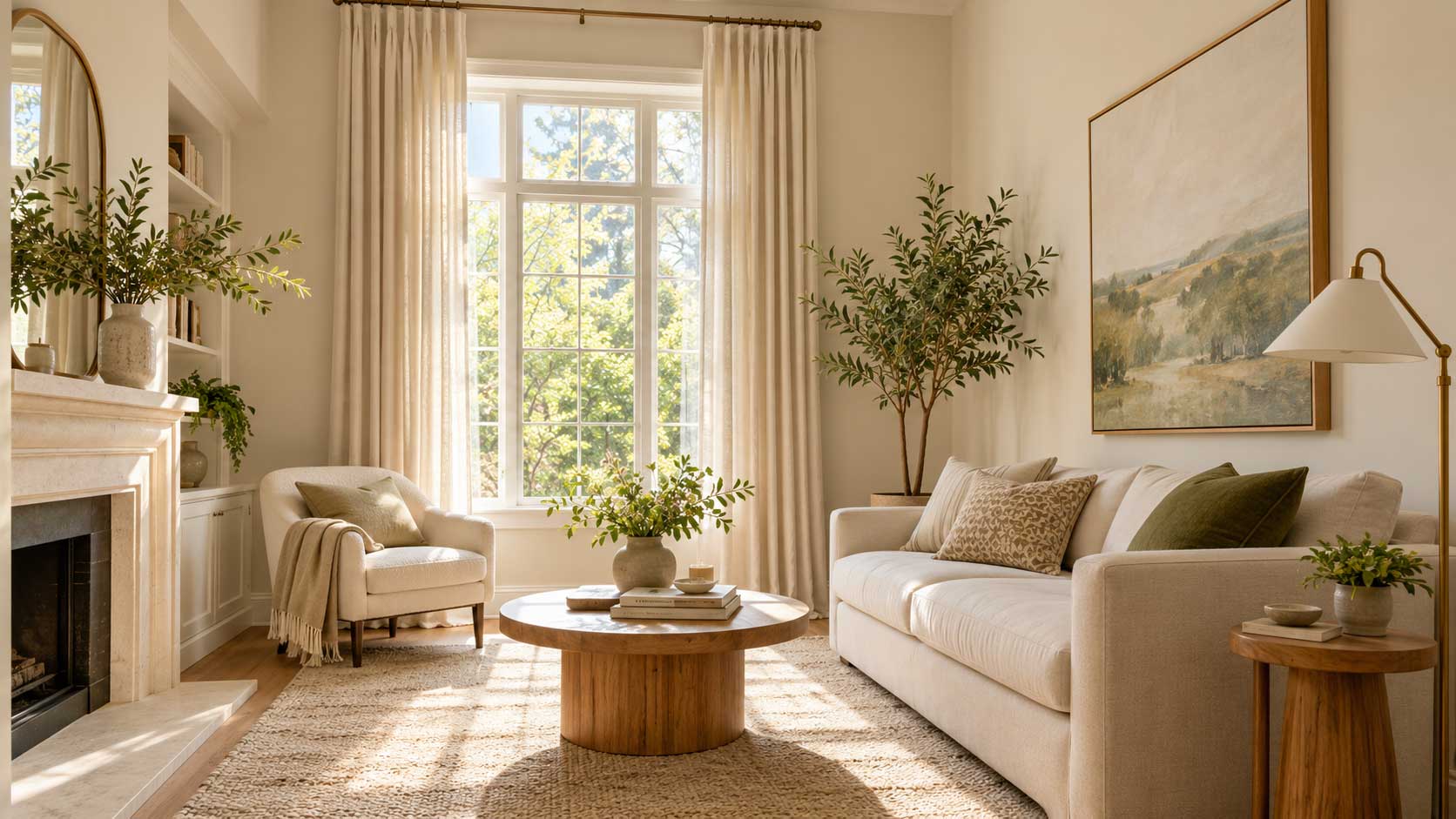
In many homes and apartments, the problem is not the number of square feet—it is how visual elements are arranged. Furniture placement, lighting, colors, and even window treatments can significantly influence how spacious a room feels.
Curtains are one of the easiest design elements to adjust, yet many homeowners underestimate their impact.
The wrong curtain placement can make a room appear shorter, darker, and more crowded. Hanging curtain rods too low, choosing heavy fabrics, or using narrow panels can visually shrink the space.
On the other hand, the right curtain techniques can create the illusion of taller ceilings, wider windows, and a more open interior.
Professional interior designers often use simple curtain placement strategies to manipulate visual proportions without requiring expensive renovations.
In this guide, we will explore practical hanging curtain tips for small spaces that help rooms feel larger, brighter, and more balanced.
You will learn how to position curtain rods, choose the right fabrics and colors, avoid common mistakes, and select window treatments that work beautifully in apartments, bedrooms, kitchens, and compact living areas.
Can Curtains Really Make a Small Room Look Bigger?
Yes, curtains can influence how large or small a room feels.
While curtains cannot physically increase the size of a room, they can change the way the eye perceives space.
Interior design relies heavily on visual balance. Elements such as vertical lines, continuous colors, and natural light can create a sense of openness.
Curtains affect three important factors:
1. Visual Height
When curtain rods are installed higher than the window frame, the eye naturally follows the vertical fabric lines upward.
This creates the impression of:
- Higher ceilings
- Taller walls
- More elegant proportions
This technique is especially useful in apartments or rooms with standard-height ceilings.
2. Window Size Perception
A narrow curtain rod can make a window appear smaller than it actually is.
Extending the curtain rod beyond the window edges allows more glass to remain visible when curtains are open.
The result:
- Wider-looking windows
- More natural light
- A more spacious appearance
3. Light Distribution
Natural light is one of the most important factors in making small spaces feel open.
Heavy, dark curtains can absorb light and create visual barriers.
Lightweight fabrics, sheer materials, and carefully positioned curtains allow daylight to move through the room.
10 Hanging Curtain Tips for Small Spaces That Create More Visual Space
1. Hang Curtain Rods Higher Than the Window Frame
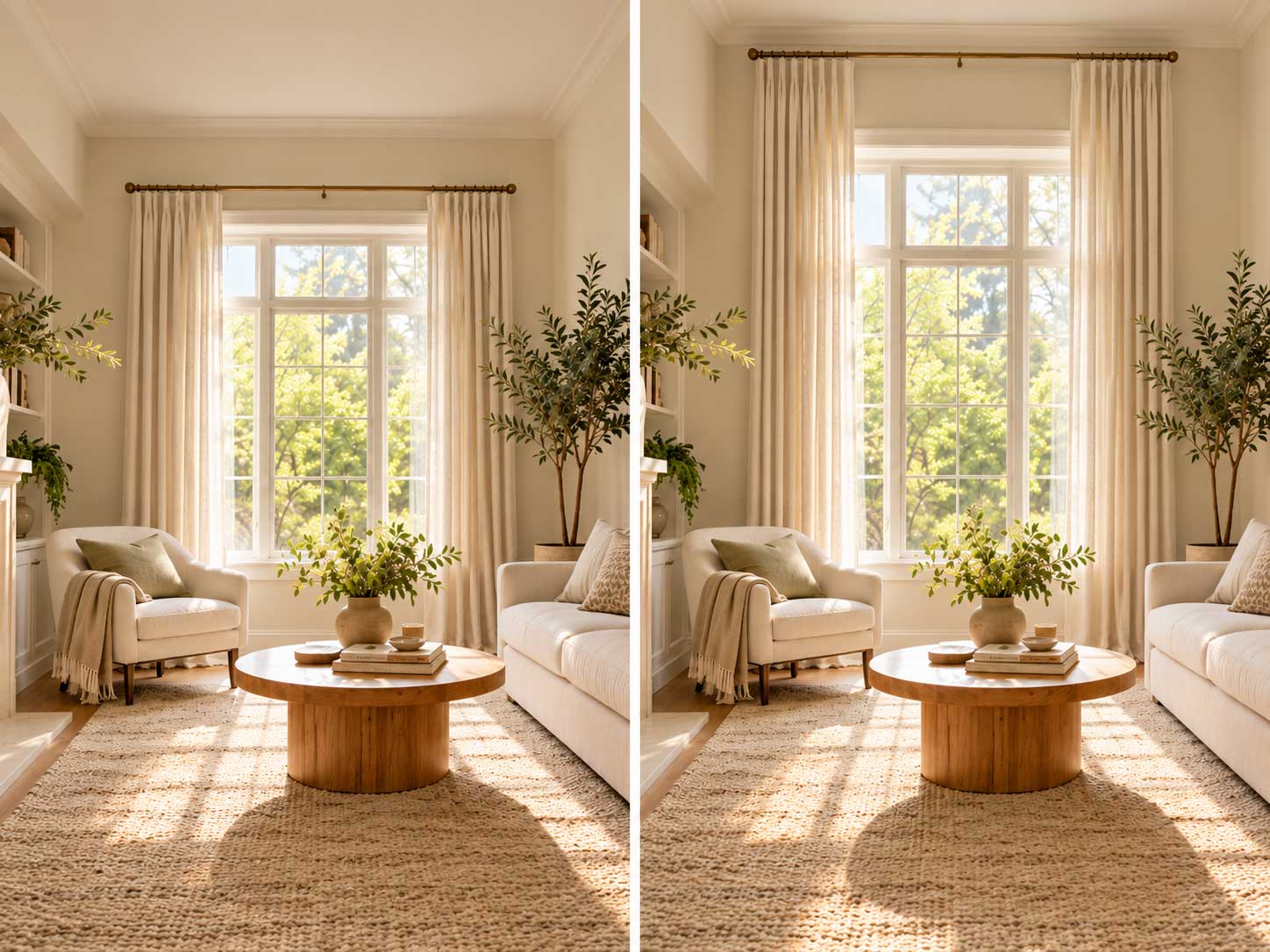
One of the most effective tricks for small rooms is installing curtain rods higher than the actual window.
Many homeowners make the mistake of placing the rod directly above the window frame. Although this seems logical, it can make the wall appear shorter.
Instead, designers often recommend placing curtain rods:
- 4–6 inches above the window frame
- Closer to the ceiling when possible
This creates a longer vertical line, making the room feel taller.
For rooms with low ceilings, ceiling-mounted curtain tracks can create an even stronger illusion of height.
The goal is simple: draw the eye upward.
2. Extend Curtain Rods Beyond the Window Width
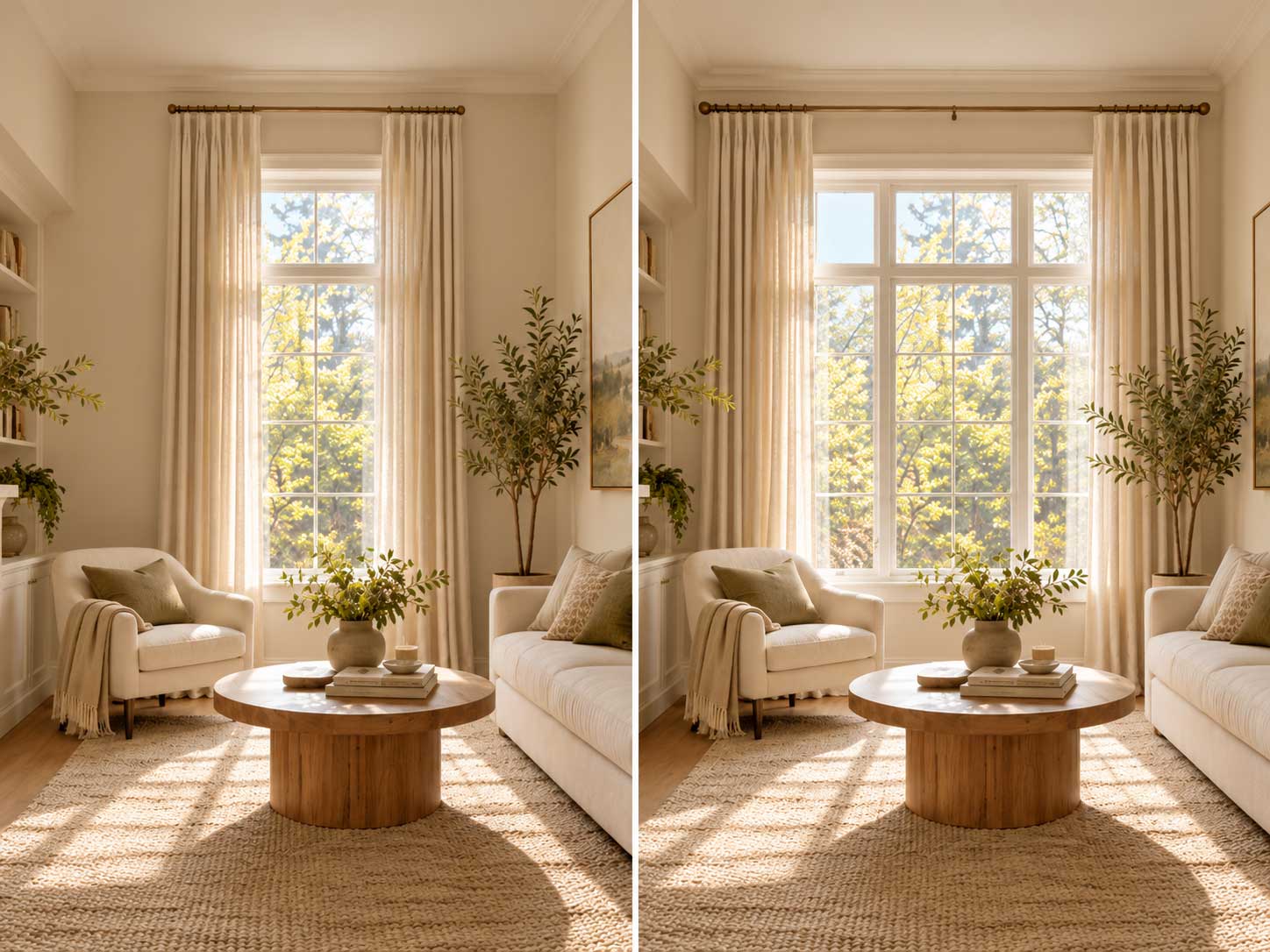
Another professional technique is making windows appear wider.
Instead of choosing a curtain rod that matches the exact window width, extend it several inches beyond both sides.
Benefits:
- More visible glass area
- Wider-looking windows
- Better natural light exposure
- More elegant curtain placement
For example: a 36-inch window can often benefit from a curtain rod that extends beyond the frame, allowing curtains to stack beside the window instead of covering the glass.
This approach works especially well in:
- Small living rooms
- Studio apartments
- Compact bedrooms
3. Choose Floor-Length Curtains Instead of Short Panels
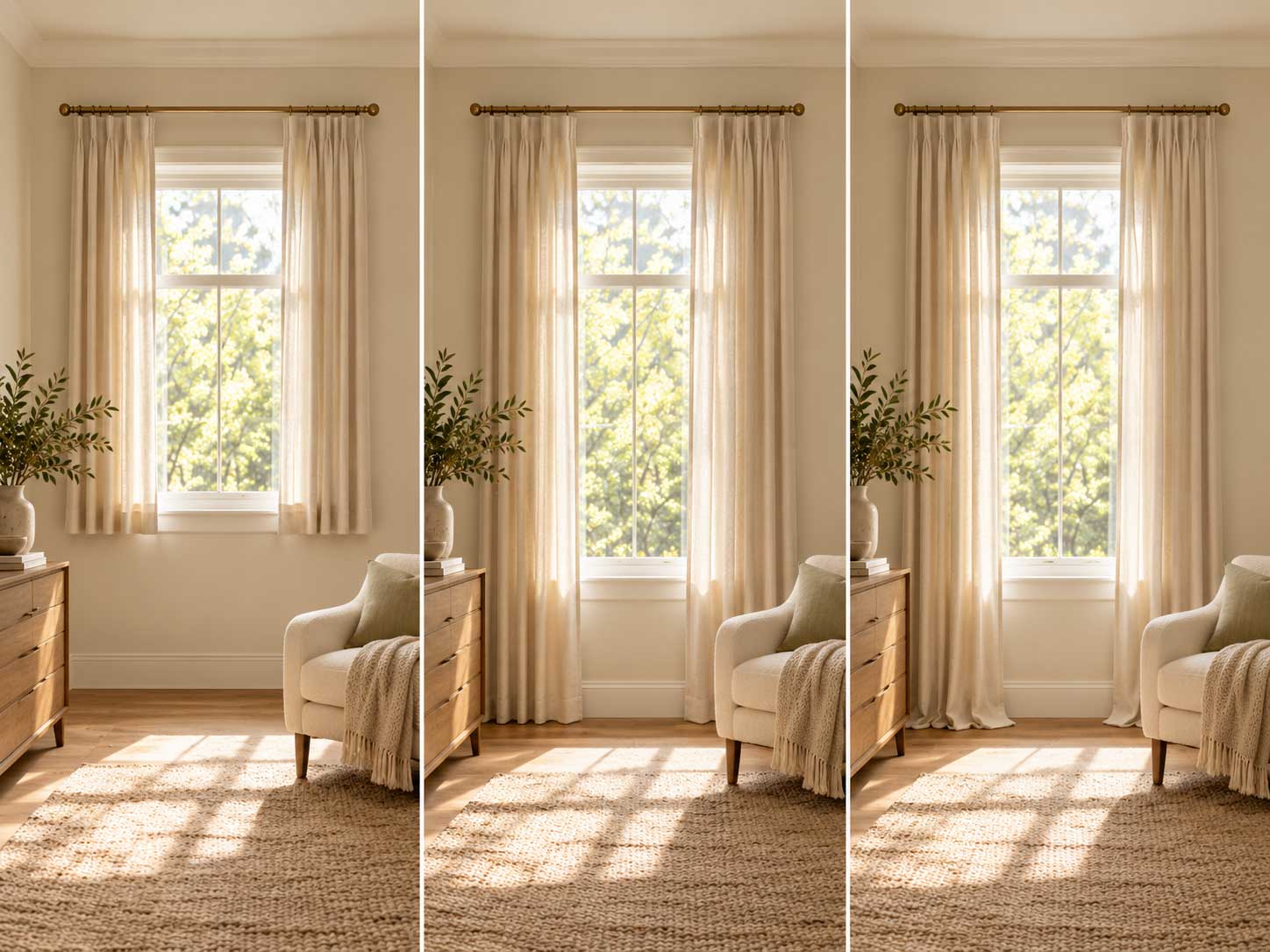
Curtain length has a major impact on room proportions.
Short curtains that stop halfway down the wall can visually divide the space and make walls appear shorter.
For most small rooms, floor-length curtains create a smoother vertical flow.
Popular options include:
Floating Length
Curtains end approximately ½ inch above the floor.
Benefits:
- Clean appearance
- Easier maintenance
- Modern look
Slight Break
Fabric lightly touches the floor.
Benefits:
- Softer appearance
- More traditional style
Ceiling-to-Floor Curtains
Curtains run from near the ceiling to the floor.
Benefits:
- Maximum height illusion
- Luxury interior appearance
For small spaces, continuous vertical fabric often creates a more spacious feeling.
4. Use Lightweight Fabrics to Maintain Natural Light
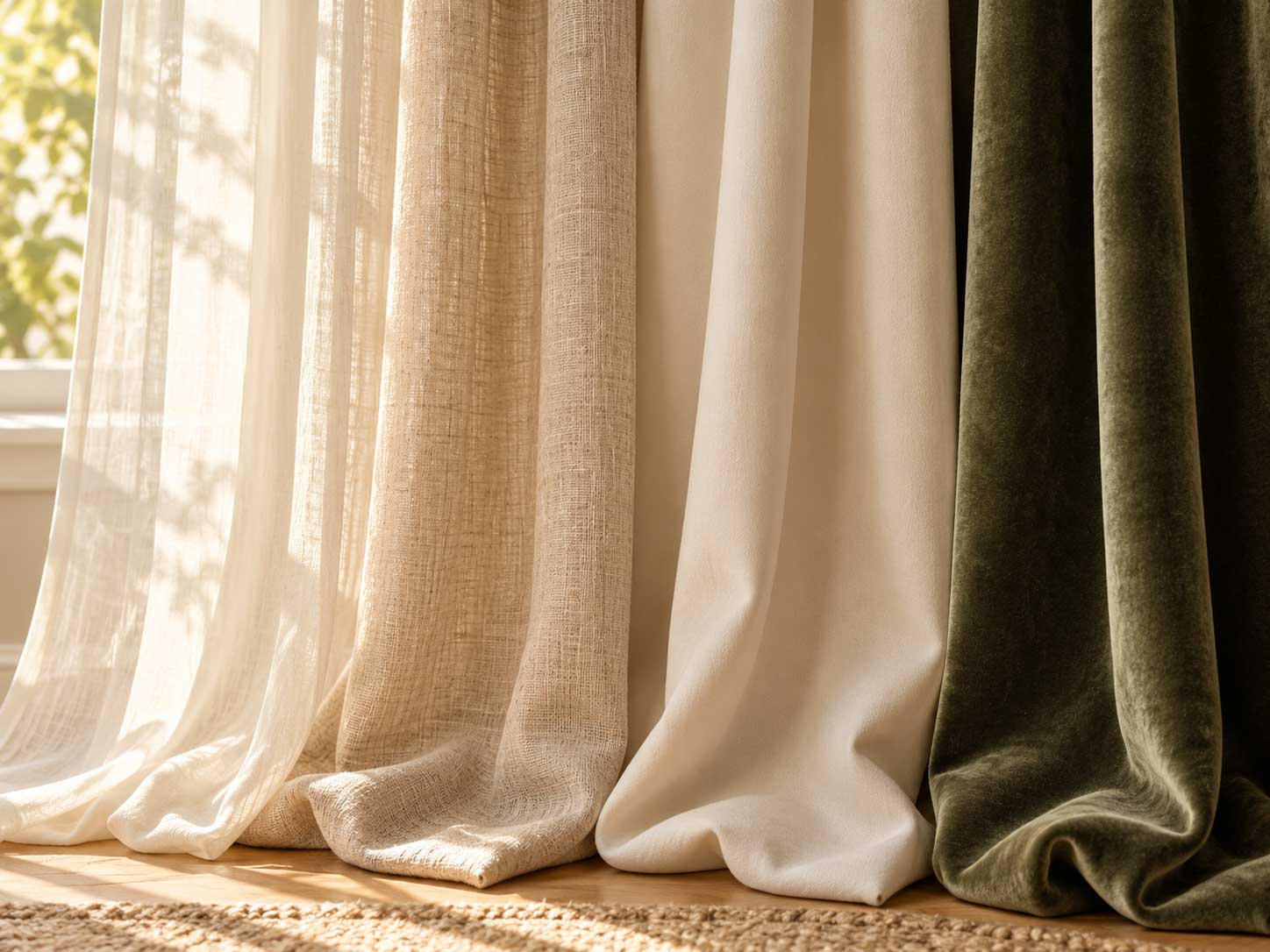
Fabric selection is just as important as placement.
Heavy velvet or thick blackout curtains can make compact rooms feel enclosed, especially when windows are already small.
Better choices include:
- Linen
- Cotton blends
- Sheer curtains
- Lightweight woven fabrics
These materials allow sunlight to filter through while maintaining softness and privacy.
For smaller kitchen windows where privacy and daylight are both important, homeowners can consider cafe curtains ideas for small windows as a practical alternative.
5. Choose Curtain Colors That Make Small Rooms Feel Larger
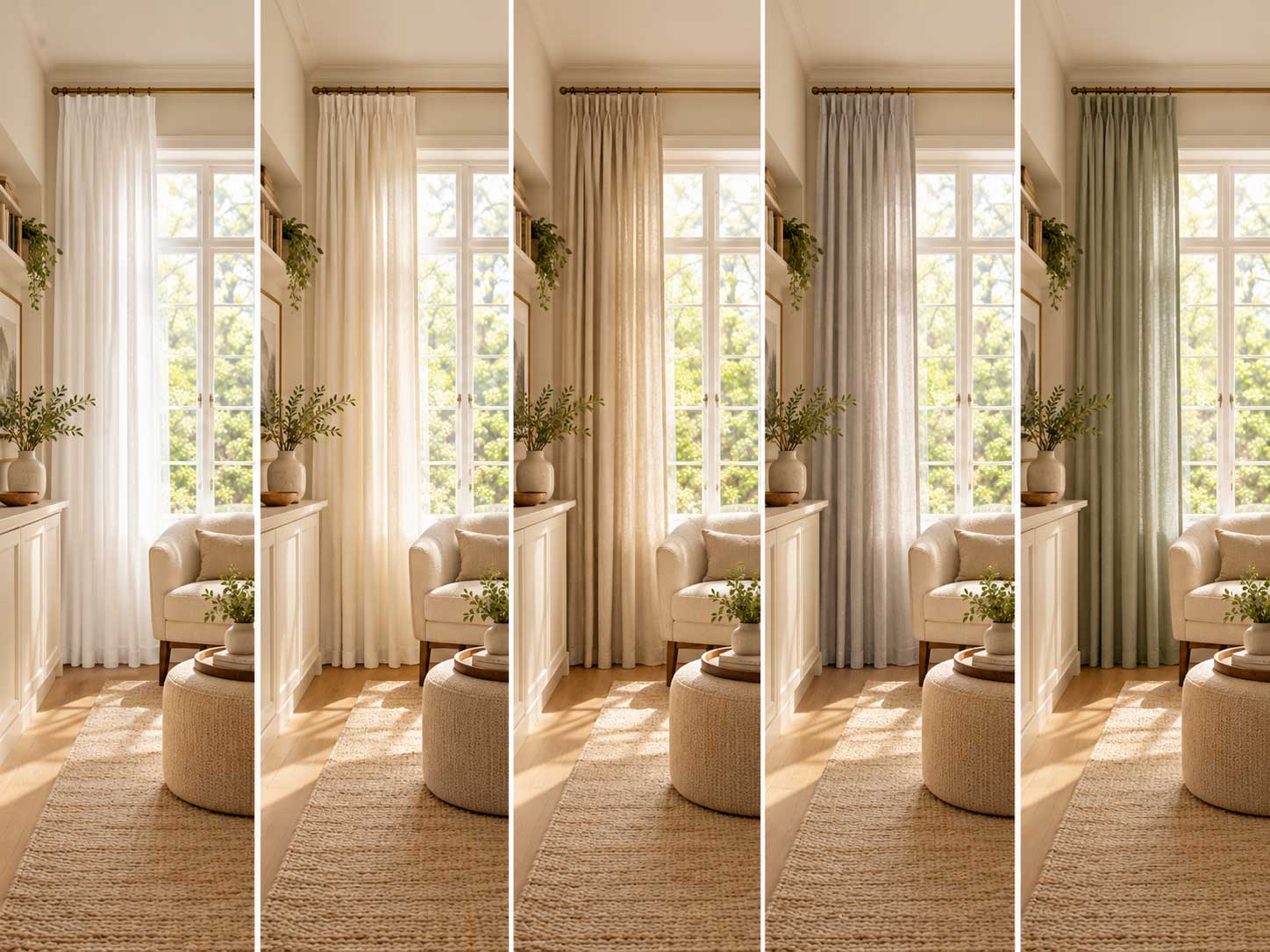
Color selection plays an important role in how spacious a room appears.
In small spaces, curtains should support the existing interior instead of creating visual separation.
Many homeowners make the mistake of choosing curtains as an isolated decoration. However, professional designers usually treat window coverings as part of the entire room composition.
The right curtain color can help walls appear longer and create a more continuous visual flow.
Use Light Neutral Colors for an Open Feeling
Light-colored curtains are one of the safest choices for compact rooms.
Popular options include:
- White
- Cream
- Beige
- Soft gray
- Light taupe
- Warm ivory
These colors reflect more natural light and prevent the window area from becoming visually heavy.
For example: a small bedroom with white walls and cream linen curtains will usually feel more open than the same room with dark navy curtains.
The goal is not to eliminate color, but to maintain visual balance.
Match Curtains with Wall Colors for a Seamless Look
One of the techniques frequently used by interior designers is color continuity.
When curtains are close in tone to the surrounding walls, the transition becomes less noticeable.
This creates:
- Longer-looking walls
- Fewer visual interruptions
- A more sophisticated appearance
Examples:
Wall Color Curtain Recommendation White Soft white, linen, cream Beige Sand, oatmeal, warm ivory Light gray Silver gray, white, muted tones Sage green Soft green, natural linen
This approach works particularly well for studio apartments and small bedrooms.
6. Use Vertical Patterns to Create the Illusion of Height
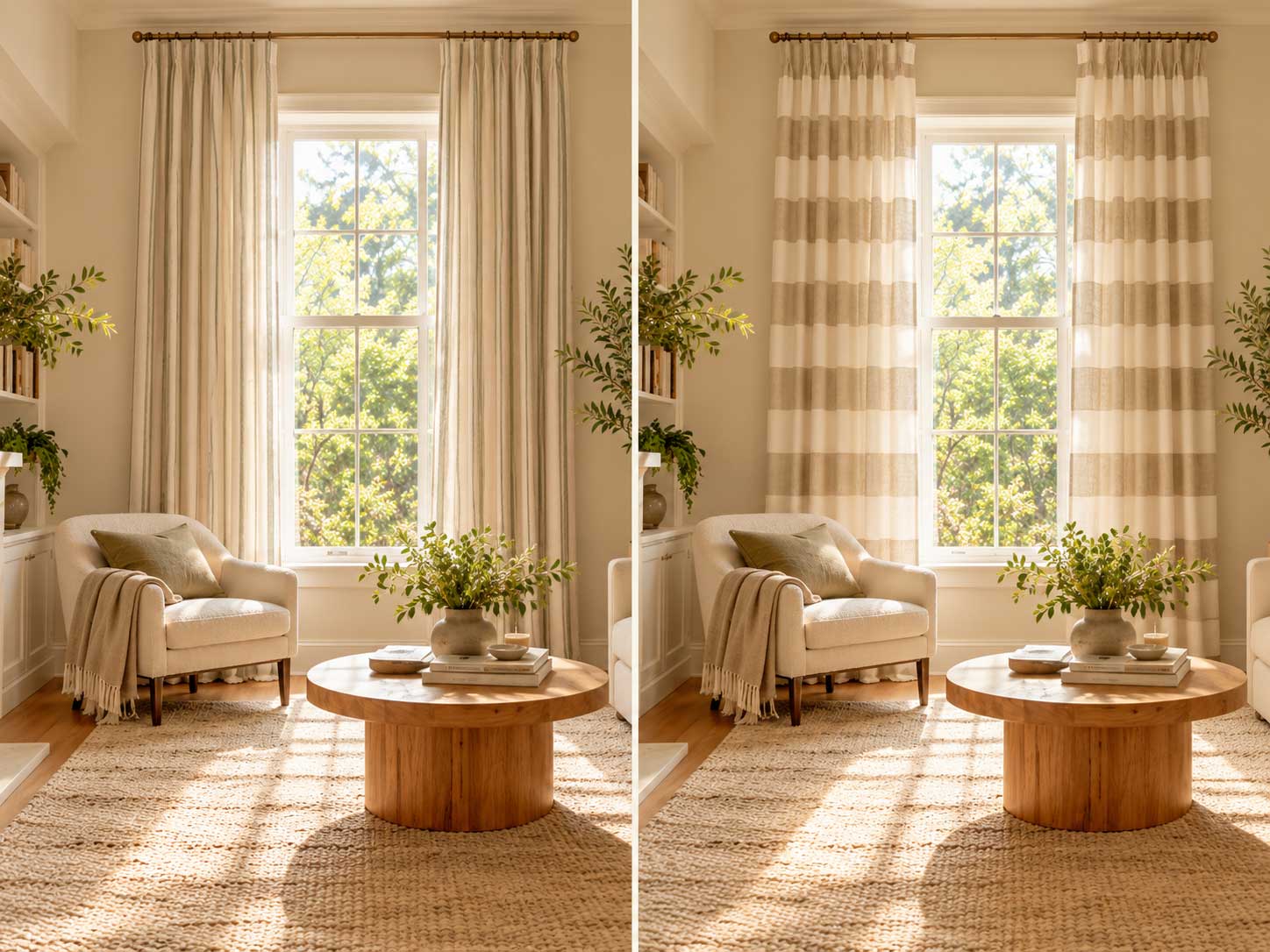
Patterns can either improve or reduce the feeling of space.
For small rooms, the scale and direction of the pattern matter.
Vertical patterns naturally guide the eye upward.
Good choices include:
- Thin vertical stripes
- Subtle textured fabrics
- Long flowing patterns
Avoid:
- Large horizontal patterns
- Oversized prints
- Heavy visual designs
Large patterns can dominate a small window and make the room feel more crowded.
A simple rule: the smaller the room, the more carefully you should control pattern scale.
7. Choose Curtain Panels with the Right Width
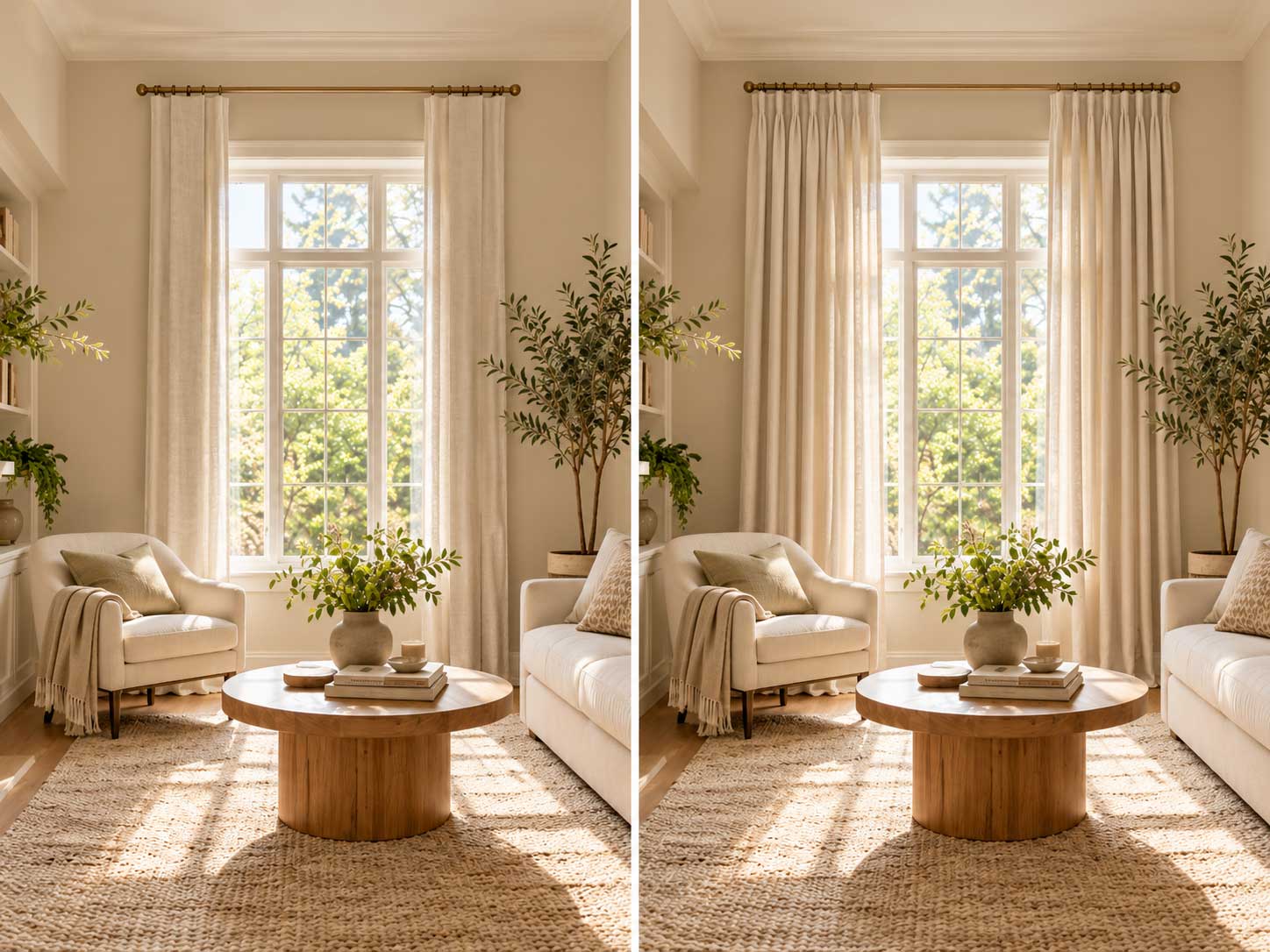
Curtain fullness affects how luxurious and spacious a room feels.
Curtains that are too narrow often look flat and unfinished.
Professional designers typically recommend using approximately:
1.5–2 times the window width
Example:
A 40-inch window may require:
- Minimum: 60 inches of curtain fabric
- Better appearance: 80 inches of curtain fabric
This creates natural folds while allowing the curtains to frame the window properly.
However, avoid excessive fullness in very small rooms.
Too much fabric can create unnecessary visual weight.
8. Keep Curtain Hardware Simple and Proportional
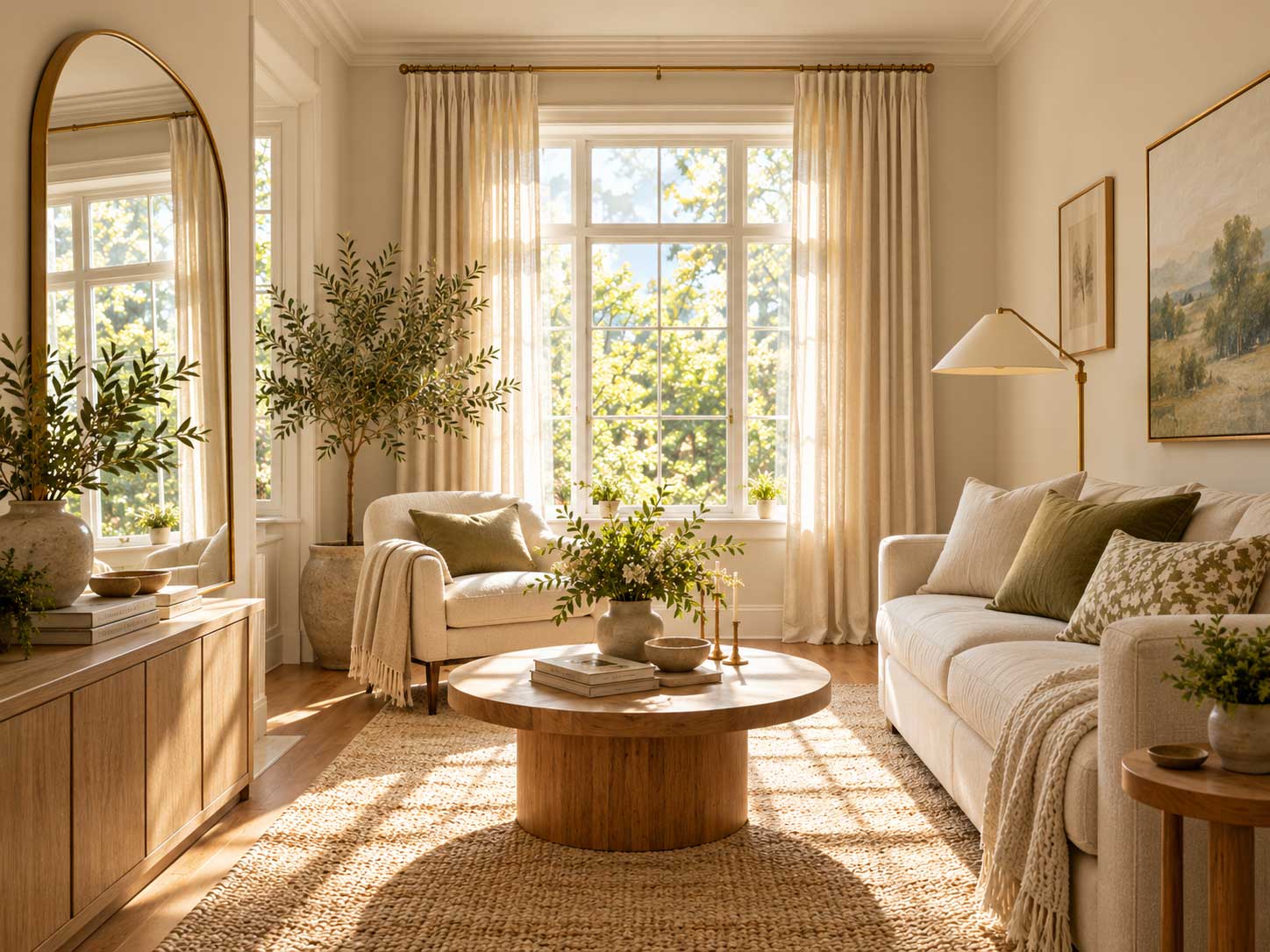
Curtain rods and hardware are often overlooked.
However, oversized rods, decorative finials, and heavy brackets can make a small window feel visually crowded.
For compact spaces, consider:
- Slim curtain rods
- Minimal brackets
- Simple finishes
- Hardware that matches existing decor
Good choices include:
- Matte black
- Brushed nickel
- Brass
- Natural wood tones
The hardware should support the design—not become the main feature.
9. Use Mirrors and Lighting Together with Curtains
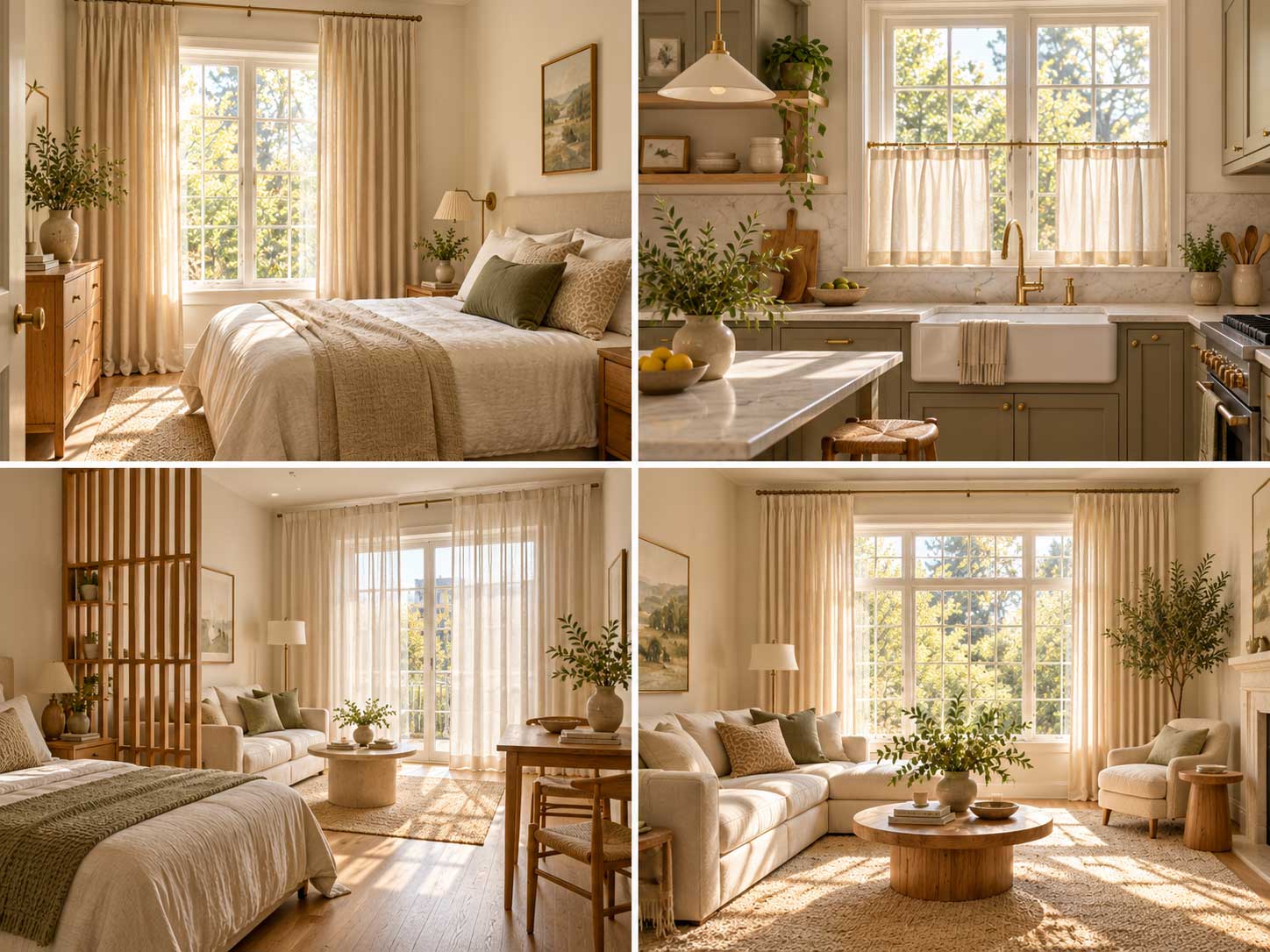
Curtains work best when combined with other space-enhancing techniques.
Interior designers often combine:
- Light curtains
- Mirrors
- Layered lighting
- Reflective surfaces
For example: a small living room with light linen curtains and a strategically placed mirror can feel significantly brighter because light is reflected throughout the space.
This is especially useful in:
- Apartments with limited windows
- North-facing rooms
- Narrow living areas
10. Select Curtain Styles Based on Room Function
Not every small room needs the same curtain solution.
The best choice depends on how the room is used.
Small Bedroom
Recommended:
- Floor-length linen curtains
- Light-filtering fabrics
- Neutral colors
Goal: create softness while maintaining a spacious feeling.
Small Kitchen
Recommended:
- Cafe curtains
- Cotton curtains
- Easy-wash fabrics
Goal: provide privacy without blocking daylight.
For kitchen windows, cafe curtains remain one of the most practical solutions because they protect privacy while maintaining an open atmosphere.
Studio Apartment
Recommended:
- Sheer curtains
- Ceiling-mounted curtains
- Minimal designs
Goal: create separation without making the space feel smaller.
Small Living Room
Recommended:
- Full-length curtains
- Wider curtain rods
- Neutral colors
Goal: make windows appear larger and ceilings taller.
Curtain Mistakes That Make Small Rooms Feel Smaller
Even expensive curtains can negatively affect a room when installed incorrectly.
Here are common mistakes professionals often see.
Mistake 1: Hanging Curtain Rods Directly Above the Window
This is one of the most common errors.
Although it seems natural, placing the rod exactly on the window frame can make the wall feel shorter.
Better approach: install the rod higher to create vertical movement.
Mistake 2: Choosing Curtains That Are Too Short
Short curtains can visually cut the wall into sections.
This often makes:
- ceilings appear lower
- windows appear smaller
- rooms feel less elegant
For most living areas and bedrooms, floor-length curtains create better proportions.
Mistake 3: Using Heavy Dark Fabrics in Small Rooms
Dark curtains can look beautiful, but they require careful use.
In compact spaces, heavy fabrics may:
- absorb natural light
- create visual weight
- make rooms feel enclosed
If you love darker colors, consider using them as accents rather than covering large window areas.
Mistake 4: Blocking Too Much Window Glass
Curtains should frame the window, not hide it completely.
A common mistake is installing narrow rods that force curtains to cover the glass even when opened.
Extending the rod beyond the window allows maximum daylight.
Cafe Curtains vs Full-Length Curtains for Small Spaces
Both curtain styles can work in small rooms, but they solve different problems.
Feature Cafe Curtains Full-Length Curtains Privacy Excellent for lower windows Excellent overall Natural light Very high Depends on fabric Space feeling Light and casual Taller and more elegant Best rooms Kitchens, bathrooms, breakfast areas Bedrooms, living rooms Installation Easy More complex
When Should You Choose Cafe Curtains?
Choose cafe curtains if you need:
- Privacy at eye level
- Maximum daylight
- A casual kitchen look
- Rental-friendly installation
They are especially effective for:
- Small kitchen windows
- Apartment kitchens
- Breakfast nooks
When Should You Choose Full-Length Curtains?
Choose full-length curtains if you want:
- Higher ceiling illusion
- More dramatic styling
- Better room softness
They work best in:
- Bedrooms
- Living rooms
- Dining spaces
How Much Do Curtains Cost for Small Spaces?
The cost depends on material, size, and whether you choose ready-made or custom curtains.
Typical US price ranges:
Curtain Type Estimated Cost DIY curtain project $15–$50 Ready-made curtains $50–$150 Premium linen curtains $100–$300+ Custom curtains $150–$500+
For homeowners updating a small room, curtains are often one of the most affordable ways to create a noticeable design improvement.
A simple change in curtain placement can sometimes create a bigger visual impact than expensive renovations.
Small Apartment Curtain Ideas That Maximize Space
Apartment living often comes with unique challenges:
- Limited wall space
- Rental restrictions
- Smaller windows
- Less storage
The right curtain strategy can make these limitations easier to manage.
Recommended solutions:
Use Ceiling-Mounted Curtain Tracks
These create a clean vertical line and work well in modern apartments.
Choose Multi-Purpose Curtains
Examples:
- Light-filtering curtains during the day
- Privacy curtains at night
Use No-Drill Solutions
For renters, tension rods and removable options provide flexibility.
This works especially well for:
- Studio apartments
- Rental homes
- Temporary spaces
Professional Curtain Styling Tips for Small Spaces
Small-space design is not about making every element smaller.
The goal is to create balance.
Professional interior designers often focus on visual continuity rather than simply reducing furniture or decorations. Curtains are one of the easiest elements to adjust because they influence both the wall proportions and the amount of natural light entering a room.
Here are several professional styling approaches that can improve the appearance of compact spaces.
Create a Consistent Visual Flow
One effective technique is reducing unnecessary visual interruptions.
For example:
- Match curtain tones with wall colors.
- Use similar textures throughout the room.
- Avoid strong contrasts unless they are intentional.
A small room with continuous colors often feels calmer and more spacious because the eye can move naturally across the space.
Layer Curtains for More Flexibility
Layering can improve both function and appearance.
A common combination includes:
Sheer curtain + privacy curtain
Benefits:
- Daytime brightness
- Nighttime privacy
- Better light control
- More sophisticated appearance
This approach works especially well in bedrooms and living rooms.
Let Curtains Frame the Window
Curtains should enhance the architecture, not hide it.
When curtains are opened, they should ideally stack beside the window rather than covering large sections of glass.
This allows:
- More sunlight
- Better outdoor connection
- A wider visual opening
A well-positioned curtain treatment can make a modest window feel much larger.
FAQ: Hanging Curtain Tips for Small Spaces
1. Do curtains really make a small room look bigger?
Yes, curtains can create the illusion of a larger room through proper placement, color selection, and fabric choice.
Hanging curtain rods higher, using floor-length curtains, and choosing light fabrics can make walls appear taller and spaces feel more open.
2. How high should curtain rods be hung in a small room?
For most rooms, curtain rods should be installed approximately 4–6 inches above the window frame.
In rooms with low ceilings, installing rods closer to the ceiling can create a stronger height illusion.
3. What curtain colors make a small room look bigger?
Light neutral colors usually work best, including:
- White
- Cream
- Beige
- Soft gray
- Light taupe
These shades reflect natural light and create a more open appearance.
4. Should curtains touch the floor in a small room?
In most bedrooms and living rooms, floor-length curtains are recommended because they create a continuous vertical line.
However, kitchens and bathrooms may benefit from shorter options such as cafe curtains because of moisture and maintenance considerations.
5. Are cafe curtains good for small spaces?
Yes. Cafe curtains are excellent for small spaces where privacy and natural light are both important.
They work particularly well in:
- Small kitchens
- Breakfast areas
- Apartments
- Bathroom windows
For more ideas, explore our guide on: Cafe Curtains Ideas for Small Windows
6. Should curtain rods be wider than the window?
Yes.
Extending curtain rods beyond the window frame allows curtains to sit beside the window when opened, making the window appear wider and maximizing natural light.
7. What type of curtains are best for apartments?
The best apartment curtains depend on the room.
Popular choices include:
- Lightweight linen curtains
- Sheer curtains
- Cafe curtains
- Tension rod curtains
- No-drill curtain solutions
These options provide flexibility without major installation changes.
Conclusion: Simple Curtain Changes Can Transform Small Spaces
Making a small room feel larger does not always require remodeling, replacing furniture, or expanding the space.
Sometimes, the solution is already in the details.
The way curtains are installed, the fabric selected, and the colors used can significantly change how a room feels.
The most effective hanging curtain tips for small spaces focus on:
- Installing curtain rods higher to create height
- Extending rods beyond window frames
- Choosing lightweight fabrics
- Using colors that blend naturally with the room
- Selecting curtain styles based on function
Whether you are decorating a small apartment, refreshing a bedroom, or improving a compact living area, the right curtain strategy can create a brighter and more comfortable home.
A well-designed window treatment does more than cover a window—it helps shape the entire atmosphere of a room.
Looking for more small-space window inspiration? Explore our cafe curtain ideas and other curtain styling guides to create a home that feels open, functional, and beautifully designed.

Royan Abdillah is a home improvement enthusiast and interior design consultant with over 9 years of experience in the industry. Passionate about blending aesthetics with functionality, Royan Abdillah specializes in unique DIY furniture and pet-friendly home solutions. Through this blog, Royan Abdillah aims to help homeowners create beautiful, personalized spaces on a budget.