
Let’s be honest: spice bottles are probably the biggest instigators of visual clutter in a compact kitchen. When you look at professional interior design photography, the spice setups always look pristine—perfectly uniform glass jars lined up on a sunlit shelf like tiny works of art. But in reality, most of our kitchens tell a very different story. We have plastic grocery store bottles mixed with bulky square tins, half-empty bags clipped with chip ties, and random exotic seasoning rubs we bought for a single recipe three years ago.
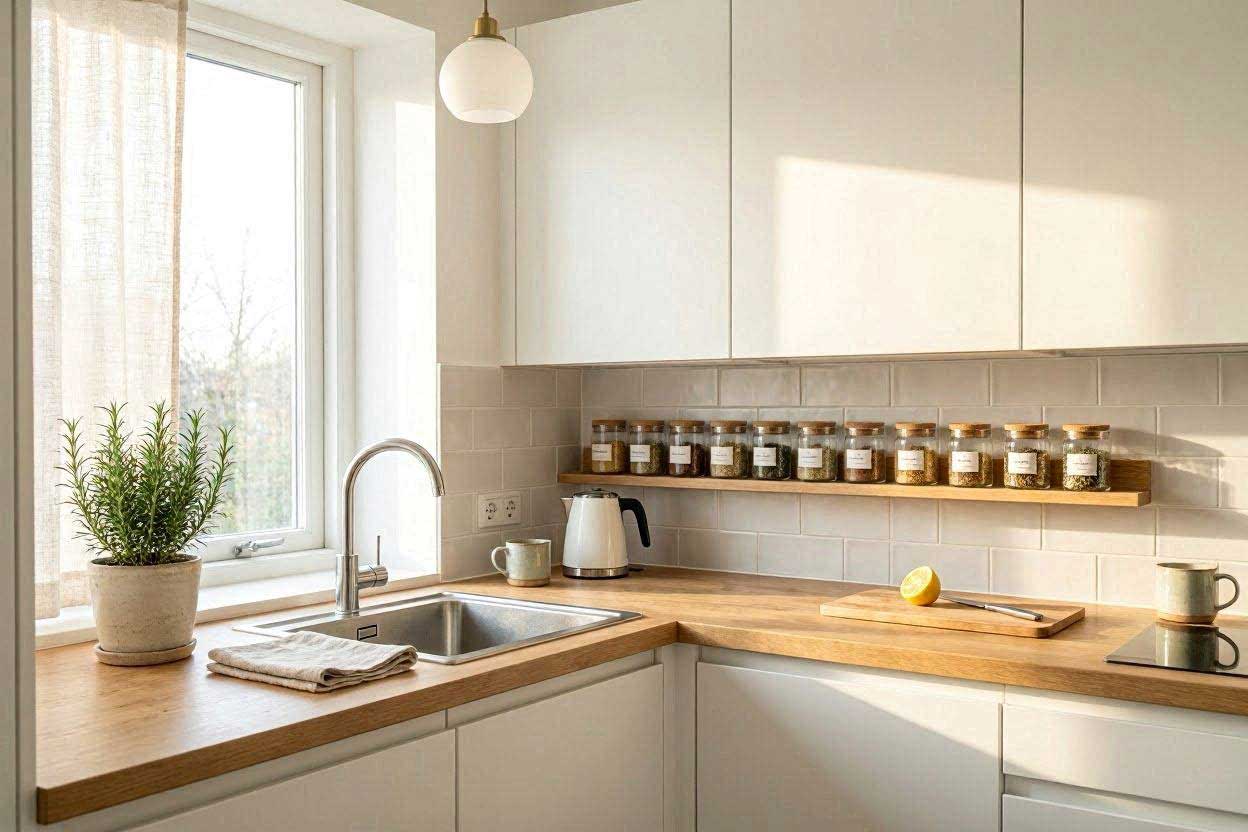
Because spice containers come in all shapes and sizes, they are incredibly difficult to stack. They end up taking over the prime real estate right next to your stove, crowding your cutting board, and falling over like dominoes every time you try to reach for the black pepper.
I hit my breaking point during a hectic weeknight dinner rush. I was trying to sear chicken while searching for garlic powder, and I ended up knocking five small glass jars straight onto the floor. As I found myself sweeping up a mixture of broken glass and expensive paprika at 8:00 PM, I realized that organizing spices isn’t just a fun weekend aesthetic project; it is a critical component of smooth cooking logistics.
While keeping your cooking workspace organized is vital, choosing the right stone layout can make or break your kitchen’s aesthetic. If you are currently remodeling and wondering what color countertops go with white cabinets, choosing the right contrast can instantly make a small space feel double the size.
When you are fighting for every single inch of workspace, learning how to organize spices in a small kitchen is a total game-changer.
If you have recently optimized your morning setup using our clever coffee station storage ideas, taking control of your savory seasonings is the next logical step toward total kitchen efficiency. You don’t need a massive walk-in pantry or custom pull-out cabinetry to master this. By utilizing smart space-saving spice rack ideas and exploiting hidden vertical zones, we can completely clear your countertops while keeping your favorite flavors right at your fingertips.
🧠 The “Freshness & Visibility” Audit Before Organizing
Before you rush to buy a beautiful magnetic spice rack for refrigerator mounting or install an under cabinet spice organizer, you must complete a basic spice audit. Many people skip this step and end up wasting valuable storage space on jars filled with stale, flavorless dust.
Set aside 20 minutes, pull every single spice container out of your cabinets, and run through this non-negotiable checklist:
1. The Expiration and Sniff Test
Spices don’t technically rot or spoil in a way that makes you sick, but they do completely lose their essential oils, color, and aroma over time. Check the expiration dates on the bottoms of your jars. If a jar doesn’t have a date, open it and take a sniff. If your ground cumin or oregano barely smells like anything, it won’t add any flavor to your cooking. Toss it out to instantly free up space.
2. Separate Everyday and Specialty Spices
A simple trick is to divide your collection into two groups:
- Everyday spices (salt, pepper, garlic powder, paprika, oregano)
- Specialty spices used only occasionally
Store everyday spices closest to your cooking area and move rarely used seasonings to higher shelves or secondary storage zones.
3. The Moisture and Clumping Check
Spices that have been sitting too close to the steam of your stovetop often absorb ambient moisture. If your onion powder or garlic salt has turned into a solid, unshakeable brick inside the jar, it’s time to replace it. For your new setup, ensure the storage location is cool and dry.
4. Decanting vs. Original Containers
This is a crucial choice for minimalist spice jar organization. Decanting means transferring your spices into a matching set of uniform glass jars.
- The Pro: Matching jars look beautiful, stack perfectly, and maximize every millimeter of space because there are no awkward bulges.
- The Con: It requires a bit of upfront effort and a budget-friendly spice storage investment. If you decide to keep the original store bottles, you must commit to an organizational system that groups them by height so smaller bottles don’t get permanently lost behind tall ones.
6 Smart Configurations for a Small Kitchen Spice Layout
Clearing your counters requires thinking beyond the standard spice rack. Here are 6 proven space-saving spice rack ideas to tuck your flavor collection into empty walls, hidden drawers, and unused appliance surfaces.
1. The Vertical Wall Escape (Wall mounted spice rack ideas)
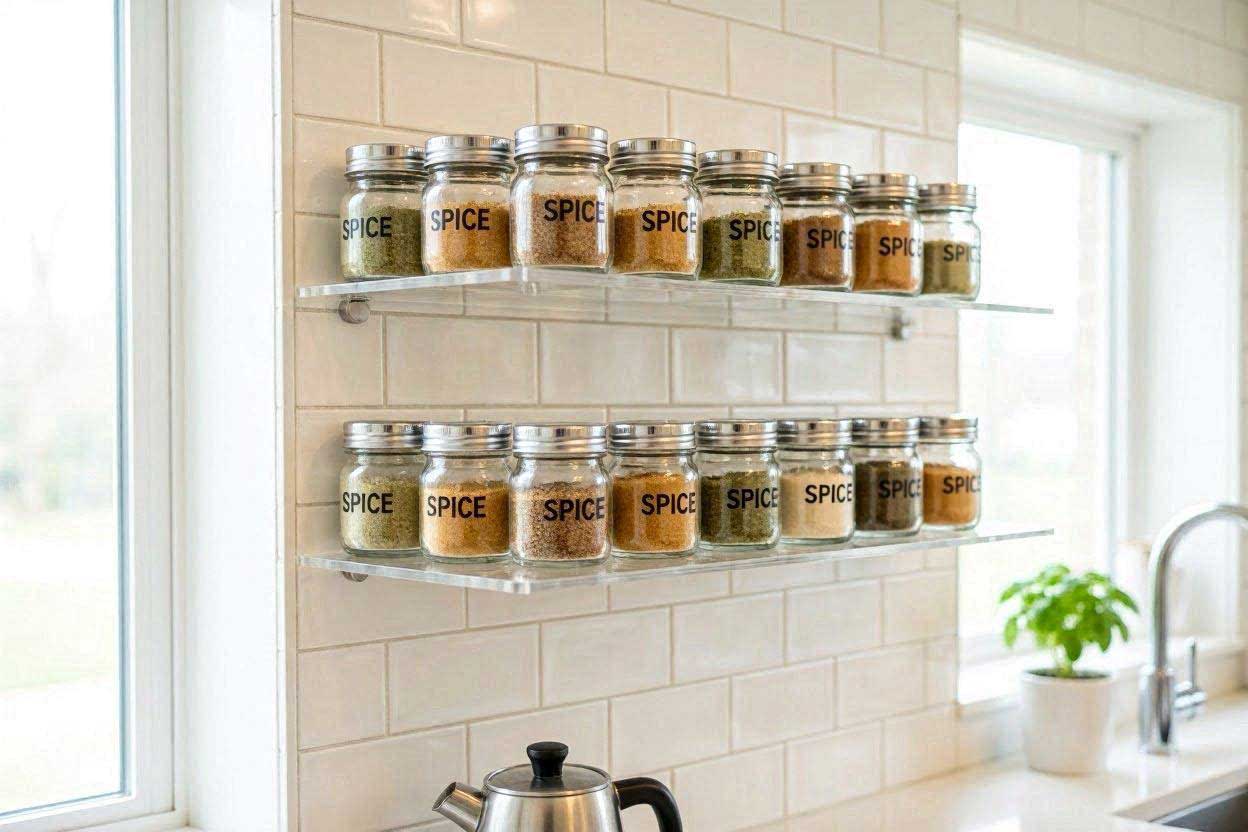
When you run out of horizontal counter space, the single best way to clear the clutter is to utilize the open drywall space between your countertops and upper cabinets.
- How to do it: Mount two or three ultra-slim acrylic or wooden ledge shelves directly onto your backsplash or open wall. Line up your jars in a single row.
- Why it works: A wall mounted spice rack ideas setup keeps your spices completely off the prep area while keeping labels perfectly visible at eye level while cooking.
2. The Appliance Magnet Trick (Magnetic spice rack for refrigerator)
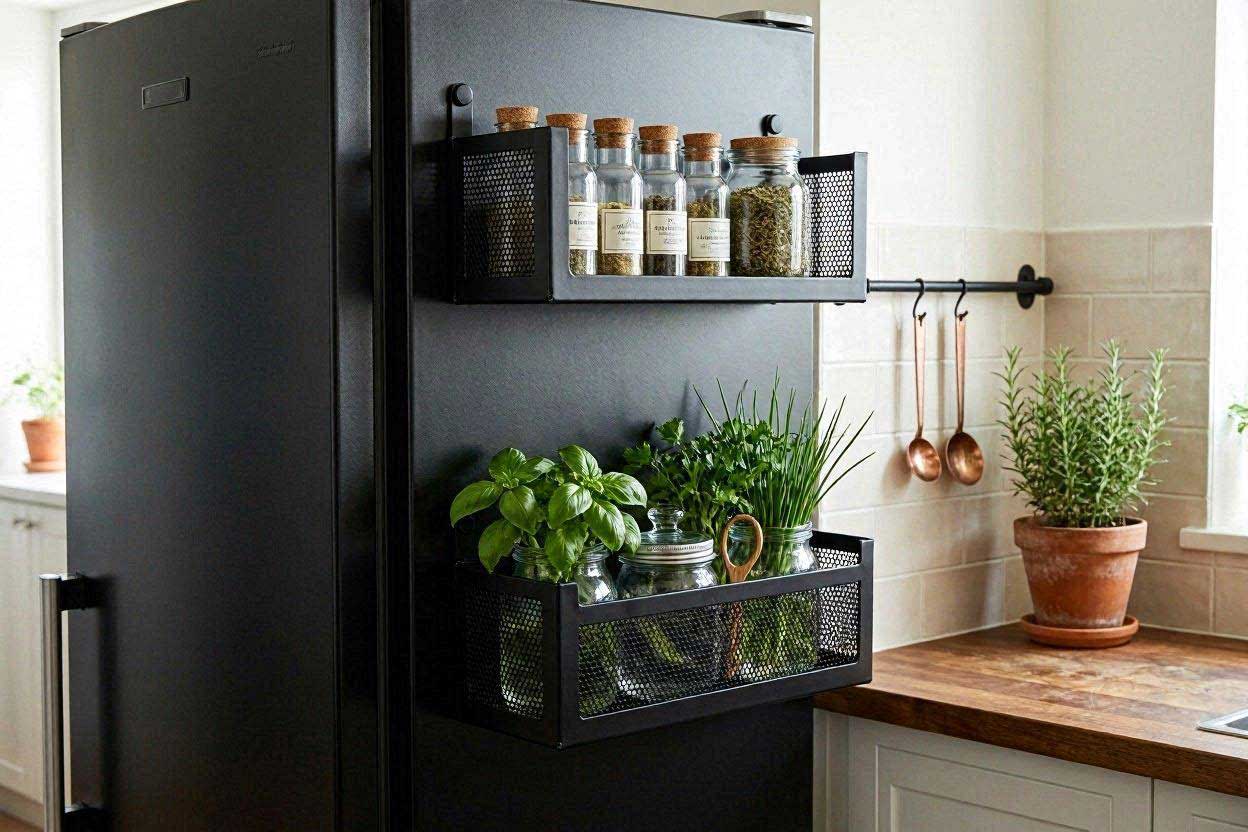
The side of your refrigerator is often a giant, empty metallic canvas. Transforming it into a storage zone requires zero tools or drilling.
- How to do it: Purchase heavy-duty magnetic spice baskets and snap them directly onto the side of your fridge. Place your most frequently used everyday seasonings inside.
- Why it works: A magnetic spice rack for refrigerator is the ultimate budget-friendly spice storage hack for renters because it can be adjusted or removed in two seconds without damaging walls.
💡 In my experience, magnetic racks work best when reserved for frequently used spices. Loading them with too many heavy glass jars can make access less convenient over time.
3. The Deep Drawer Matrix (Spice drawer organization for small kitchens)
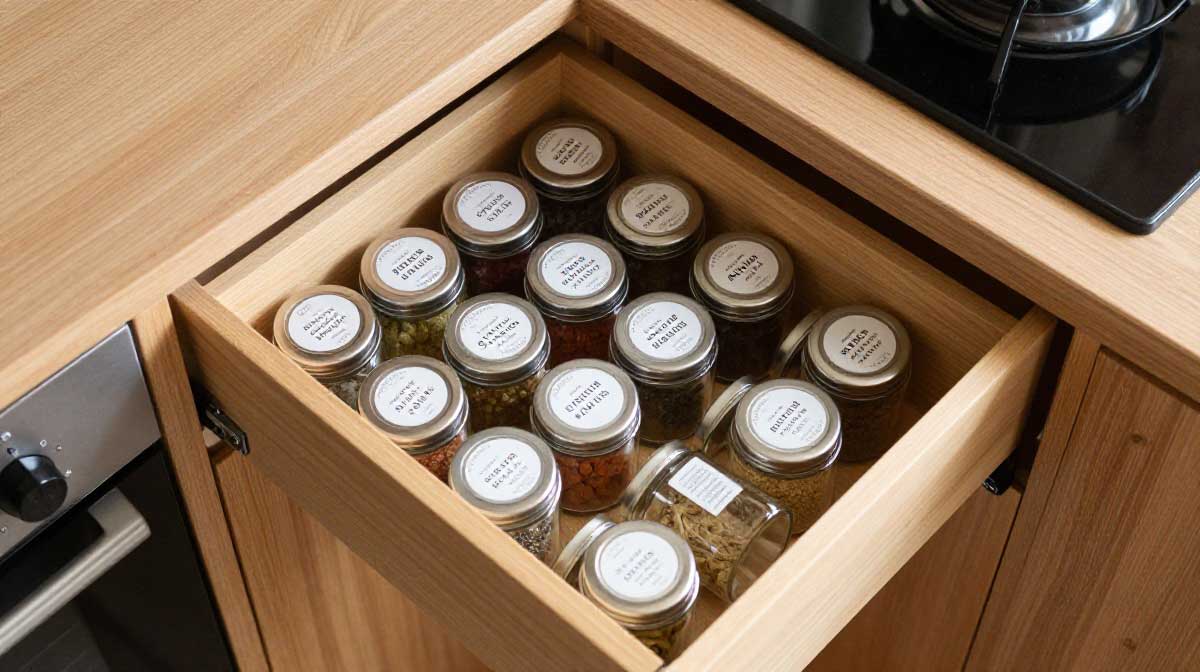
If you prefer a clean kitchen look with completely hidden countertops, converting a shallow drawer right next to your stove is your best bet.
- How to do it: Place a tiered, angled acrylic or wooden drawer insert inside the drawer. Lay your spice jars flat on the angled tiers with the lids pointing toward the front.
- Why it works: Proper spice drawer organization for small kitchens ensures that no bottles can tip over or roll around, allowing you to scan 20+ spices at a single glance.
4. The Hidden Overhead Lift (Under cabinet spice organizer)
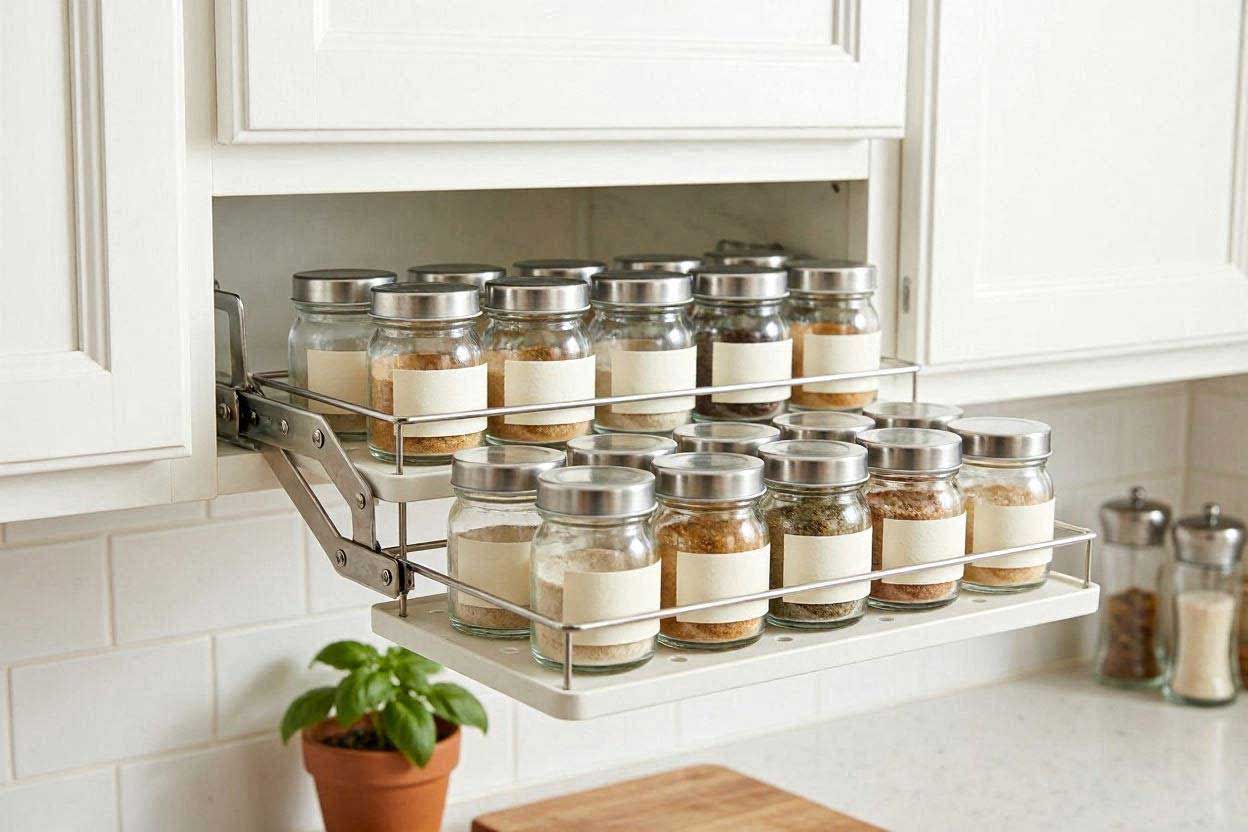
The dead space floating directly beneath your upper kitchen cabinets is one of the most underutilized zones in a small kitchen.
- How to do it: Install a drop-down or slide-out rack that mounts underneath your upper cabinet base. The rack folds completely flat against the cabinet bottom when closed.
- Why it works: An under cabinet spice organizer keeps your seasonings hidden from view but pulls down smoothly right to your eye level whenever you need to season a boiling pot.
5. The Narrow Slide-Out System (Pull out spice rack for narrow cabinets)
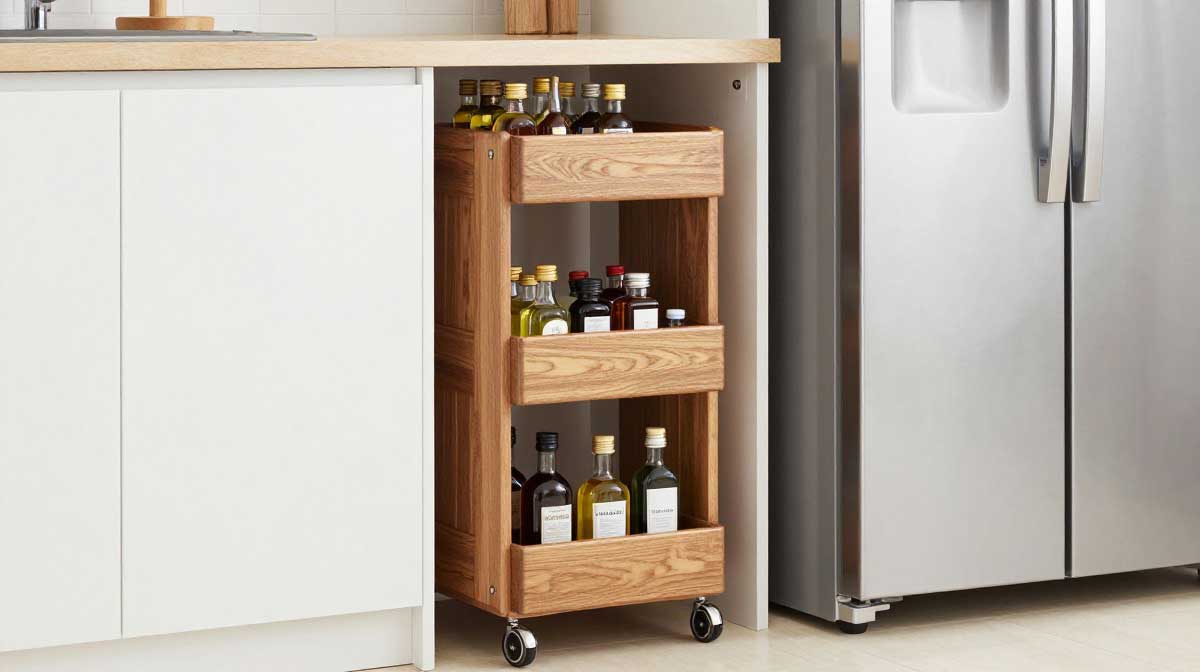
Almost every kitchen has a small, awkward gap between the cabinets and the stove or refrigerator that is too thin for standard storage.
- How to do it: Insert a ultra-slim, multi-tier rolling cart or install a slide-out wire rack inside a thin cabinet opening (as narrow as 4 to 6 inches).
- Why it works: A pull out spice rack for narrow cabinets packs massive storage into zero-waste zones. This dense storage philosophy is exactly how we add storage to a small kitchen island effectively without making the main room layout feel cramped.
6. The Tiered Pantry Strategy (Tiered spice rack for pantry)
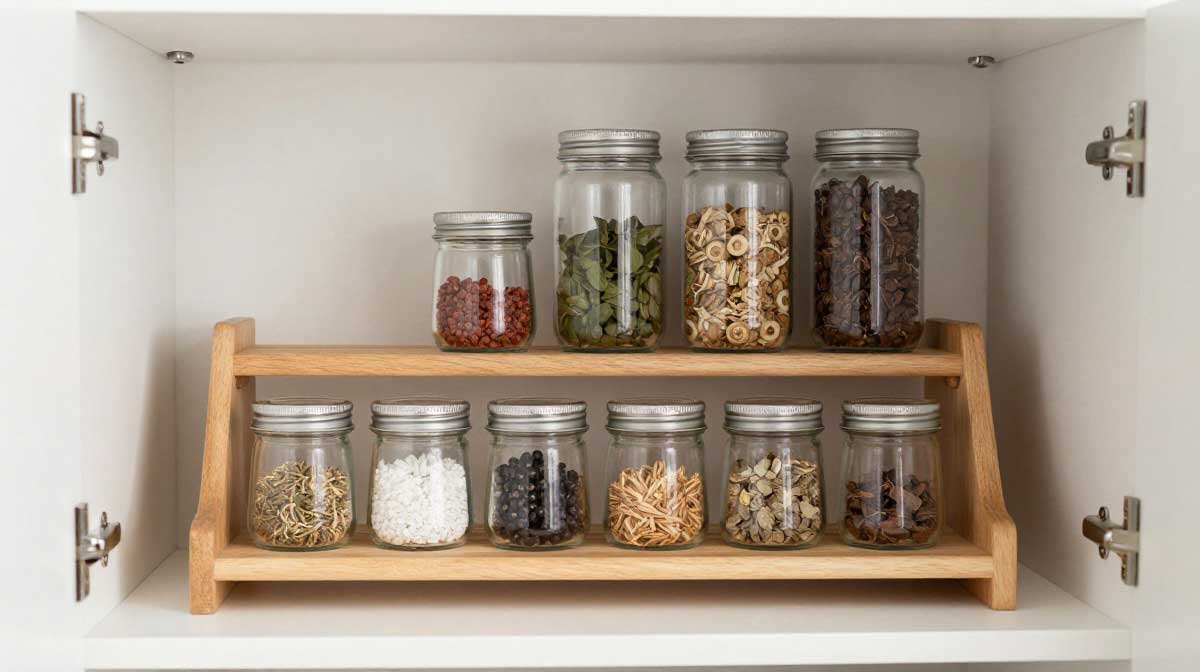
If you store your bumbu inside a standard deep pantry shelf, small bottles will inevitably get pushed to the back and permanently forgotten.
- How to do it: Place a three-tiered stadium-style riser (anak tangga) on your shelf. Put your shortest jars on the bottom front tier and the tallest bottles on the very top back tier.
- Why it works: A tiered spice rack for pantry utilizes vertical stepping so that every single label remains 100% visible, stopping you from accidentally buying duplicate bottles at the store.
Quick Spice Storage Comparison
| Storage Method | Best For | Cost | Renter Friendly |
| Wall Shelf | Everyday cooks | $$ | Yes |
| Magnetic Rack | Apartments | $ | Yes |
| Drawer Insert | Minimalist kitchens | $$ | Yes |
| Under Cabinet Rack | Hidden storage | $$ | Sometimes |
| Pull-Out Rack | Narrow spaces | $$$ | No |
| Tiered Pantry Riser | Existing pantry users | $ | Yes |
🧭 Which Spice Storage Solution Is Right for You?
With so many space-saving spice rack ideas available, picking the perfect method can feel a bit overwhelming. The best setup depends entirely on your daily cooking habits, kitchen layout, and whether you own or rent your home. Use this quick breakdown to find your ideal match:
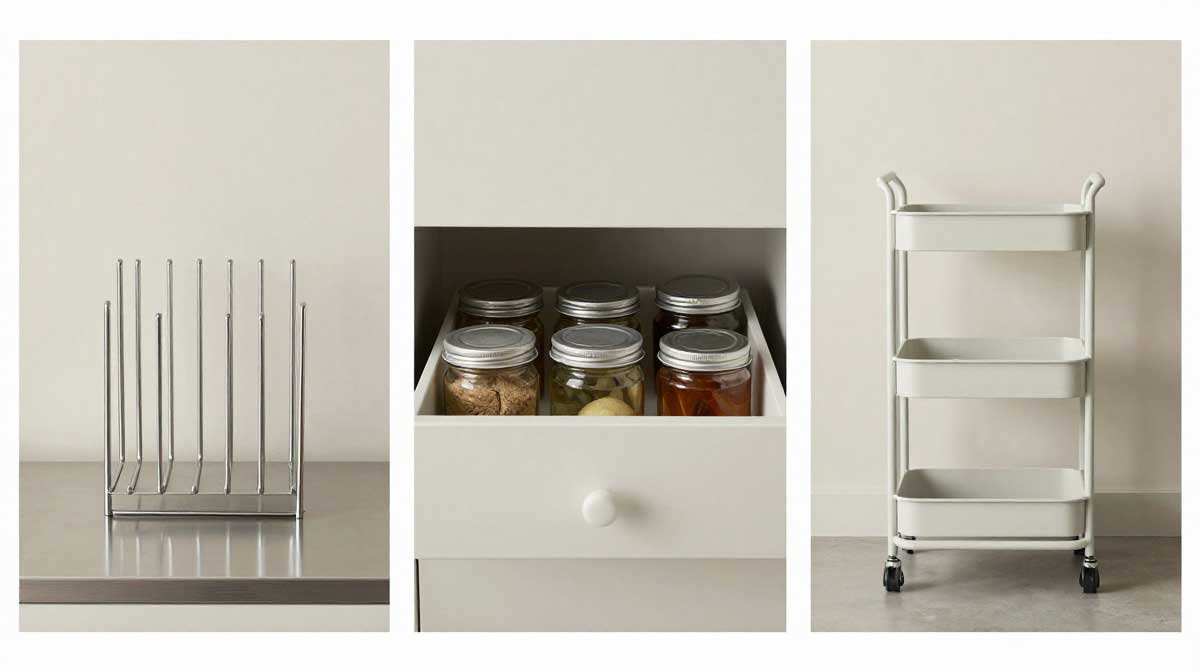
Which Spice Storage Method Should You Choose?
1. Choose a Magnetic Rack if:
You rent your home: It requires zero commitment and leaves no permanent mark when you move out.
- You need a zero-drill solution: You can instantly install a magnetic spice rack for refrigerator mounting without touching a single power tool.
- You use a handful of spices daily: It keeps your absolute favorite, everyday seasonings right in arm’s reach while you cook.
2. Choose a Drawer Organizer if:
You prefer clutter-free countertops: It keeps 100% of your seasoning bottles tucked away out of sight, creating an ultra-clean look.
- You have a shallow drawer near the stove: It turns a basic, thin drawer into a functional grid where no jars can ever tip over.
- You love visual order: Laying jars flat with labels facing up provides perfect spice drawer organization for small kitchens.
3. Choose a Pull-Out Rack if:
You have narrow unused cabinet gaps: It utilizes awkward kitchen wedges (as thin as 4 to 6 inches) that would otherwise go to waste.
- You cook frequently: Sliding the entire tier out gives you immediate, ergonomic access to a massive variety of seasonings.
- You want maximum storage density: A pull out spice rack for narrow cabinets packs the highest number of bottles into the smallest possible physical footprint.
⚠️ 3 Critical Mistakes to Avoid in Spice Storage
Designing a beautiful DIY spice storage for small spaces is a fun weekend project, but it is easy to make a few technical layout mistakes that can ruin your ingredients. To protect the flavor and shelf-life of your herbs and seasonings, make sure to avoid these three common pitfalls:
1. Storing Spices Directly Above the Stove
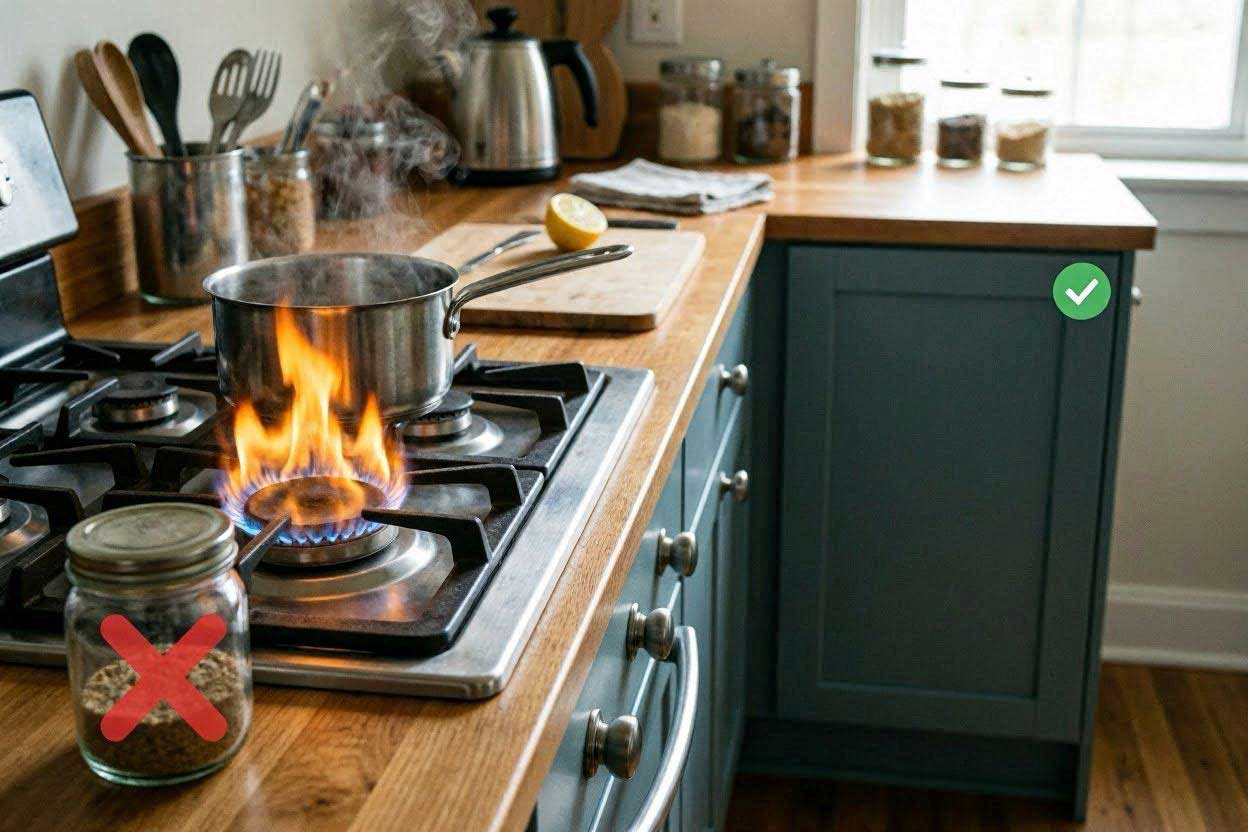
This is the most common layout mistake in small kitchens. While mounting a shelf right above the burners seems convenient, the intense heat, boiling steam, and ambient grease from cooking will quickly penetrate your jars. This causes ground spices to cake, clump, and rapidly lose their essential oils, rendering them completely flavorless within a few weeks. Always store spices at least 12 to 18 inches away from your main heat source.
2. Buying Containers Before Measuring Clearance
It is incredibly tempting to order a set of cute, matching jars online before your project begins. However, if you are planning on spice drawer organization for small kitchens, you must measure the exact internal depth of your drawer first. Many modern square or tall round jars will block the drawer from rolling open or closed. Measure your vertical drawer clearances and shelf heights before committing to a specific jar design.
3. Using Clear Glass in Direct Sunlight
Exposure to direct ultraviolet (UV) light acts as a bleaching agent for dried herbs and ground powders. Storing vibrant spices like paprika, turmeric, or parsley in clear glass jars on an open window ledge will cause them to turn brown and lose their chemical potency. If your only open wall space is bathed in bright daylight, opt for amber glass jars, metal tins, or keep your clear jars hidden inside an enclosed pantry cabinet.
Small Kitchen Spice Storage Checklist
✔ Expired spices removed
✔ Frequently used spices identified
✔ Storage location away from heat
✔ Labels easy to read
✔ Containers fit available space
✔ Countertops remain clear
✔ Vertical space utilized
✔ Pantry shelves remain accessible
❓ Frequently Asked Questions
👉 Is it better to store spices in a drawer or on the wall?
If you have a shallow drawer available near your prep area, a drawer matrix is ideal because it keeps your countertops completely clear and protects the spices from light and heat. However, if your cabinet space is already completely packed, utilizing open vertical walls with a slim rail or ledge is the best alternative to maximize a tight layout.
👉 How do I organize spices in a small kitchen without buying new jars?
You can easily pull off a budget-friendly spice storage layout by keeping your original store bottles and organizing them strictly by frequency of use or alphabetically. To make them look neat, use a small tiered riser or a spinning lazy susan turntable so that shorter bottles are never hidden behind taller ones.
👉 What is the maximum weight a magnetic spice rack for a refrigerator can hold?
Most high-quality magnetic spice shelves equipped with heavy-duty neodymium magnets can safely hold between 3 to 5 pounds (1.3 to 2.2 kg) of weight without sliding down the metallic surface. This is more than enough strength to support 4 to 6 standard glass spice jars filled with seasonings.
Conclusion
Mastering your small kitchen spice storage hacks is one of the quickest, most satisfying ways to banish daily cooking friction and reclaim your workspace. By shifting your jars onto vertical wall ledges, using hidden drawer inserts, or snapping magnetic baskets onto your refrigerator, you can transform a chaotic stack of bottles into a highly efficient culinary station.
Maximizing your vertical space and empty corners will make your small kitchen work twice as hard. If you are looking to take your layout optimization a step further and want to introduce highly versatile, multi-functional furniture into your cooking zone, make sure to explore our top configurations for a small kitchen island with seating to complete your ultimate kitchen transformation.
The best spice storage system isn’t necessarily the one with the most containers. It’s the one that helps you find what you need quickly while keeping your cooking space clean and functional. Even a few small changes can make a compact kitchen feel significantly more organized.
Ready to clear your countertops? Pin this guide to your favorite Kitchen Organization, Smart Storage, or Apartment Hacks board on Pinterest so you can tackle this project this weekend!

Royan Abdillah is a home improvement enthusiast and interior design consultant with over 9 years of experience in the industry. Passionate about blending aesthetics with functionality, Royan Abdillah specializes in unique DIY furniture and pet-friendly home solutions. Through this blog, Royan Abdillah aims to help homeowners create beautiful, personalized spaces on a budget.