Creating a small bedroom that supports better sleep requires thoughtful design and smart use of space. Limited room size does not have to compromise comfort or sleep quality. With the right layout, furniture choices, and calming elements, a small bedroom can become a peaceful retreat that promotes deeper and more restful sleep.

Use Under-Bed Storage to Reduce Visual Clutter
One of the most effective small bedroom ideas for better sleep is maximizing under-bed storage. This often-unused space can be transformed into a practical storage area for seasonal clothing, extra bedding, or personal items.
Reducing clutter plays an important role in improving sleep quality. A tidy and organized bedroom creates a calmer visual environment, which can help reduce mental stress before bedtime. When the room feels open and uncluttered, it becomes easier to relax and unwind at the end of the day.
Choose Calming Decor and Minimal Artwork
Decor choices have a direct impact on how a bedroom feels, especially in small spaces. Incorporating calming artwork with soft colors, gentle patterns, or nature-inspired designs can help create a soothing atmosphere.
In a small bedroom, minimal decor is often more effective than overcrowding the space. Selecting a few meaningful decorative elements allows the room to feel balanced and peaceful rather than overwhelming. A calm visual environment supports relaxation and helps prepare the mind for sleep.
Select Compact and Multi-Functional Furniture
Furniture selection is crucial when designing a small bedroom for better sleep. Compact and multi-functional furniture helps preserve floor space and improve room flow. Beds with built-in drawers, slim nightstands, or foldable desks can provide functionality without crowding the room.
Soft, neutral-colored furniture can also enhance sleep comfort. Shades such as white, beige, or light gray reflect light and make the room feel more open, which contributes to a more breathable and comfortable sleeping environment.
Maintain an Organized and Relaxing Bedtime Space
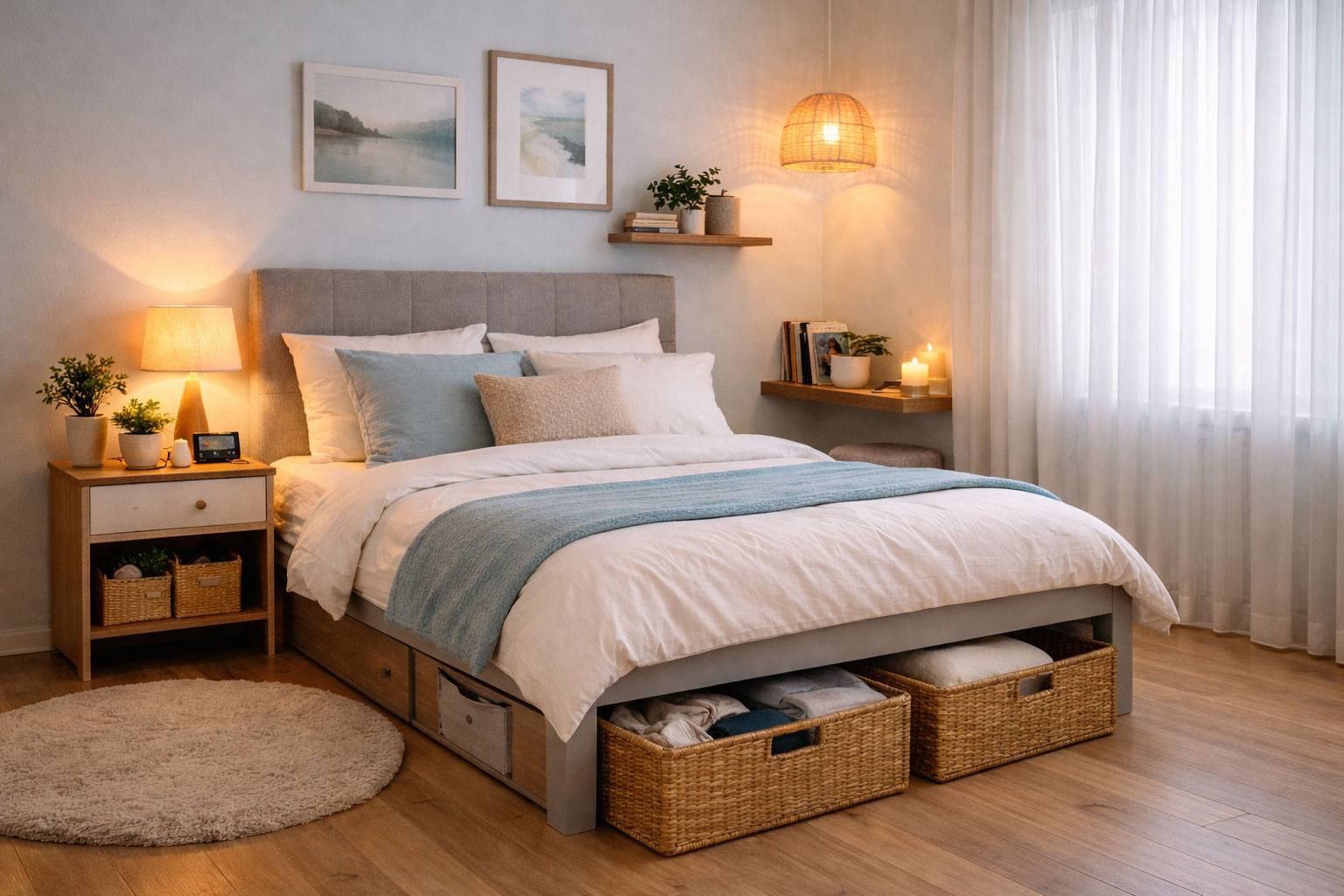
An organized bedroom supports a more consistent and relaxing nighttime routine. Keeping surfaces clear and storage well-managed reduces distractions that can interfere with falling asleep.
Simple habits such as dimming lights in the evening, keeping electronics out of reach, and maintaining a clean sleep area help signal the body that it is time to rest. In small bedrooms, maintaining order is especially important, as clutter can quickly make the space feel cramped and stressful.
Balance Natural Light and Soft Evening Lighting
Natural light plays an important role in regulating the body’s internal clock. Allowing daylight into a small bedroom during the day can make the space feel brighter and more comfortable.
For evenings, soft and warm lighting is ideal. Bedside lamps, wall-mounted lights, or warm-toned bulbs create a cozy atmosphere that supports relaxation before sleep. Using layered lighting rather than harsh overhead lights can significantly improve sleep comfort in small bedrooms.
Create a Sleep-Friendly Environment in Limited Space
These small bedroom ideas for better sleep are most effective when combined with broader principles such as proper lighting, comfortable temperature, and noise control. Understanding the fundamentals of the best bedroom environment for better sleep helps ensure that even a compact space supports healthy sleep habits.
By focusing on organization, calming decor, smart furniture choices, and balanced lighting, a small bedroom can feel both functional and relaxing.
Conclusion
Designing a small bedroom for better sleep is entirely achievable with the right approach. Thoughtful storage solutions, compact furniture, calming decor, and a clutter-free layout all contribute to a more restful environment. When space is optimized and distractions are minimized, even the smallest bedroom can support deeper, more restorative sleep.