
A rust accent chair is often the piece that gives a living room its personality. Its warm, earthy tone instantly creates a cozy atmosphere while adding a touch of sophistication that works beautifully in modern, Scandinavian, rustic, or even industrial interiors. However, many homeowners focus so much on choosing the perfect chair that they overlook one small detail—the side table.
Although often overlooked, a side table plays an important role in both the appearance and functionality of your living space. The right side table provides a convenient place for your morning coffee, favorite book, reading lamp, or decorative accessories while visually completing the seating area. On the other hand, the wrong size, color, or material can make the corner feel disconnected or overcrowded.
Choosing a side table isn’t simply about matching colors. It’s about balancing proportions, materials, and textures to create a seating area that feels both functional and inviting. Whether you’re decorating a compact apartment or a spacious family room, a carefully selected side table can make the entire seating arrangement feel intentional and inviting.
If you’re decorating around a rust accent chair, don’t overlook the importance of color coordination. Understanding how colors interact can make it much easier to choose furniture and accessories that feel balanced throughout the room. For a simple explanation, read Understanding Color Wheel for Home Design.
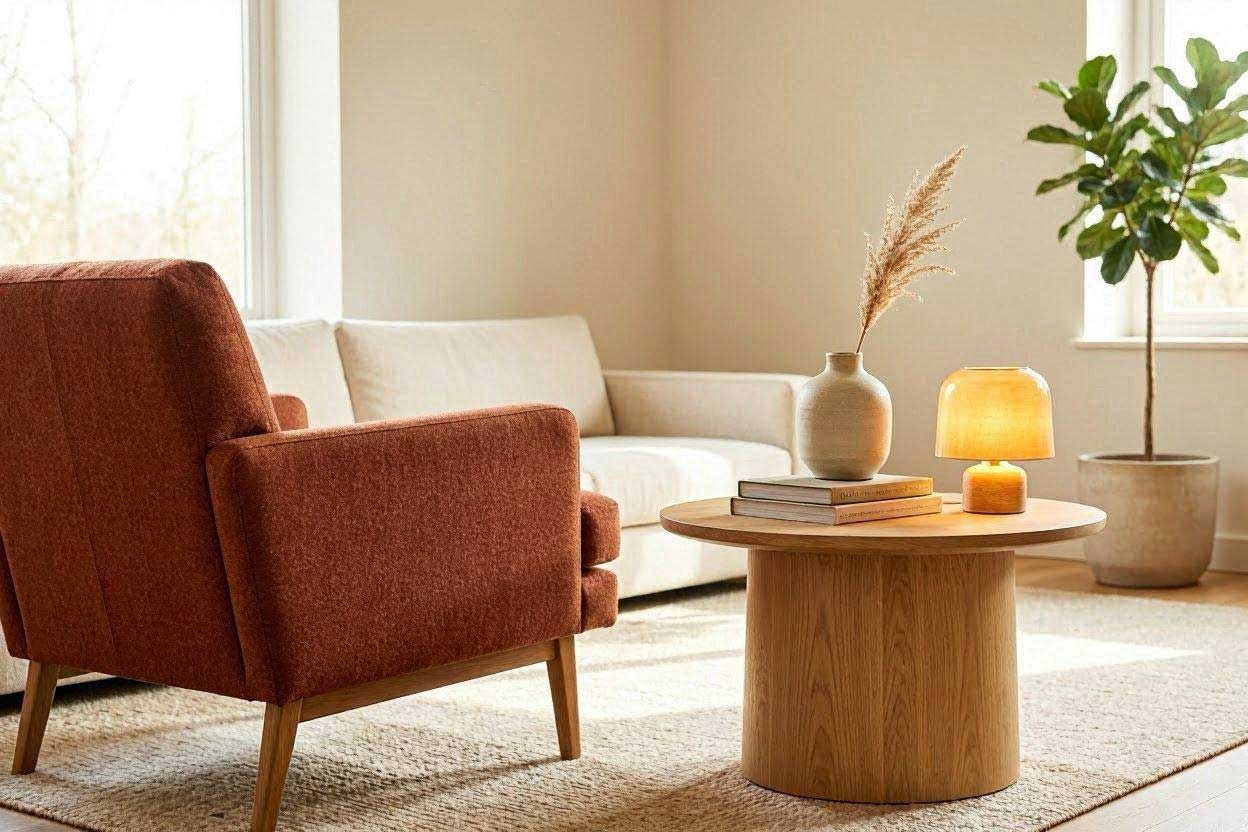
In this guide, you’ll discover how to choose the best side table for a rust accent chair, including the ideal size, materials, colors, and styling ideas that professional interior designers often use to create warm and cohesive living rooms.
Why a Side Table Completes a Rust Accent Chair
A rust accent chair can easily become the focal point of a living room, but even the most beautiful chair can feel unfinished without the right companion piece. A thoughtfully chosen side table does more than fill an empty space—it improves comfort, adds functionality, and helps create a seating area that feels complete.
Unlike a coffee table, which serves the entire seating arrangement, a side table is designed to support the person using the chair. It keeps everyday essentials within easy reach while making the corner more practical for relaxing, reading, or enjoying a cup of coffee.
Here are the key reasons why a side table is an essential addition to a rust accent chair.
1. It Adds Everyday Convenience
Imagine sitting down with a good book or your favorite drink. Without a nearby surface, you’ll constantly reach for the coffee table or place items on the floor.
By keeping everyday essentials within easy reach, a side table transforms your accent chair from a decorative feature into a comfortable place you’ll use every day. Even a compact table can hold a mug, reading glasses, a remote control, or a small notebook without taking up much space.
2. It Creates a More Balanced Seating Area
A single accent chair can sometimes appear visually isolated, especially in larger living rooms.
Adding a side table helps establish a stronger connection between the chair and the surrounding furniture. Instead of standing alone, the chair becomes part of a cohesive seating arrangement that feels intentional and inviting.
This sense of balance is one of the subtle techniques interior designers often use to make a room appear professionally styled without adding unnecessary furniture.
3. It Provides Space for Decorative Styling
A side table also offers an opportunity to express your personal style.
A small table lamp, a ceramic vase, a scented candle, or a stack of books can instantly make the area feel warmer and more welcoming. Because the table sits directly beside the rust accent chair, these accessories naturally draw attention without overwhelming the space.
The key is choosing only a few carefully selected decorative pieces that complement the chair instead of competing with it.
4. It Helps Define a Cozy Reading Corner
If your rust accent chair is placed near a window or in a quiet corner of the room, adding a side table can transform the area into a comfortable reading nook.
Pair the table with a reading lamp, a favorite book, and a small plant to create a relaxing retreat that’s both functional and visually appealing.
This approach works particularly well in apartments or compact living rooms where every piece of furniture needs to serve multiple purposes.
5. It Completes the Overall Design
Good interior design is often about the small details rather than the biggest furniture pieces.
A side table acts as a bridge between the accent chair and the rest of the room by repeating similar materials, colors, or finishes. Whether you choose natural wood, matte black metal, or elegant marble, the right table helps tie the entire design together.
Instead of treating the side table as an afterthought, consider it the finishing touch that makes your rust accent chair feel like an intentional part of a well-designed living room.
👉 Now that you understand why a side table plays such an important role, the next step is choosing dimensions that feel comfortable and proportionate to your seating area.
Choosing the Right Side Table Size
A side table should feel comfortable to use while remaining proportional to your accent chair. Getting the dimensions right is just as important as choosing the perfect design. Even the most beautiful side table won’t feel right if it’s too tall, too low, or oversized for the space.
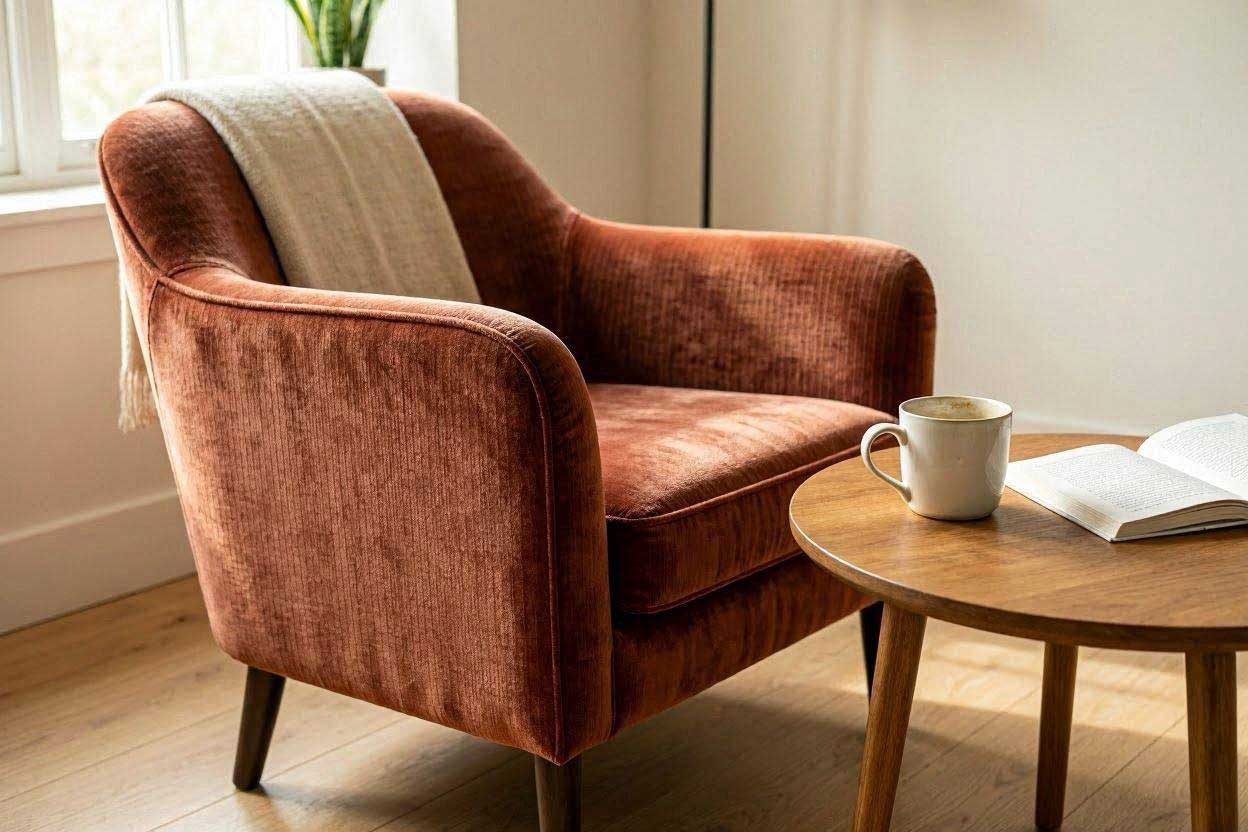
Here’s what to consider when selecting the ideal side table.
1. Match the Table Height to the Chair
The height of your side table should be close to the height of your chair’s armrest.
As a general guideline, a table that sits at the same height—or just a few inches lower—creates the most comfortable experience. This makes it easy to reach for a cup of coffee, a book, or your phone without stretching or bending awkwardly.
If the table is significantly taller than the armrest, it can dominate the seating area and feel visually unbalanced. On the other hand, a table that’s too low may look disconnected and become less practical for everyday use.
2. Choose a Size That Fits the Space
A side table should complement the chair, not overwhelm it.
For most living rooms, a compact table provides enough surface area for daily essentials while preserving an open and uncluttered appearance.
If your rust accent chair sits in a small apartment or reading nook, a slim-profile side table is often the better choice. In larger living rooms, you can comfortably use a slightly wider design without making the seating area feel crowded.
Remember that the goal is to support the chair—not compete with it.
3. Leave Enough Space for Comfortable Movement
Placement is just as important as size.
Ideally, leave a small gap between the chair and the side table so you can easily sit down, stand up, and move around without bumping into furniture.
Maintaining adequate walking space around the seating area also helps the room feel more open and organized, especially in compact living rooms where every inch matters.
A thoughtfully positioned side table improves both comfort and traffic flow throughout the room.
Round or Square: Which Shape Works Better?
Both shapes can work beautifully with a rust accent chair, but each creates a different feeling.
- Round side tables soften the overall look of the seating area. Their curved edges make them an excellent choice for smaller rooms because they improve movement and reduce visual heaviness.
- Square or rectangular side tables provide more usable surface space and often suit structured interiors such as modern, industrial, or contemporary living rooms. Their clean lines pair well with furniture that features straight silhouettes.
Rather than choosing a shape based solely on appearance, consider how the table will function within your daily routine and the available space.
Think Beyond Today’s Needs
A side table is one of the most frequently used pieces of furniture in a living room.
Instead of selecting the smallest option simply to save space, think about how you’ll use it over time. Will you place a table lamp on it? Display decorative accessories? Keep books within reach? Charge your phone while relaxing?
Choosing a table with enough surface area for your daily habits ensures it remains both beautiful and practical for years to come.
👉 Once you’ve determined the right size, it’s time to think about the material. The finish you choose will influence not only durability but also the overall atmosphere of your living room.
Best Side Table Materials for a Rust Accent Chair
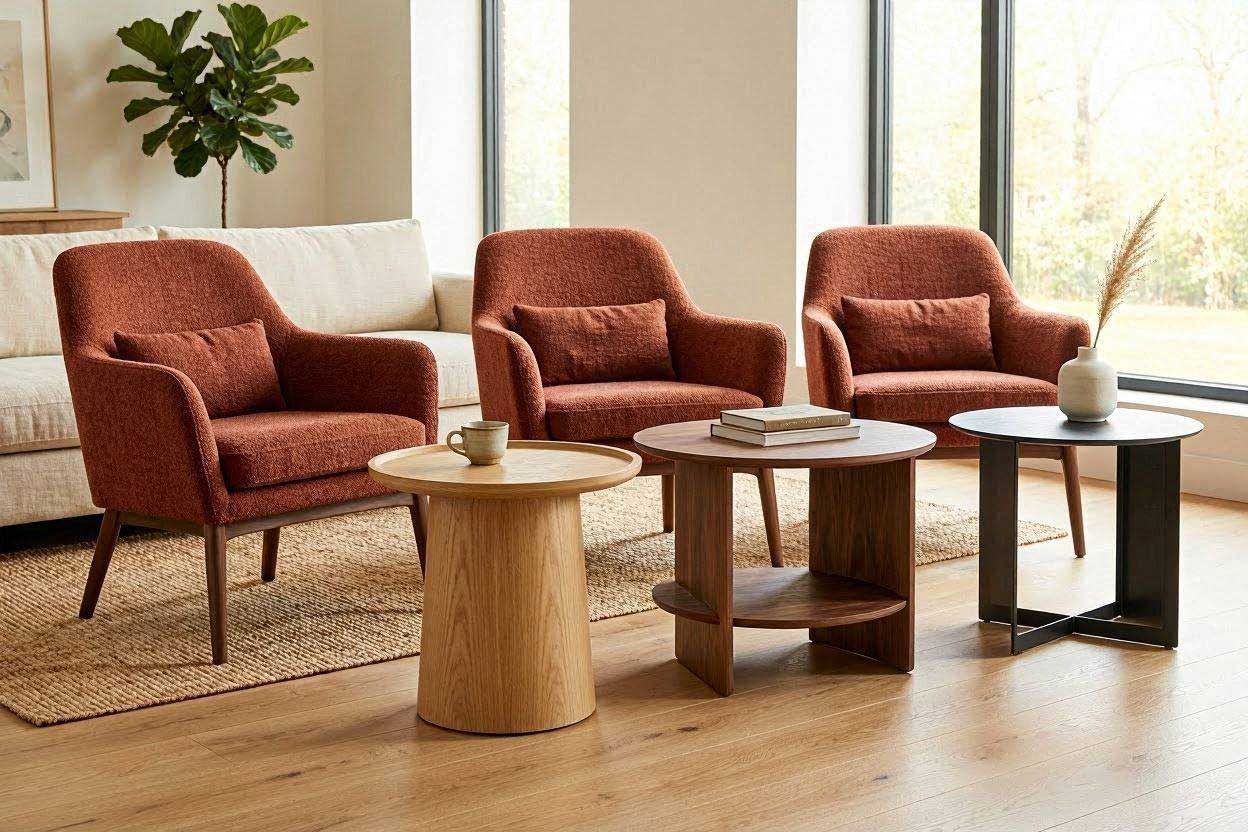
The material of your side table has a significant impact on the overall mood of your living room. While color often catches attention first, the texture and finish of the table help determine whether the space feels warm, modern, elegant, or casual.
The good news is that a rust accent chair is surprisingly versatile. Its rich earthy tone pairs well with several materials, allowing you to create different design styles without replacing your favorite chair.
Here are some of the best materials to consider.
1. Natural Oak for a Bright and Welcoming Look
If your goal is to create a cozy and inviting living room, natural oak is one of the safest choices.
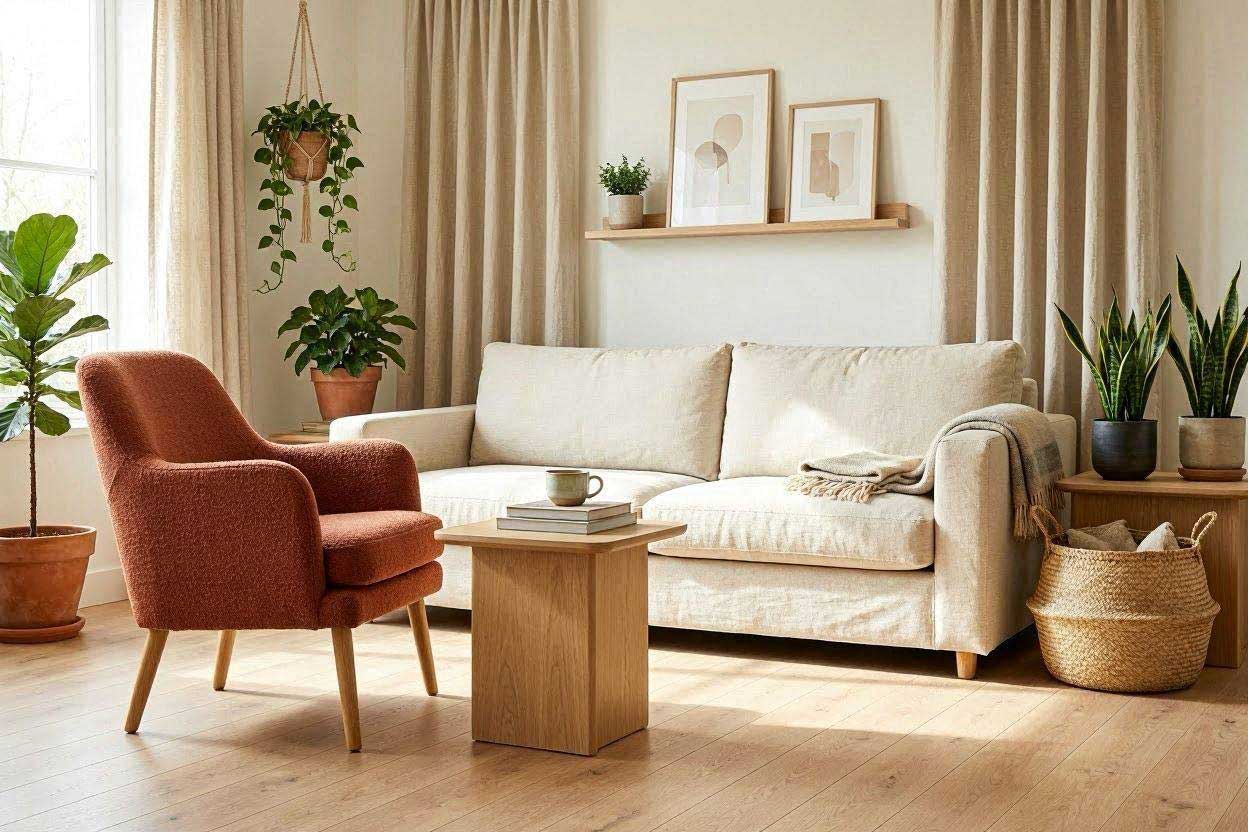
Its light wood tone complements the warmth of a rust accent chair without making the room feel too dark. Instead, the combination creates a fresh and balanced appearance that works beautifully in Scandinavian, Japandi, and organic modern interiors.
Natural oak also reflects more light than darker woods, making smaller living rooms appear brighter and more spacious.
Best for:
- Scandinavian interiors
- Japandi homes
- Small living rooms
- Cozy family spaces
2. Walnut for Timeless Warmth
Looking for a richer and more sophisticated atmosphere? Walnut is an excellent choice.
Walnut offers a deeper and richer wood tone that naturally enhances the earthy character of a rust accent chair.
Rather than creating contrast, walnut builds a layered color palette filled with warm browns and subtle reddish undertones. This combination feels sophisticated without appearing overly formal.
If your living room already features wood flooring or wooden shelving, a walnut side table can help tie everything together beautifully.
Best for:
- Mid-century modern interiors
- Traditional living rooms
- Warm contemporary spaces
3. Black Metal for Modern Contrast
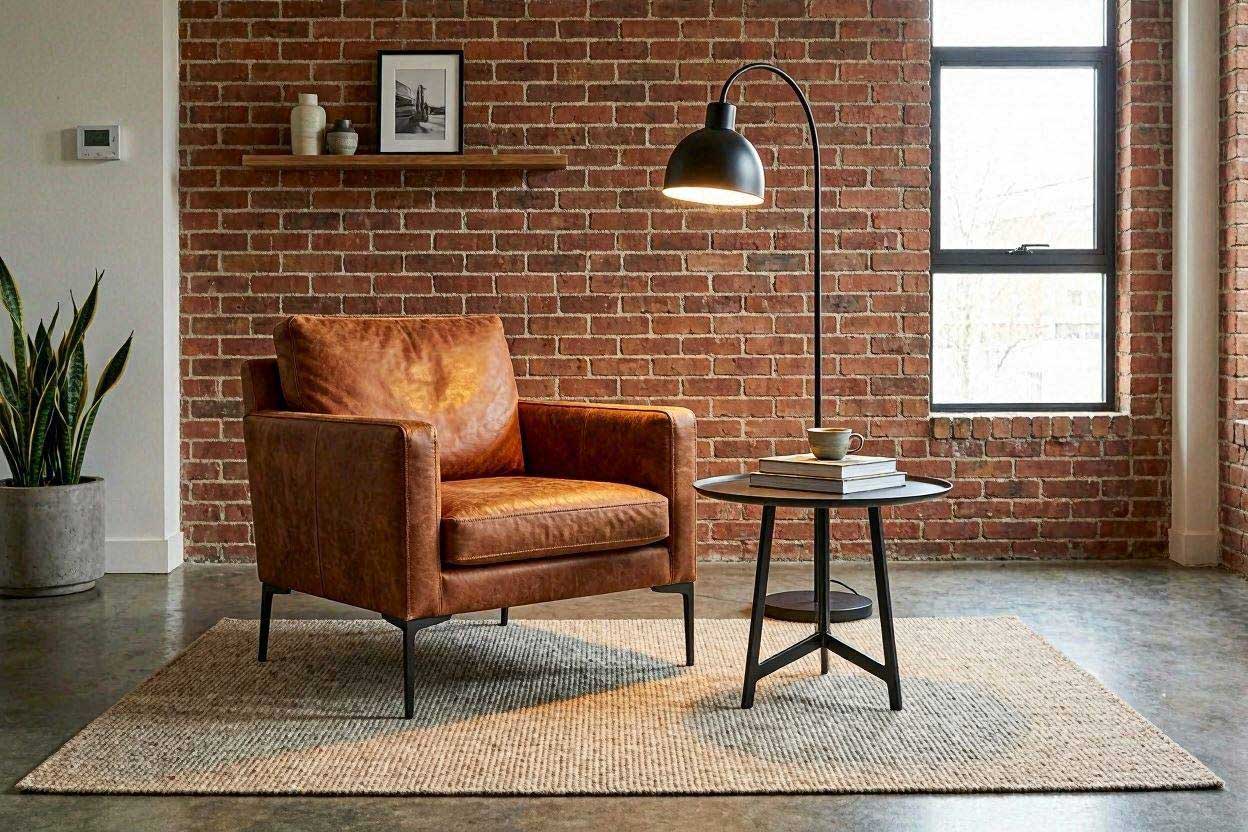
If your living room already feels warm, adding contrast can make the space look more refined. That’s where a black metal side table shines.
Sometimes, introducing contrast creates a stronger visual impact.
A black metal side table provides clean lines and a modern edge that prevents a rust accent chair from looking overly rustic. The dark finish grounds the seating area while adding a touch of industrial sophistication.
To keep the space feeling balanced, pair black metal with softer textures such as linen cushions, woven baskets, or neutral rugs.
Best for:
- Modern interiors
- Industrial homes
- Minimalist living rooms
4. Marble for a Refined Touch
For homeowners who prefer a more elegant aesthetic, a marble-top side table is an excellent option.
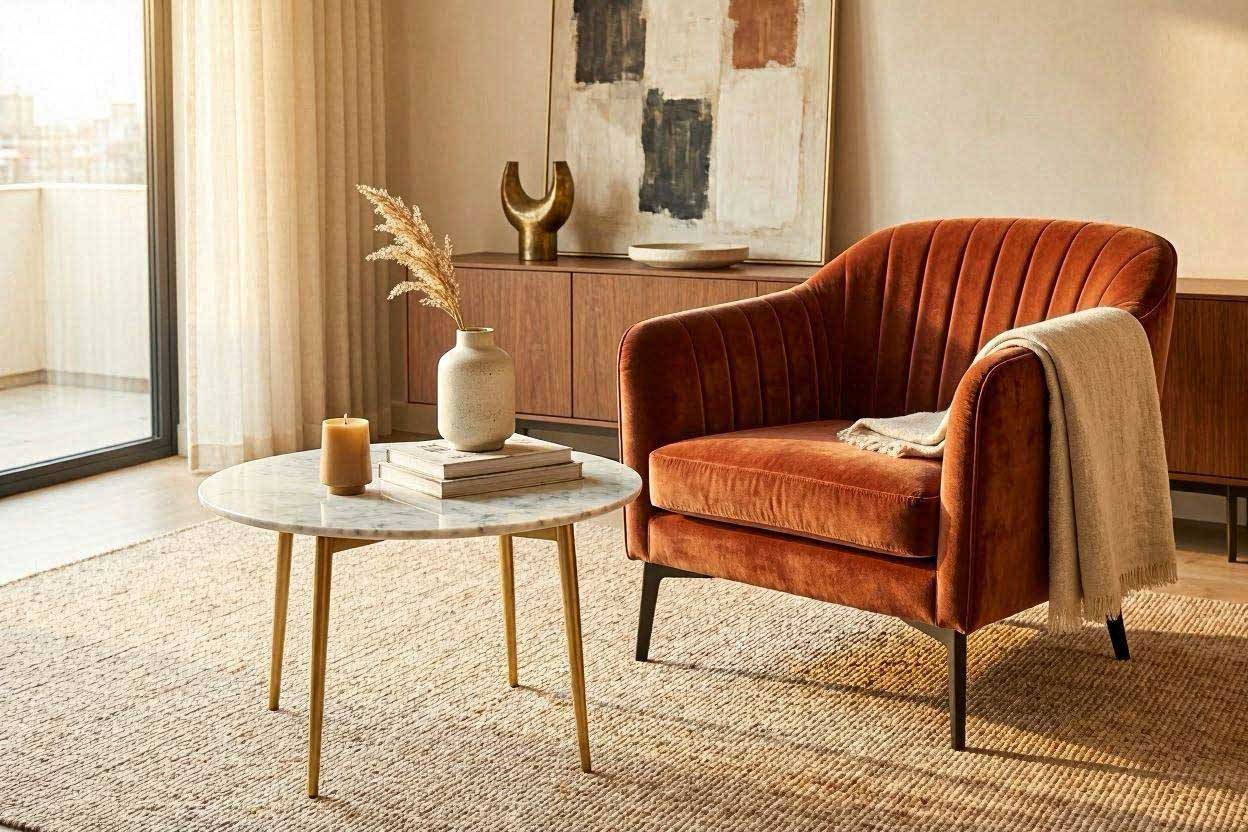
The bright surface introduces visual contrast while maintaining a timeless appearance. White marble, in particular, helps lighten the rich color of a rust accent chair, creating a space that feels luxurious without becoming overwhelming.
Because marble already makes a strong statement, simple accessories are usually all that’s needed to complete the look.
Best for:
- Contemporary interiors
- Luxury-inspired spaces
- Bright living rooms
5. Glass for Small Spaces
For compact living rooms, glass side tables can be surprisingly effective because they create a lighter visual footprint.
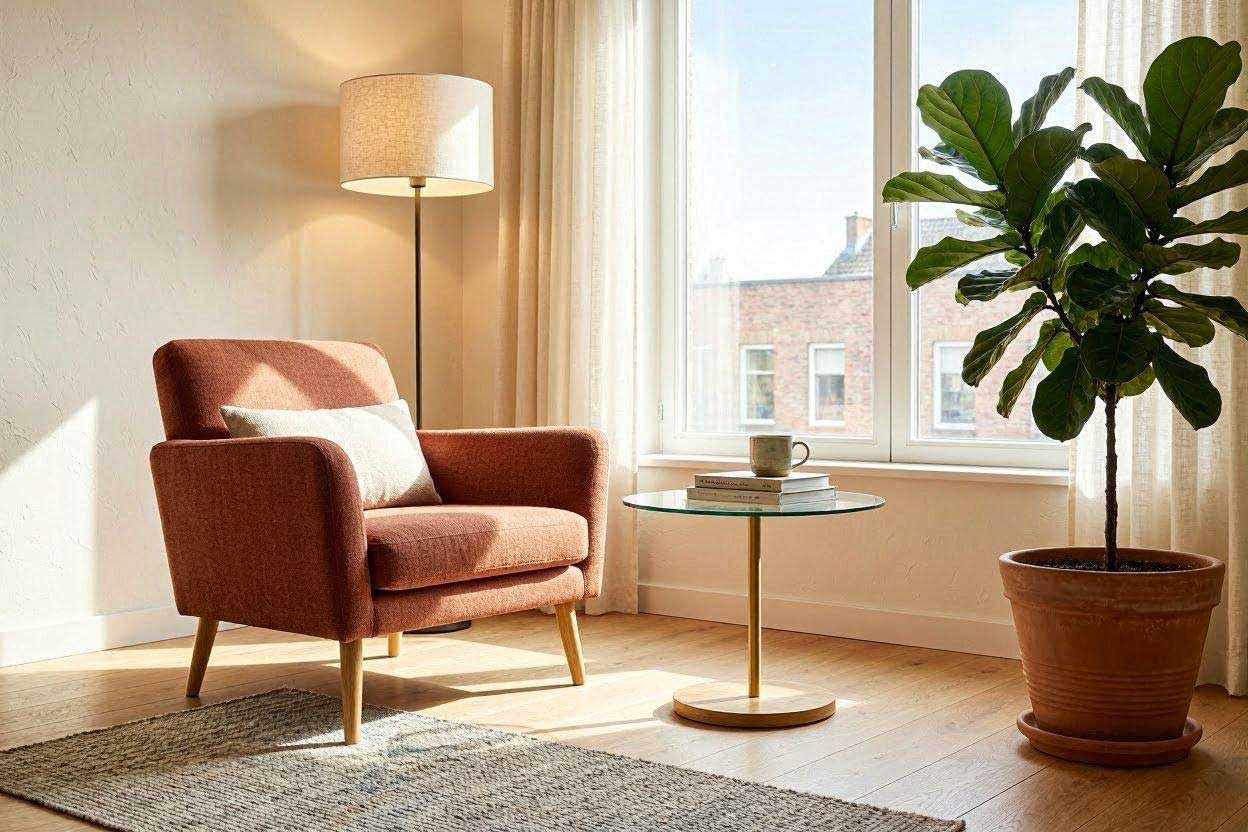
Their transparent surface allows light to pass through, making the area beside a rust accent chair feel open and uncluttered. This creates the illusion of more space without sacrificing functionality.
Glass works especially well when combined with slim metal frames in black, brass, or matte bronze finishes.
Best for:
- Apartments
- Small reading corners
- Minimalist interiors
6. Mixed Materials for Added Character
If you don’t want to commit to a single material, consider a side table that combines two finishes.
For example, a natural wood top with black metal legs offers the warmth of wood and the structure of metal in one piece. Likewise, a marble top with a brass frame creates a sophisticated focal point without overpowering the rust accent chair.
Mixed-material furniture is also an easy way to connect different finishes already present in your living room, resulting in a design that feels cohesive and thoughtfully layered.
💡 Designer’s Tip: Instead of trying to match every wood tone or metal finish perfectly, aim for visual harmony. Repeating similar textures and finishes throughout the room creates a more natural, professionally styled look than making every piece of furniture identical.
👉 Material provides texture, while color sets the mood. Choosing the right color combination helps your side table blend naturally with the warmth of a rust accent chair.
Best Side Table Colors That Pair with a Rust Accent Chair
Choosing the right material is only half of the equation. The color of your side table also influences how your rust accent chair blends with the rest of the living room.
Rather than looking for an exact color match, focus on creating balance through complementary tones. A well-chosen side table should either enhance the chair’s warmth or provide enough contrast to keep the space visually interesting.
Here are some of the most versatile color choices.
1. Natural Wood for a Warm and Organic Feel
Natural wood remains one of the easiest colors to pair with a rust accent chair.
Its soft, earthy appearance reinforces the warmth of the chair while maintaining a relaxed and welcoming atmosphere. Whether your living room follows a Scandinavian, Japandi, or modern farmhouse style, natural wood creates a timeless combination that rarely feels outdated.
This color also pairs beautifully with neutral walls, woven rugs, and linen fabrics.
2. Walnut Brown for Rich Layering
If you enjoy deeper, more dramatic interiors, walnut brown is an excellent option.
Rather than creating contrast, walnut introduces another warm layer that complements the reddish-orange tone of a rust accent chair. The result feels sophisticated, cozy, and intentionally curated.
To prevent the room from feeling too dark, balance walnut furniture with lighter accessories such as cream cushions, beige curtains, or soft ivory rugs.
3. White for Fresh Contrast
Want your rust accent chair to stand out even more? A white side table creates crisp contrast while keeping the room bright and airy.
A white side table offers a completely different effect.
Instead of blending into the chair, it creates a bright visual break that makes the rust color stand out even more. This contrast is especially effective in smaller living rooms because it reflects natural light and keeps the seating area feeling open.
White works particularly well in minimalist and contemporary interiors where clean lines are the main focus.
4. Black for Modern Definition
Black side tables provide structure and visual weight.
When paired with a rust accent chair, the combination feels bold yet balanced, especially if black accents already appear elsewhere in the room through picture frames, lighting fixtures, or cabinet hardware.
Using black strategically helps anchor the seating area without making it feel heavy.
5. Greige for Soft Neutral Harmony
Greige—a balanced mix of gray and beige—has become a favorite among interior designers because of its flexibility.
Unlike cool gray, greige carries a subtle warmth that complements rust tones without competing for attention. It creates a calm backdrop that allows the accent chair to remain the focal point of the room.
This option works beautifully if you prefer understated elegance over strong visual contrast.
6. Matte Bronze for a Touch of Luxury
For homeowners looking to elevate their living room, matte bronze is worth considering.
Its warm metallic finish echoes the earthy richness of a rust accent chair while introducing a refined decorative element. Whether used on the table frame or as a subtle accent, bronze adds depth without feeling overly glamorous.
Paired with warm lighting and natural textures, it creates a living room that feels both cozy and sophisticated.
💡 Designer’s Tip: When selecting a side table color, don’t focus solely on matching the chair. Instead, look at the room as a whole. Repeating one or two finishes throughout the space—such as wood tones, black accents, or warm metallic details—creates a more cohesive design than trying to match every piece exactly.
A thoughtfully coordinated color palette will always feel more balanced than a room filled with perfectly matching furniture.
Once you’ve selected the right side table color, the next step is making sure your seating feels comfortable as well as visually balanced. Choosing complementary cushions can instantly soften the look and tie the entire color palette together. Explore our guide on Throw Pillow Colors for a Rust Accent Chair for more styling inspiration.
👉 After selecting the right size, material, and color, the final step is bringing everything together with thoughtful styling.
Styling a Side Table Like a Designer
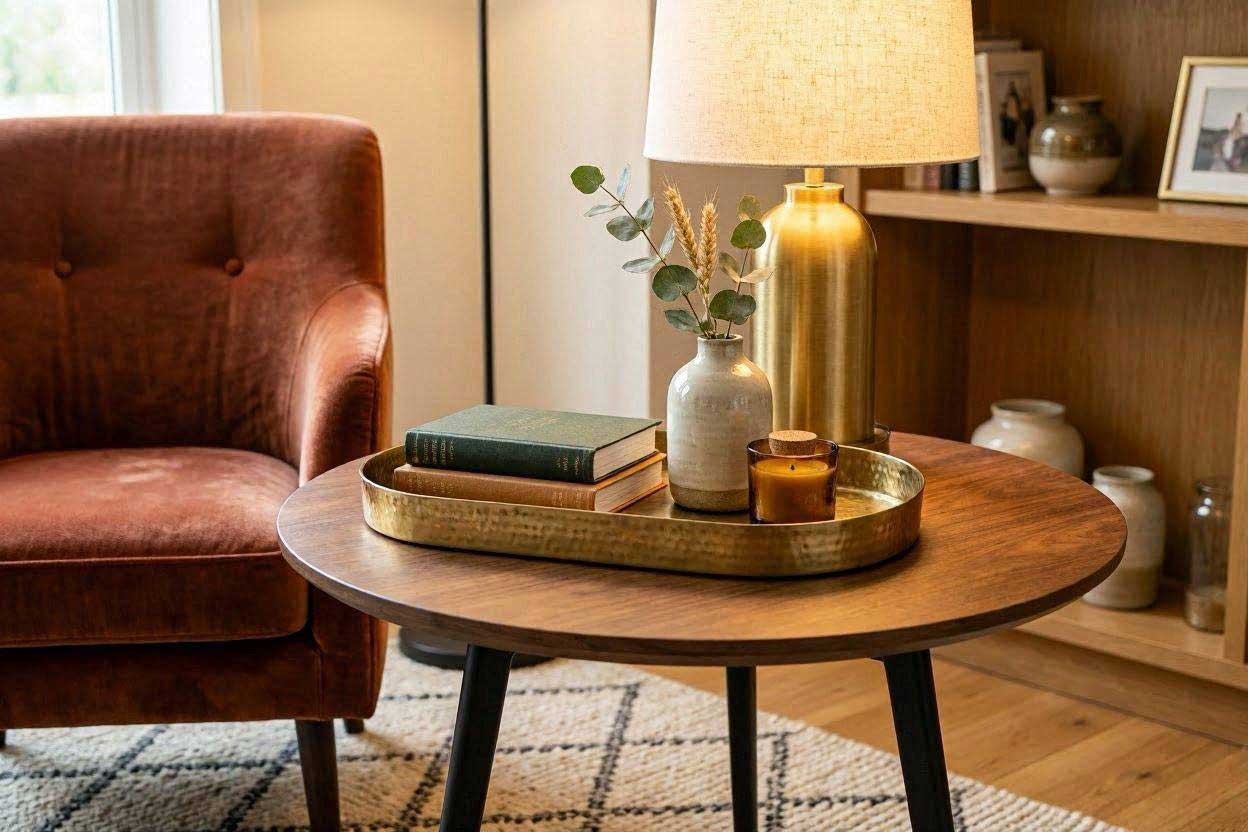
Choosing the right side table is only the first step. The way you style it can make the difference between a corner that looks ordinary and one that feels professionally designed.
The goal isn’t to fill every inch of the tabletop. Instead, create a simple arrangement that feels balanced, functional, and reflects your personal style.
Here are a few designer-inspired ideas you can easily recreate at home.
1. Start with a Table Lamp
A table lamp is often the anchor of a well-styled side table.
Besides providing practical lighting for reading or relaxing, it also adds height and visual interest to the arrangement. Choose a lamp with a fabric shade for a softer look or a matte black base if you want to introduce modern contrast.
Warm white lighting works particularly well with a rust accent chair because it enhances the chair’s rich, earthy tone and creates a cozy atmosphere in the evening.
2. Add a Small Plant for Natural Texture
Bringing a touch of greenery into the seating area instantly makes the space feel more inviting.
A small potted plant, trailing vine, or simple arrangement of fresh branches introduces organic texture that complements the warmth of a rust accent chair.
If natural plants aren’t practical, high-quality artificial greenery can create a similar visual effect with minimal maintenance.
3. Display One or Two Favorite Books
Books are more than reading material—they’re also timeless decorative accessories.
Stack one or two hardcover books neatly on the table to add personality and a lived-in feel. Choose titles that reflect your interests or feature attractive covers that complement your living room’s color palette.
This simple styling technique works beautifully in both modern and traditional interiors.
4. Use a Decorative Tray to Keep Things Organized
A small tray helps group everyday items into one organized arrangement.
Instead of placing a candle, coaster, and remote control separately, arrange them on a decorative tray to reduce visual clutter and create a cleaner appearance.
Natural wood, woven rattan, or matte metal trays pair especially well with rust-colored furniture.
5. Follow the Rule of Three
One of the easiest styling principles used by interior designers is the Rule of Three.
Rather than displaying many unrelated objects, combine three items with different heights and textures. For example:
- A table lamp
- A small ceramic vase
- A stack of books
This creates a balanced composition that feels intentional without looking overcrowded.
The same principle works whether your style is Scandinavian, modern farmhouse, or contemporary.
6. Leave Some Empty Space
One of the most common decorating mistakes is trying to fill every available surface.
Empty space is just as important as decorative accessories because it allows each object to stand out while keeping the side table practical for everyday use.
Leaving room for a cup of coffee or your favorite book ensures the table remains functional rather than becoming a display shelf.
💡 Designer’s Tip: Instead of buying several decorative accessories at once, start with one or two meaningful pieces and build your styling over time. A thoughtfully curated side table often feels warmer and more authentic than one filled with brand-new decorations that lack a personal connection.
7. Wrapping Up
A well-chosen side table does much more than hold everyday essentials. It enhances the comfort of your rust accent chair, improves the functionality of your seating area, and helps create a living room that feels balanced and intentionally designed.
By choosing the right size, material, color, and styling accessories, you can transform even a simple corner into one of the most inviting spaces in your home. Remember, great interior design isn’t about buying more furniture—it’s about selecting pieces that work together beautifully and support the way you live every day.
Frequently Asked Questions
Should my side table match my coffee table?
Not necessarily. While using similar materials or finishes can create a cohesive look, matching every furniture piece exactly may make the room feel overly coordinated. Instead, focus on complementary colors, textures, and design styles that work well together.
Can a side table be taller than a rust accent chair?
Ideally, a side table should be about the same height as the chair’s armrest or slightly lower. This makes it easier to reach everyday items like a cup of coffee, a book, or your phone while maintaining balanced proportions within the seating area.
Is a round or square side table better?
Both shapes work well, but they serve different purposes. Round side tables are excellent for smaller living rooms because they improve movement and soften the layout. Square or rectangular tables usually provide more usable surface space and complement modern or structured interiors.
What is the best material for a side table with a rust accent chair?
There isn’t a single best material for every home. Natural oak is ideal for bright Scandinavian-inspired interiors, walnut creates a richer and warmer atmosphere, black metal suits modern spaces, while marble offers a more elegant appearance. The best choice depends on your overall decorating style and daily needs.
How should I decorate a side table?
Keep the styling simple and functional. A table lamp, a small plant, and one or two decorative accessories are often enough to create an attractive arrangement. Remember to leave some empty space so the table remains practical for everyday use.
Can I use a side table in a small living room?
Absolutely. A compact side table is one of the easiest ways to add convenience without making a small space feel crowded. Choosing a slim design or a table with an open frame can help maintain an airy and uncluttered appearance.
Conclusion
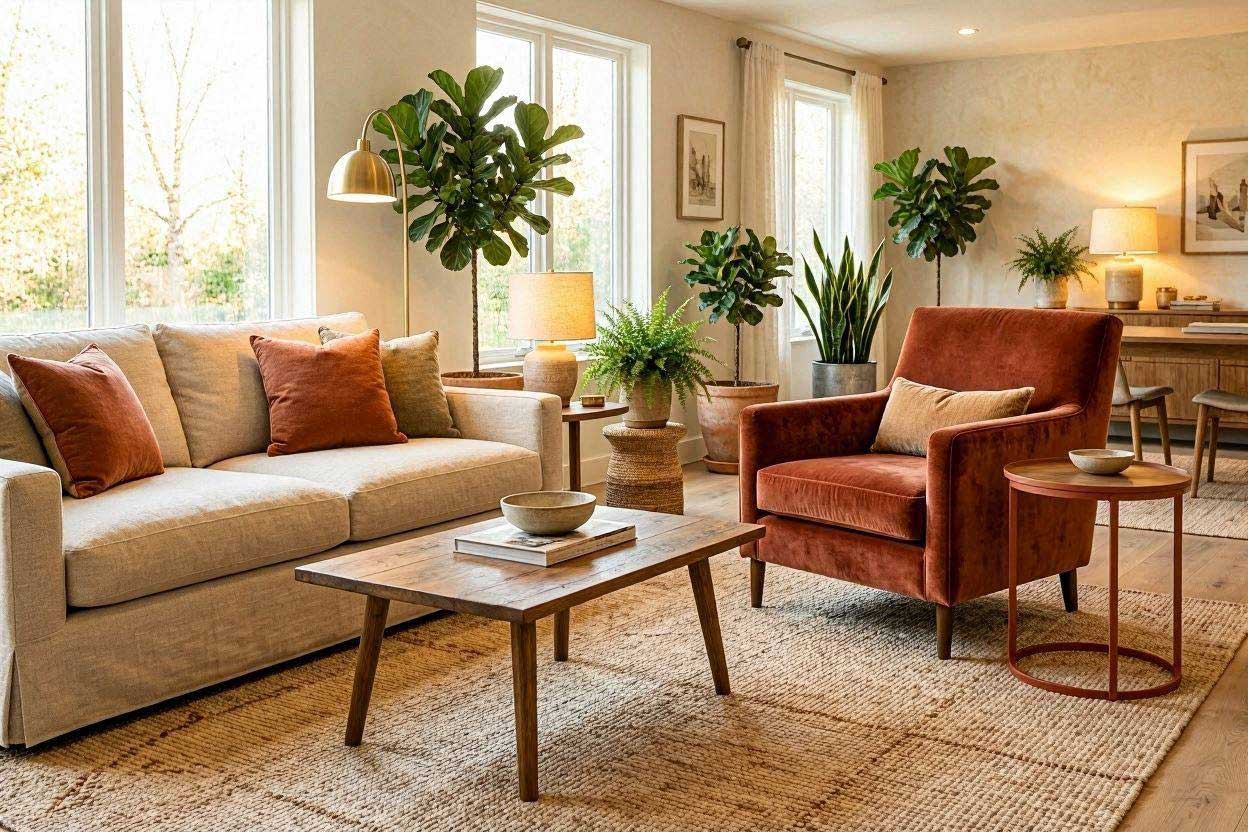
A thoughtfully chosen side table can transform a rust accent chair from a standalone furniture piece into a comfortable and well-designed seating area. Beyond providing a convenient place for everyday essentials, the right side table helps balance proportions, introduces complementary textures, and enhances the overall style of your living room.
Whether you prefer the warmth of natural wood, the elegance of marble, or the clean lines of black metal, the best choice is one that fits both your lifestyle and your interior design. By paying attention to size, material, color, and styling, you can create a space that feels functional, welcoming, and effortlessly cohesive.
The best side table isn’t necessarily the most expensive or the trendiest. It’s the one that makes your rust accent chair more comfortable to use, complements the overall style of your living room, and fits naturally into your daily routine.
By focusing on proportion, materials, color, and thoughtful styling, you’ll create a seating area that feels inviting, practical, and timeless. Sometimes, it’s the smallest furniture pairing that makes the biggest difference in how a room looks and feels.
A side table works best when it’s paired with a coffee table that complements the same seating arrangement. If you’re planning to complete your living room, our guide to Best Coffee Table for a Rust Accent Chair will help you choose a design that matches your style and space.
With just a few intentional decisions, your rust accent chair and side table can become a stylish corner you’ll enjoy every day.

Royan Abdillah is a home improvement enthusiast and interior design consultant with over 9 years of experience in the industry. Passionate about blending aesthetics with functionality, Royan Abdillah specializes in unique DIY furniture and pet-friendly home solutions. Through this blog, Royan Abdillah aims to help homeowners create beautiful, personalized spaces on a budget.